
By Achile Danjuma
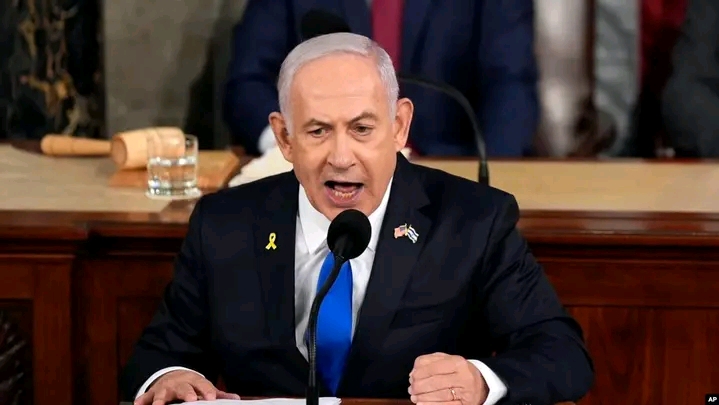
The Iranian Revolutionary Guard Corps (IRGC) has issued a direct threat against Israeli Prime Minister Benjamin Netanyahu, vowing to assassinate him amid escalating hostilities between the two nations.
In a statement published on its official website, Sepah News, the IRGC declared, “If this child-killing criminal is alive, we will continue to pursue and kill him with full force.” The threat comes as the region remains on high alert following unverified rumors of Netanyahu’s death, which circulated widely on social media over the weekend. The Israel Defense Forces (IDF) have officially denied these reports.
The current surge in violence began on February 28, 2026, when Israel and the United States launched surprise airstrikes on multiple locations across Iran. The attack resulted in the death of Iran’s Supreme Leader, Ayatollah Ali Khamenei, along with several other senior Iranian officials.
In retaliation, Iran launched a barrage of missiles and drones at Israeli territory, US military bases, and other US-aligned targets in the region. The exchange has since evolved into a sustained conflict, inflicting casualties on all sides and sending shockwaves through the global economy, with oil prices soaring amid the instability.
The Israeli Health Ministry provided an update on the human cost of the conflict on the home front. In the past 24 hours, 108 injured individuals have been admitted to hospitals across the country. The ministry reported, “Among those treated in hospitals, two are in moderate condition, and 96 are in good condition. Nine people have been treated for anxiety.” It did not specify the causes of the injuries.
Since the war with Iran began on February 28, a total of 3,195 people have been hospitalized, including both civilians and soldiers. Currently, 81 individuals remain in hospitals. The breakdown of current patients includes one person in critical condition, nine in serious condition, ten in moderate condition, and 60 in good condition.
On the international front, US President Donald Trump, whose country is a key military partner in the conflict, stated that Iran has signaled a willingness to negotiate a deal. However, in an interview with NBC News on Saturday, Trump said he is not ready to accept, “because the terms aren’t good enough yet.” He declined to elaborate on the specifics of any potential agreement.
During the same interview, Trump also cast doubt on whether Iran’s newly appointed supreme leader is still alive and expressed uncertainty about reports that mines have been laid in the strategic Strait of Hormuz, a vital artery for global oil shipments.
Inside Iran, authorities have ramped up internal security measures. State-linked media report that 20 individuals have been arrested in West Azerbaijan province on charges of “attempting to cooperate with Israel.” According to a statement from the local prosecutor’s office, as cited by the Tasnim news agency, the detainees are accused of providing Israel with location data on Iranian military and security assets.
A source briefed on Israel’s military strategy confirmed that these informant networks are playing a key role. The source indicated that Israel has launched a new phase of its assault, using real-time intelligence from the ground to conduct precise strikes on security checkpoints and other targets.