
By Isaac Aqua
A storm of outrage, disbelief and sharp criticism has swept across African football following the Confederation of African Football’s controversial decision to strip Senegal of the 2025 Africa Cup of Nations title and award it to Morocco.
What should have been a celebration of sporting excellence has instead spiraled into one of the most contentious episodes in the history of the Africa Cup of Nations, igniting fierce debate over integrity, governance and the soul of the African game.
The controversy erupted after CAF’s Appeals Board overturned the result of the final, handing Morocco a 3–0 victory on the grounds that Senegal forfeited the match after walking off the pitch. The decision effectively reversed an earlier outcome that had seen Senegal crowned champions at the end of regulation play.
For many observers, the ruling has raised more questions than answers.
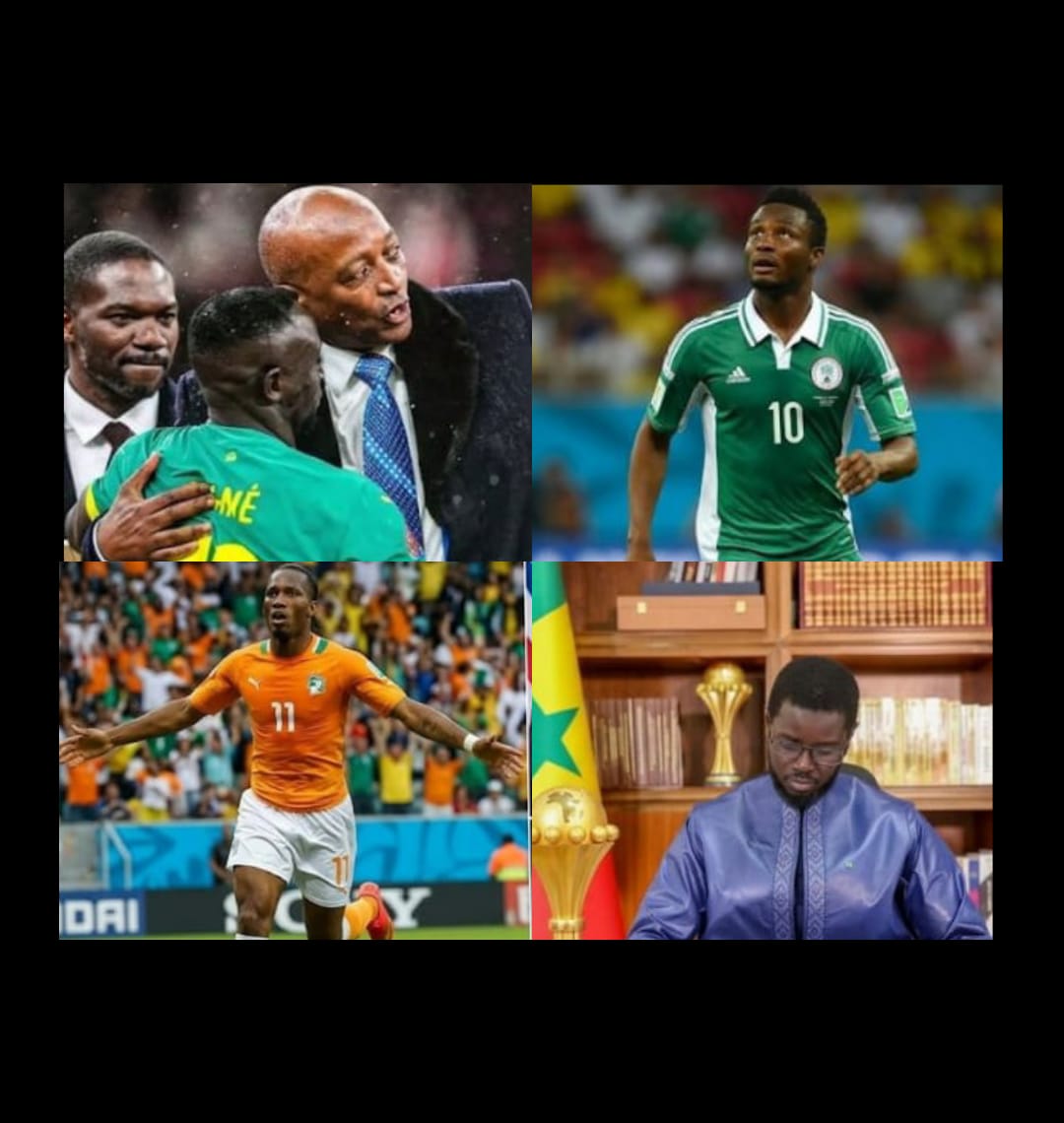
Former Ivorian and Chelsea’s star,Didier Drogba did not mince words in his reaction, describing the development as deeply troubling.
“In Europe, you can never see things like this, or even in other continents,” he said. “It is completely unacceptable that Senegal were handed the trophy and later it was given to Morocco. What level of football is this? Where are we taking African football to?”
That sentiment has echoed across dressing rooms, studios and fan spaces, where the credibility of African football’s governing structures is now under intense scrutiny.
Ex Super Eagles captain John Obi Mikel was even more direct, accusing CAF of undermining the very essence of the competition.
“CAF needs to understand that the Africa Cup of Nations is not their private property,” he said. “There is no rule or agreement anywhere that allows a team to be crowned champions, lift the trophy in public, and then later have that title taken away and handed to another team. What message are they trying to send to Africa? This is pure corruption.”
At the heart of the uproar is not just the decision itself, but the perception that it reflects deeper structural issues within the continental football body led by Patrice Motsepe.
Once widely praised for ushering in reforms such as improved sponsorship deals and increased prize money, Motsepe now finds his leadership facing one of its toughest credibility tests. Critics argue that the decision risks undoing years of progress and reinforcing long standing concerns about transparency and fairness in African football.
From Dakar to Lagos, fans have voiced anger over what many describe as a betrayal of merit and sporting justice.
The Senegalese Football Federation has formally rejected the ruling and confirmed plans to challenge it at the Court of Arbitration for Sport in Lausanne.
“To defend its rights and the interests of Senegalese football, the Federation will file a formal appeal,” the body said in a statement, reaffirming its commitment to integrity and due process.
The Senegalese government has gone further, condemning the decision as “unprecedented and exceptionally serious,” arguing that it contradicts the fundamental principles of fairness, loyalty and respect for the game.
“Senegal cannot tolerate an administrative decision that erases commitment, merit and sporting excellence,” the statement read, while also calling for an independent international investigation into suspected corruption within CAF.
Legal experts appear to see a potential pathway for Senegal. Former CAS arbitrator Raymond Hack insisted that the referee’s authority remains central to the outcome of any match.
“The referee is the only person in charge of the game on the field,” he explained. “He brought the game to an end at the end of extra time and the winner was Senegal. So Senegal remain champions.”
Even beyond the immediate dispute, the fallout has reignited broader concerns about governance and consistency in African football. Critics warn that repeated controversies risk damaging the global standing of the tournament and lending weight to long held skepticism from outside the continent.
Some fans have pointed to past remarks by figures such as Jamie Carragher, who have questioned the stature of AFCON, arguing that incidents like this only reinforce negative perceptions.
CAF, however, has maintained that due process must run its course. President Motsepe acknowledged Senegal’s right to seek redress.
“Every one of the 54 nations in Africa has a right to pursue their appeals… not only at the highest level in CAF but also at the highest body which is CAS,” he said, pledging that the organization would respect the final ruling.
Yet on the ground in Senegal, defiance remains firm. Symbolically and politically, the nation has refused to let go of what it believes was rightfully earned. President Bassirou Diomaye Faye has publicly signaled that the trophy will not be returned pending the outcome of the legal battle, underscoring the depth of national sentiment.
Beyond official statements, the controversy has stirred raw emotion among supporters who see the decision as a test of whether African football can truly uphold fairness in its most prestigious competition.
For them, the issue goes far beyond a trophy. It is about trust.
As the case heads to Lausanne, the stakes could not be higher. A ruling in Senegal’s favor may restore confidence and reaffirm the primacy of results on the pitch. A contrary outcome could deepen skepticism and leave lasting scars on the image of the continental game.
In the end, this is more than a dispute between two nations. It is a defining moment for African football, one that will determine whether its institutions can command respect not just in Africa, but across the global sporting landscape.
For now, the echoes of outrage continue to reverberate, and the beautiful game on the continent finds itself at a crossroads where credibility, justice and legacy hang in the balance.