
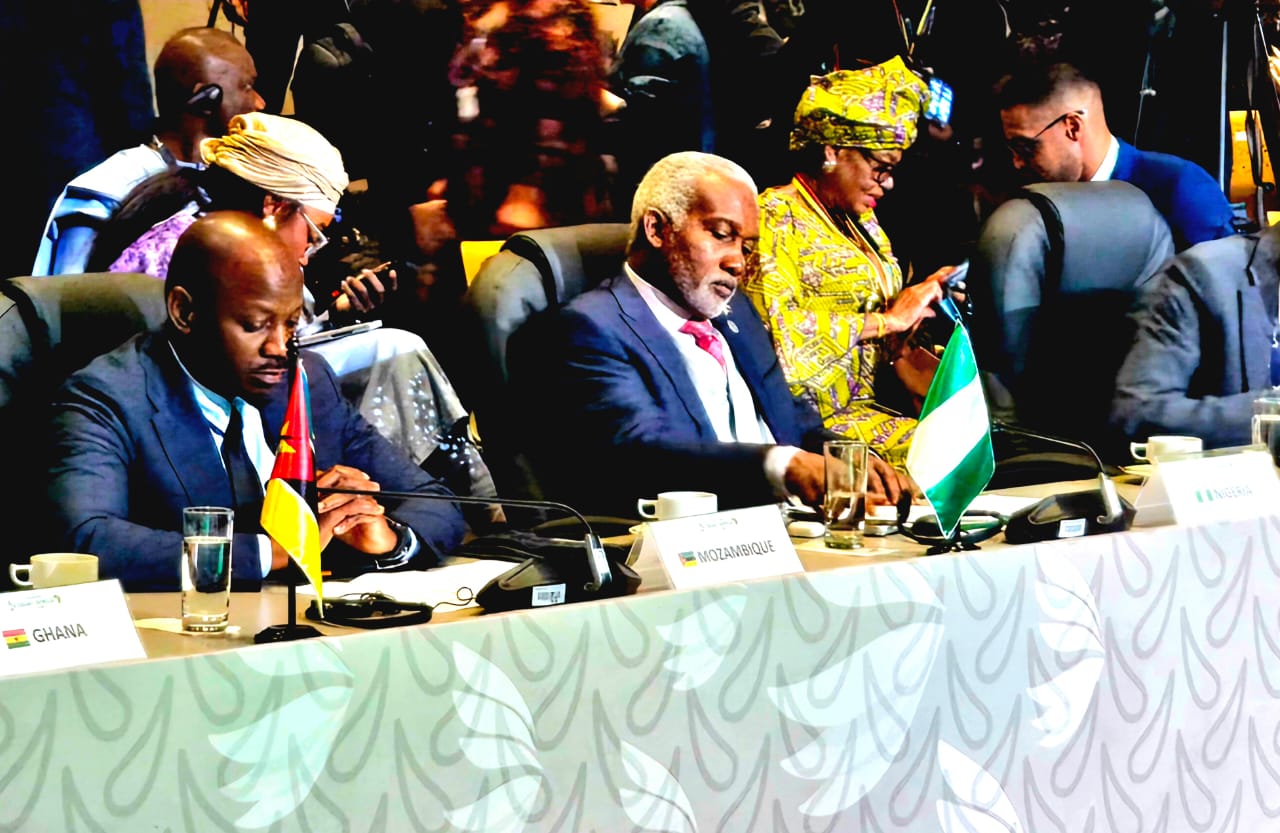
Nigeria has urged Latin America and the Caribbean to forge deeper economic, cultural, and strategic ties with Africa, calling for a united front among Global South nations to navigate an increasingly uncertain global landscape.
The appeal came from Nigeria’s Minister of Foreign Affairs, Ambassador Yusuf Maitama Tuggar, during his address at the CELAC–Africa High-Level Forum in Bogotá on Saturday. Speaking on behalf of President Bola Ahmed Tinubu, the minister described the gathering as a pivotal opportunity to reshape interregional relations.
Tuggar commended Colombian President Gustavo Petro for convening the forum, noting that it takes place amid growing global conflicts and shifting geopolitical dynamics. “We live in extraordinary times,” he said, warning that conflicts—regardless of geography—carry real consequences for developing nations. He called on participating countries to take collective responsibility in shaping outcomes that mitigate global risks and promote shared stability.
The minister emphasized that Africa and Latin America must work together to redefine their place in what he described as a fragmented and unequal international order. He advocated for a unified voice among Global South nations to push for fairer systems and more effective partnerships.
Highlighting Nigeria’s priorities, Tuggar identified education, energy, agriculture, solid minerals, and technology as key areas for collaboration. He stressed the importance of ensuring that both regions are not left behind in emerging technologies such as artificial intelligence, adding that Africa and Latin America “must not be ignored again” in global technological advancements.
Tuggar also reaffirmed Nigeria’s longstanding commitment to international cooperation, citing the country’s Technical Aid Corps programme, which has deployed skilled professionals to Caribbean nations since 1987. He said Nigeria is ready to expand cooperation with Community of Latin American and Caribbean States (CELAC) countries across trade, health, culture, and climate resilience.
On the economic front, the minister pointed to Nigeria’s position as Africa’s largest market and highlighted investment opportunities in agriculture and agro-processing. He noted that Nigeria is working toward food self-sufficiency, supported by policies aimed at boosting fertilizer production, which is expected to reach 6.5 million tonnes this year.
Tuggar also underscored the role of culture and creative industries in strengthening ties, calling for expanded collaboration in arts, education, digital innovation, and intellectual property.
Addressing broader global challenges, he called for joint efforts to tackle climate change, improve healthcare access, and promote technology transfer to developing countries. He reiterated Nigeria’s position on the repatriation of illicit financial flows and renewed calls for historical reparations, referencing the legacy of slavery and colonialism.
In his closing remarks, Tuggar urged leaders to seize the opportunity presented by the forum to unlock economic potential and foster mutual prosperity.
The CELAC–Africa High-Level Forum, held March 20–21, 2026, brings together leaders and representatives from Latin America, the Caribbean, and Africa to deepen cooperation across political, economic, and cultural domains.