
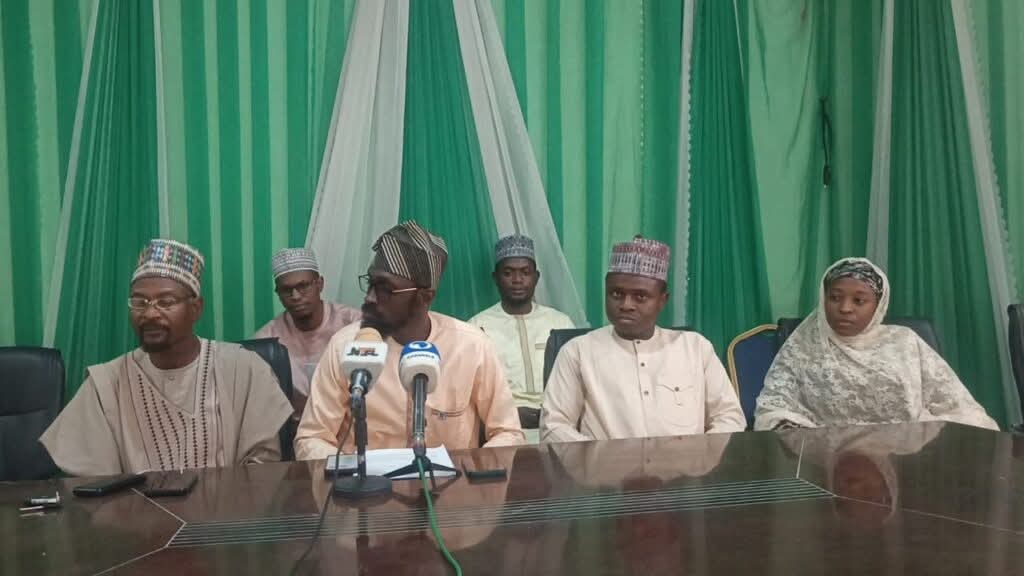
The Association of Radiographers of Nigeria has warned against what it described as a legislative attempt to erode the profession of radiography and transfer its statutory responsibilities to the Medical and Dental Council of Nigeria.
The President of the association, Dr Musa Dembele, gave the warning while addressing a press conference at the Kano NUJ Press Centre on Saturday.
He said, “The Medical and Dental Practitioners Act (Repeal and Re-enactment) Bill, 2026 (HB 2695) is not a reform but a targeted, calculated, and existential assault on the profession of radiography.”
He also described the bill as an attempt to introduce a “jurisdictional override” intended to dismantle the Radiographers Registration Board of Nigeria.
“This is a legislative execution of a profession that has served Nigeria for over 50 years,” he said.
Dembele pointed to Section 8(1) of the bill, which grants the Medical and Dental Council of Nigeria exclusive authority, describing it as “a legislative nuclear weapon” that strips the Radiographers Registration Board of Nigeria of its mandate.
The association also accused the bill of “conceptual theft” by redefining radiology in a way that erases radiography as an independent scientific discipline.
“The bill seeks to legally erase radiography as an independent profession and subjugate radiographers to the disciplinary authority of a council composed of individuals with no expertise in radiographic science,” the association said.
On financial matters, the association accused the bill of promoting “extortion as regulation,” noting that it mandates that 70 per cent of practising fees be shared with the Nigerian Medical Association.
“This reveals the true motive — financial colonisation,” Dembele said.
The association also raised concerns over HB 2699, the Radiographers Registration Board of Nigeria Amendment Bill, which it said seeks to weaken the board from within.
It described the inclusion of medical doctors on the board as “a fundamental violation of the doctrine of professional self-regulation” and warned against excessive ministerial control that could politicise regulation.
The association stressed that globally, radiography regulation is profession-led, citing examples from the United Kingdom, Canada, and Australia, and noted that Nigeria cannot afford to adopt a substandard model that contradicts established international norms.
The association therefore called on the National Assembly to protect the integrity of the Nigerian healthcare system by rejecting the bill in its entirety.