
…says defections were a Trojan horse to gift Tinubu 2027 victory
By Achile Danjuma
In a blistering television appearance that laid bare the raw nerves festering beneath Nigeria’s opposition landscape, the African Democratic Congress (ADC) has accused defectors Peter Obi and Rabiu Musa Kwankwaso of executing a “premeditated” exit strategy — one that may have been designed from the start to sabotage rival challengers to President Bola Tinubu.
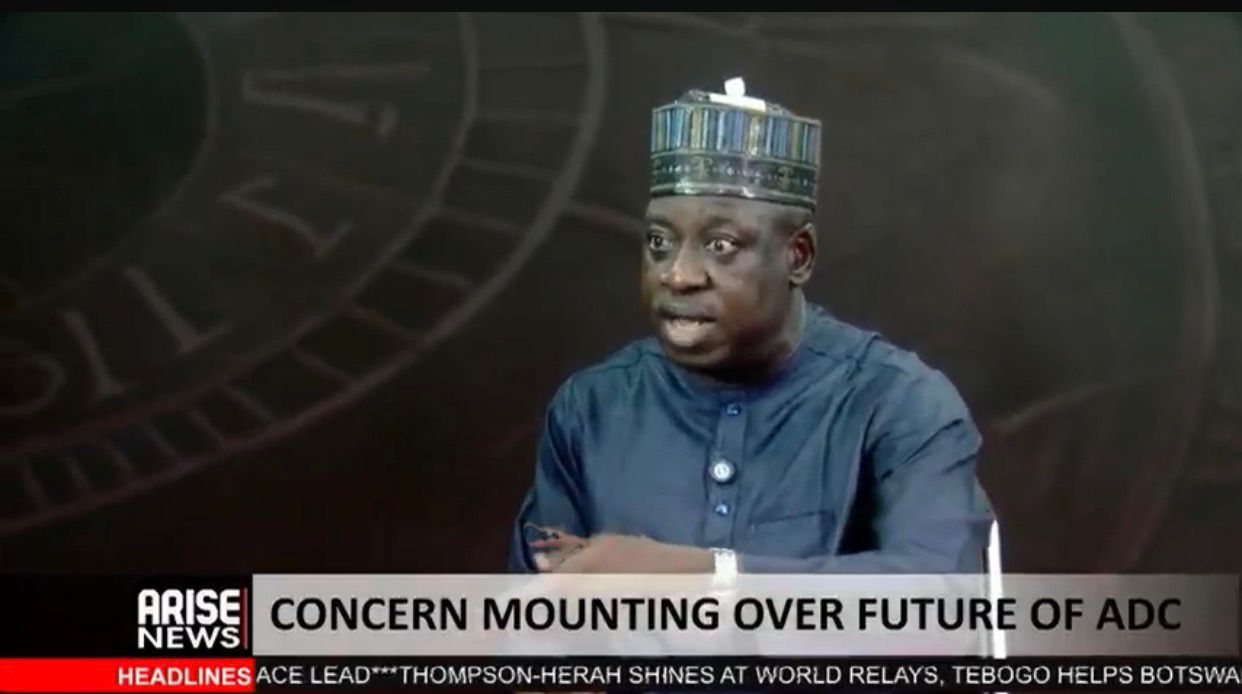
Mallam Bolaji Abdullahi, the party’s National Publicity Secretary, did not mince words on Arise News Prime Time Monday night. Speaking with the controlled fury of a jilted partner, he painted a picture of calculated political manipulation.
“When a woman wants to leave a marriage, she gives all kinds of reasons — including being suffocated by too much love,” Abdullahi said, his metaphor hanging in the air like a verdict. “That is what we are seeing now.”
‘Too many concessions’
The ADC, Abdullahi insisted, offered Obi unprecedented power — including the keys to the party’s operational engine room: the position of National Organising Secretary, a role that controls congresses, elections, and the very machinery of political survival.
“None of the aspirants or leaders was given as much consideration as Peter Obi,” Abdullahi revealed. “That office is occupied by his nominee.”
Yet the former Labour Party standard-bearer, who once warned at a coalition meeting that splitting the opposition would hand Tinubu victory in 2027, now stands accused of doing exactly that.
The Kano conspiracy
In a revelation that crackles with intrigue, Abdullahi disclosed a clandestine meeting held two months ago in Kano — bringing together Obi, Kwankwaso, and former Bayelsa Governor Seriake Dickson.
“After that meeting, I reached out to Governor Dickson,” Abdullahi said. “Suddenly, things changed.”
His insinuation was unmistakable: that Kwankwaso’s flirtation with the ADC may have been a “Trojan horse” from the outset — a planted operation to infiltrate and fracture opposition unity from within.
‘Three flimsy cases’
Dismissing claims that legal battles prompted the mass exodus, Abdullahi scoffed at what he called “flimsy excuses.”
The party faces only three minor court cases, he said — hardly justification for abandoning a platform that, in his words, has “fought back against everything the government has thrown at us.”
As the interview closed, one question lingered, unanswered and perhaps unanswerable: In Nigeria’s high-stakes political chess match ahead of 2027, who is truly playing whom?
For now, the ADC insists it was never a partner — merely a vehicle. And someone, they say, just stole the keys.