
By Janet Samuel
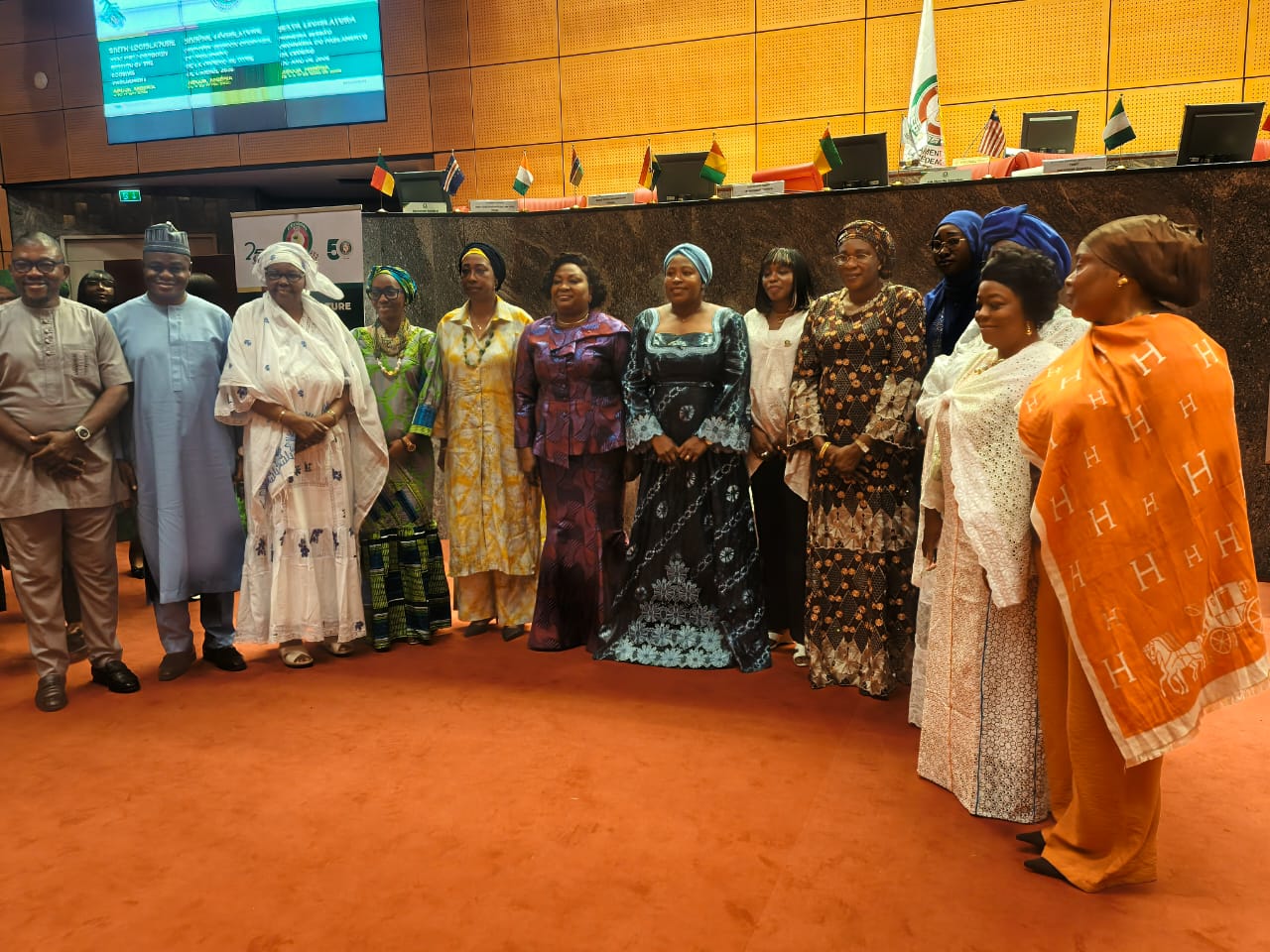
The Speaker of the ECOWAS Parliament, Hajia Memounatou Ibrahima, has called for stronger regional support systems to empower women entrepreneurs and traders across West Africa, declaring that women must move from being passive participants to key architects of the region’s economic transformation.She made the call while declaring open the Executive Masterclass organised by the ECOFEPA in collaboration with WATEX, focusing on women in trade and export.
Addressing participants at the opening ceremony, the ECOWAS Parliament Speaker described women traders as “day-to-day heroes” who sustain markets, feed families and preserve social cohesion across the region despite difficult trading conditions and limited institutional support.
According to her, many women engaged in cross-border commerce continue to face barriers including high compliance costs, inadequate infrastructure, limited access to finance and weak policy protection.
She stressed the need for continuous capacity-building initiatives such as the executive masterclass, noting that the programme would equip women with the knowledge and tools required to negotiate better contracts, improve advocacy, and access regional and international markets.
“May women not only be present in commercial trade, but be architects at the forefront. May women not be passive beneficiaries, but the main actors in the economic transformation of ECOWAS,” she stated.
The Speaker further urged participants to translate lessons from the programme into measurable economic outcomes capable of strengthening women-led enterprises across the sub-region.
Earlier in her keynote presentation, trade expert and academic, Prof. Ngozi Egbuna, said prosperity that excludes women remains incomplete and unsustainable, insisting that women are central to regional economic growth and industrialisation.
She observed that although women dominate informal cross-border trade and contribute significantly to agricultural value chains and digital commerce, they remain largely excluded from formal export systems and trade policy processes.
According to her, democratizing prosperity across ECOWAS requires dismantling barriers confronting women traders through simplified trade procedures, digital customs systems, gender-responsive border policies and improved access to financing.
Prof. Egbuna also called for innovative financing models, export credit systems and targeted trade support mechanisms for women-owned businesses, stressing that financial inclusion should be treated as an economic strategy rather than charity.
Sharing personal experiences from her travels across West Africa, she recounted the harsh realities faced by women traders who transport goods across borders without security, decent shelter or adequate welfare facilities.
She challenged policymakers and regional institutions to develop practical solutions capable of reducing border delays, connecting women-owned SMEs to global value chains and preventing digital trade exclusion.
Also speaking at the event, the Managing Director of the Bank of Industry Nigeria�, Dr. Olasupo Olusi, reaffirmed the institution’s commitment to improving access to finance and supporting the transition of women-owned enterprises from informal operations to structured participation in regional and global markets.
He described women empowerment as both a social imperative and an economic necessity for sustainable growth and shared prosperity in the ECOWAS region.
“Do not look down on yourself. Know that prosperity is out there. After this masterclass, let something in you be activated to aim higher,” he told participants.
The ECOFEPA Executive Masterclass brought together female parliamentarians, entrepreneurs, policymakers, financial experts and trade stakeholders from across West Africa to discuss strategies for enhancing women’s participation in regional and international trade.