
By Melvin Tejan Mansaray
The delegation of Nigeria to the Economic Community of West African States (ECOWAS) Parliament has pledged firm commitment to the principles and ideals of ECOWAS.
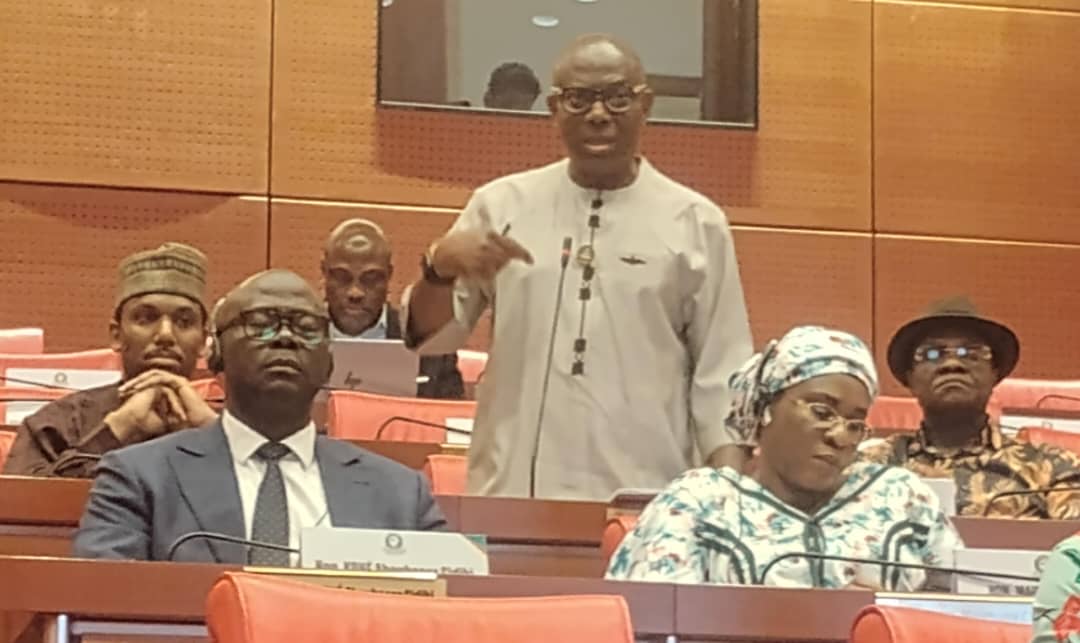
This reaffirmation was made during the presentation of Nigeria’s country report on Friday 8th May, 2026 at the Chamber of the Community Parliament’s International Conference Center, Area 10, Abuja Nigeria.
The 41-page report features a delegation list of thirty-five members, introduction, political situation – democracy and good governance, peace and security and human rights.
It also detailed the environmental situation – effects of climate change, the status of the implementation of ECOWAS Community texts, initiatives or programme/projects within Member States and a conclusion.
Underscoring Nigeria’s commitment to the principles and ideals of ECOWAS, the presenter, Hon. Abiante Awaji-Inombek presented that:
“As we reaffirm our collective commitment to the principles and ideals of ECOWAS, let us with sincerity acknowledge that the path forward will require courage, innovation, and unwavering unity of purpose.”
The report did not shy away from the challenges but called for bold actions.
“The multidimensional challenges affecting ECOWAS Community requires new and innovative measures to address,” the report captured.
It nevertheless reassured West Africans that:
” Nigeria remains committed in response to this adverse reality and reemphasises its conviction in supporting regional cohesion to move the ECOWAS forward forever.”
The report concludes that the Federal Republic of Nigeria remains committed in solidarity with fellow Member States, to reposition the West African subregion for greater economic prosperity, political stability and social welfare.
Nigeria is located in West Africa and borders the Gulf of Guinea.
It is Africa’s most populous country, with over two hundred and forty-two million people.
Nigeria is a Federal Republic with thirty-six states and its capital city is Abuja.
It is a culturally diverse nation with over five hundred and twenty-five native languages.
Its economy relies heavily on oil, gas, and agriculture, while the country face challenges with security and high inflation.