
By Melvin Tejan Mansaray, Abuja Nigeria
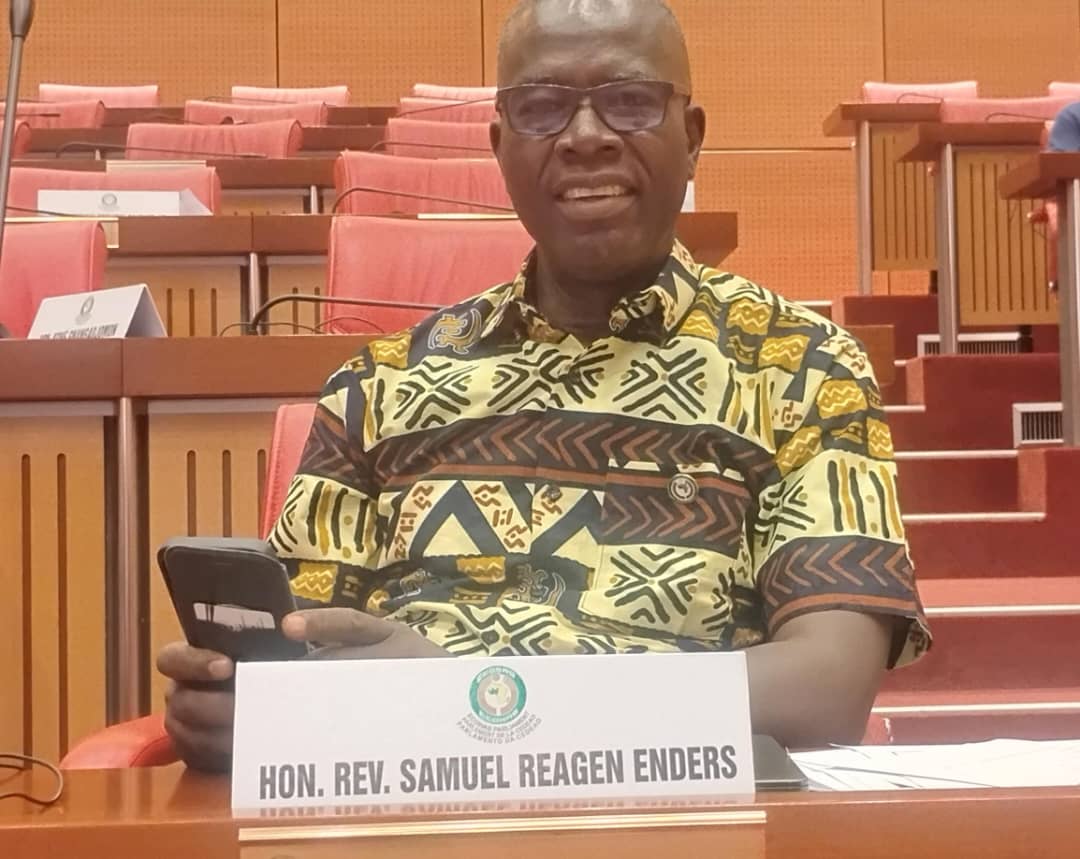
A Member of the ECOWAS Parliament’s Joint Committee on Education, Science and Culture/Health/Telecommunications and Information has spotlighted the importance of “Strengthening Curriculum Alignment with the Socioeconomic needs of the ECOWAS Region.”
He was speaking exclusively to this Medium following the tabling, debate and adoption of the Committee’s report on Thursday 14th May, 2026 at the Sixth Legislature’s ongoing 2026 First Ordinary Session holding at the International Conference Center, Area 10 Abuja Nigeria.
According to Hon. Rev. Samuel Reagen Enders, curriculum alignment is very important for development because a large portion of the demographic in West Africa is made up of young people.
“We always complain that most of our young people are leaving, causing braindrain by seeking jobs on the other side.
Now, the reality becomes how do we keep those people and how do we prepare them?
To do so, we have to look at the skills that are essential to the growth and development of our subregion.
Our countries can’t work individually, so we must be collective in our approach.
We must work together to make sure solutions are found, and if we work in isolation, we’re not going to succeed, so education-wise, we have to look at the curriculum, what is being taught in Sierra Leone, Liberia, Guinea, etc.”
Hon. Enders said that as the subregion fosters free movement of goods and services across countries by exchanging ideas, it is quintessential to the fact that students in Liberia must be able to work in Sierra Leone, Ivory Coast, Guinea, and elsewhere.
He stressed that:
“It’s important that we have to have a curriculum that cuts across the subregion.
The same methodology that is taught in Liberia must be taught in Sierra Leone and across the board.
By so doing, we can have a workforce that will work and serve our entire subregion, that’s why it’s important to have sanity around that.”
Asked about how ravaging is the issue of braindrain in the subregion, Hon. Enders said, “brain drain is a very serious issue.”
He maintained that:
“Braindrain is ravaging. Although there is a cross-border braindrain, unfortunately, the ability to prepare those people for those tasks are not in line with what is happening in our countries.
In terms of braindrain, a lot of people from the subregion want to go to London, USA, Australia, and other places outside of the continent.
We are losing these people. As soon as they get the skills, they leave the continent and don’t return to serve. It’s a concern to all of us, if we want our countries to develop, if we want our subregion to be at par with the rest of the world.
If we lose all of our best doctors, lawyers, engineers, IT people, then it becomes a problem for us.”
On whether having a subregional curriculum takes cognizance of the demographic diversity in terms of linguistics, population, economics, sociocultural and infrastructural issues and how will the Parliament get all of these harmonized, Hon. Enders said it takes “a dependent-independent approach”.
“We want to respect each country’s curriculum. We want to look at what they have. Everyone might not have the same financial capability, but I think on paper, we must be able to have the same structure, guidelines, rules, regulations and expectations.
Students must meet certain benchmarks. They must be able to study the same way people study in other countries.
In terms of Infrastructure, ECOWAS is helping to build some of these things – I think a university is being built in Sierra Leone, and they are doing the same thing in Liberia with healthcare.
I think we must work together to mobilize the funding but it’s important that in terms of the standardized curriculum, it’s made, ready, prepared, respected throughout the subregion because if you teach one plus one in Liberia, you should teach the same across the board. Those kinds of structures and requirements are important. If it’s thirty-two hours of academic work, you must be able to do the same elsewhere in the subregion. Someone can’t do two hours here and another fifty hours on the other side, you won’t have the sanity. You’re not going to be able to have the type of standard that is needed to measure what is being done. ”
Hon. Enders concluded that now that the report has been adopted, he looks forward to the report being sent to the ECOWAS Commission and make sure Heads of State have it and Parliament followup on their deliberation and final views on having a workable framework for the successful implementation.”
The nine-page Joint Committee report featured the following content outline; introduction, opening ceremony, proceeding of the meeting, panel presentations on; legislative and institutional reforms for market-oriented education, harnessing digital transformation and future skills to foster entrepreneurship and formalise the informal economy in the ECOWAS region, unlocking entrepreneurial potential for regional prosperity and an interactive session between Parliamentarians, students, teachers and parents.
Among the key recommendations are:
” Strengthen cooperation between Member States to facilitate the mutual recognition of qualifications and academic and professional mobility within the ECOWAS Region.
Invite the plenary of the ECOWAS Parliament to consider and adopt a resolution on strengthening the alignment of school curricular with the socioeconomic needs of the region, with a view to its transmission to the ECOWAS Commission for submission to the Authority of Heads of State and Government,” among other things.
Hon. Rev. Samuel Reagen Enders is a prominent Liberian politician, pastor, educationalist, and humanitarian.
He serves as the Representative for Electoral District #6 of Montserrado County in the House of Representatives of Liberia.