
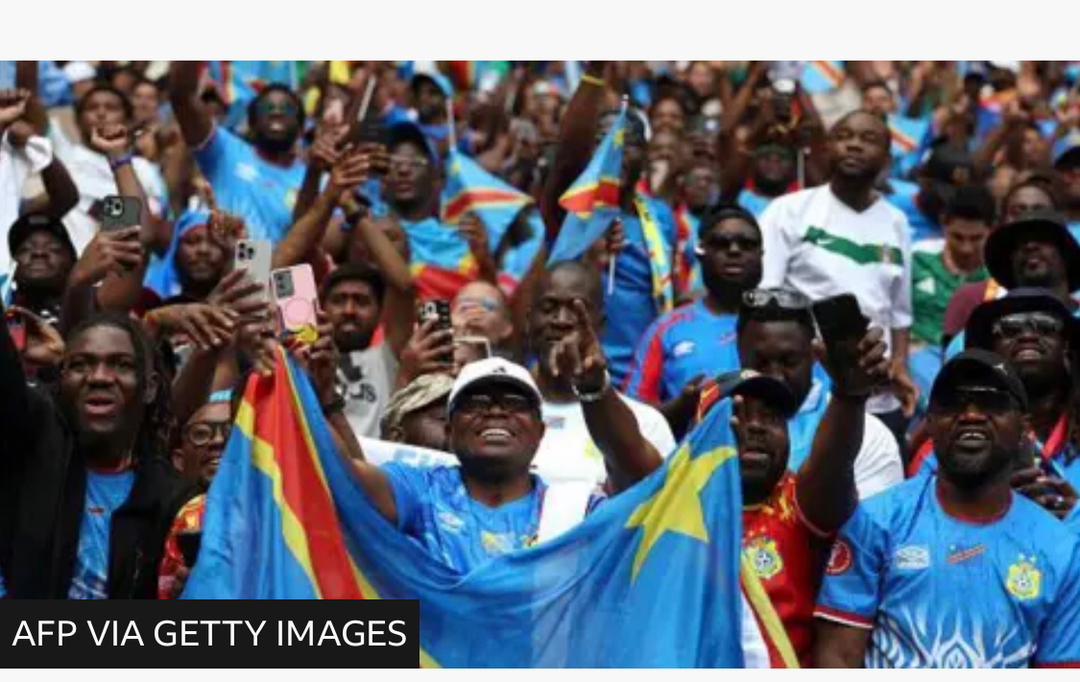
The Democratic Republic of Congo has appealed to FIFA to reimburse supporters who purchased tickets for the 2026 World Cup but are now unable to travel to the United States due to fresh Ebola-related entry restrictions.
The national team, nicknamed the Leopards, is set to make a long-awaited return to football’s biggest stage for the first time since 1974. However, the comeback is being overshadowed by a public health emergency declared by the World Health Organization (WHO) on 16 May, following a surge in Ebola cases in parts of Africa.
Health authorities report more than 900 suspected infections and at least 223 deaths linked to the outbreak, with the majority recorded in DR Congo. In response, the United States has suspended visa services in Kinshasa and imposed entry restrictions on travellers who have been in DR Congo, Uganda, or South Sudan within 21 days of arrival.
As a result, many Congolese fans who had already purchased expensive match tickets are now effectively barred from attending games in the US-hosted tournament.
“We asked FIFA to consider the situation because the tickets are very expensive,” said Veron Mosengo-Omba, president of the Congolese football federation (FECOFA), in an interview with BBC Sport Africa.
“These supporters are being punished through no fault of their own. They simply want to follow their team.”
FIFA has acknowledged the request, stating that it will review the matter. However, its current policy generally allows ticket resale or transfer rather than refunds, except in rare cases such as match cancellations.
The United States is co-hosting the tournament with Canada and Mexico, but high ticket prices—driven by FIFA’s dynamic pricing system—have already made attendance difficult for many African supporters.
DR Congo’s group stage fixtures include matches in Houston, Guadalajara, and Atlanta, meaning fans may need to adjust travel plans and prioritize venues outside the US where possible.
Despite the restrictions affecting supporters, the national team itself remains unaffected. Most players in Sébastien Desabre’s squad are based outside DR Congo, while officials who were in-country have already left to meet quarantine requirements.
The team previously cancelled a training camp in Kinshasa and has instead been preparing in Belgium before heading to their base in Texas.
FECOFA has confirmed ongoing discussions with FIFA and tournament stakeholders, including health and security agencies, to ensure compliance with international regulations.
For many in DR Congo, the World Cup appearance carries deep emotional significance. The country made history in 1974 as the first sub-Saharan African nation to compete at the tournament, then known as Zaire.
“This is like a rebirth of football in our country,” Mosengo-Omba said. “People are united behind the team again.”
He added that expectations remain realistic but optimistic: the goal is to build a strong foundation for the future of Congolese football.
Meanwhile, concern over the Ebola outbreak continues to grow. The WHO has classified it as a public health emergency, with the current strain proving particularly difficult to control due to the absence of a licensed vaccine.
Local health challenges, including displacement caused by conflict in eastern regions, have further complicated response efforts.
Despite international concern, Congolese officials insist the situation is being misinterpreted abroad.
“People misunderstand Ebola,” Mosengo-Omba said. “Not everyone in the country is affected. The world should not panic.”
As the tournament approaches, the intersection of global health restrictions and sporting ambition has left thousands of fans caught in the middle—unable to witness a historic moment they had long waited for.