
By Cliff Stanley
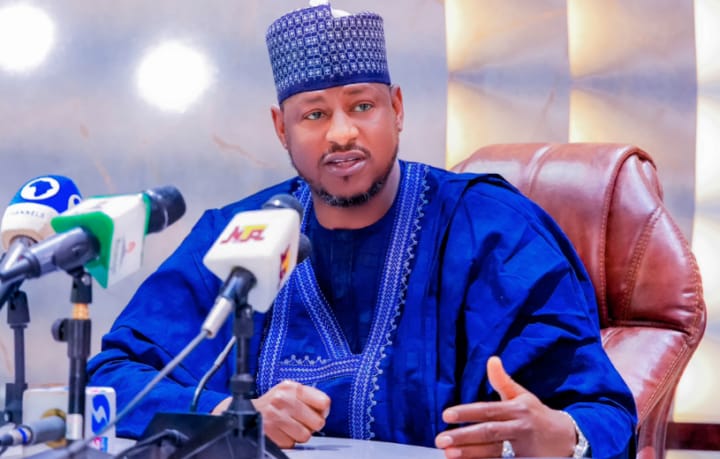
What Governor Dikko Umaru Radda revealed in 2026 about the existence of “moles” within government circles, security agencies, and local communities aiding bandits has once again given credence to the alarm raised over a decade ago by former President Goodluck Jonathan when he openly admitted that terrorists and insurgents had infiltrated government institutions.
In 2012, Jonathan warned Nigerians that Boko Haram sympathizers existed “in the executive, judiciary, legislature and even within the armed forces.” At the time, many dismissed the statement as political rhetoric. Today, with the benefit of hindsight, the nation can clearly see that insecurity in Nigeria was never merely about guns in the forests; it was also about collaborators in high and low places.
Governor Radda’s recent disclosure that bandits often receive intelligence “minutes after security meetings” confirms the frightening depth of institutional compromise. According to him, some criminal groups already know security movement routes before operations even begin.
The tragedy is that Nigeria has paid heavily for these years of denial, political manipulation, and elite selfishness.
From Boko Haram insurgency in the North-East to banditry in the North-West, kidnapping in the North-Central, separatist violence in the South-East, and organized criminality across the federation, Nigeria has gradually drifted into a dangerous cycle where insecurity has become both a political weapon and an economic industry.
Distinguished political economist Claude Ake once warned that “the problem is not simply the absence of development, but the politics of exclusion.” That exclusion economic, political, and social created fertile ground for extremism, criminality, and violent mobilization.
Similarly, renowned scholar Chinua Achebe famously argued that “the trouble with Nigeria is simply and squarely a failure of leadership.” Decades later, insecurity continues to expose the cost of weak institutions, corruption, politicization of security, and the absence of visionary national leadership.
Even more disturbing is how insecurity has devastated Nigeria’s economy. Studies now show that agricultural productivity in several conflict-prone states has sharply declined because farmers can no longer safely access their lands. A 2025 study on insecurity in Benue State found that rising violence significantly reduced crop and livestock output, worsening poverty and food inflation nationwide.
The human cost is even worse: • Thousands killed across communities.
• Millions displaced internally.
• Rural economies destroyed.
• Investors frightened away.
• Young people pushed into crime, drugs, migration, or extremism.
What makes the situation more painful is that many of these crises were preventable.
Nigeria’s political elite spent years weaponizing religion, ethnicity, poverty, and regional distrust for electoral advantage, while neglecting governance, education, intelligence gathering, and economic inclusion. Today, the same divisions are threatening national cohesion itself.
Yet, despite everything, Nigeria can still recover but only through hard political decisions, not empty speeches.
The way forward must include:
• A complete overhaul of intelligence and internal security architecture.
• Identification and prosecution of terror sponsors and collaborators regardless of status or ethnicity.
• State policing and community-based intelligence structures with constitutional safeguards.
• Massive investment in education, agriculture, and youth employment.
• De-politicization of security and national unity issues.
• Regional cooperation among governors beyond party affiliations.
• Leadership that places national survival above electoral calculations.
As Governor Radda himself recently stated, “Security is not solved overnight; it requires coordinated understanding and community engagement.”
Nigeria is indeed bleeding, but nations do not collapse only because of terrorists; they collapse when leaders refuse to confront uncomfortable truths.
The challenge before Nigeria in 2026 and beyond is no longer whether the danger exists. The real question is whether the political class has the courage, sincerity, and patriotism to save the country before insecurity becomes permanently normalized.
History will judge this generation of leaders not by their campaign slogans, but by whether they preserved the Nigerian state itself.