
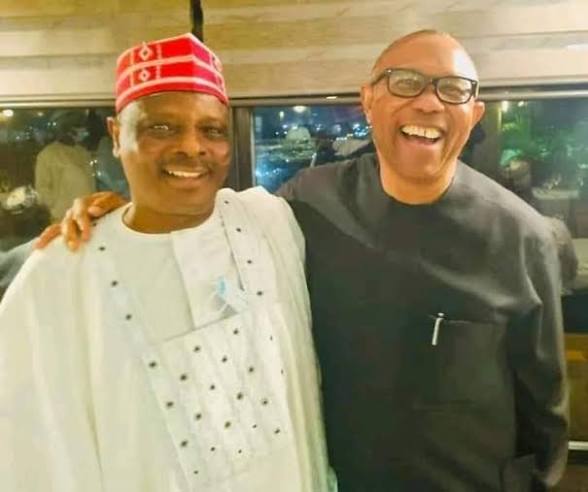
The presidential candidate of the Nigerian Democratic Congress (NDC), Peter Obi, has declared that Senator Rabiu Kwankwaso will not be treated as a “spare tyre” but as a full political partner if their ticket wins the 2027 general elections.
Obi made the remark in his acceptance speech after emerging as the party’s presidential flagbearer, according to a statement shared on his X account on Sunday. He had earlier confirmed Kwankwaso as his running mate on Saturday.
Both politicians were contenders in the previous presidential election, where Obi came third and Kwankwaso finished fourth. The race was ultimately won by President Bola Tinubu, while former Vice President Atiku Abubakar placed second. Kwankwaso, who ran under the New Nigeria Peoples Party (NNPP), secured his strongest support base in Kano State.
Describing his nomination as a call to national duty, Obi said his campaign would focus on building a “New Nigeria” driven by unity, security, economic reform, and accountable leadership. He thanked party officials, including the leadership and National Working Committee, as well as supporters nationwide.
He warned that the country was facing a difficult period marked by insecurity, economic strain, and declining trust in government. According to him, Nigeria must avoid division along ethnic or religious lines and instead embrace its diversity as a source of strength.
On security, Obi expressed concern over worsening conditions, citing global reports that ranked Nigeria among the countries most affected by terrorism in recent years. He also referenced Nigeria’s past contributions to international peacekeeping operations, noting the professionalism and sacrifices of the armed forces.
He stressed that government must prioritise the protection of lives and property, describing security as the most fundamental responsibility of any administration.
Turning to other sectors, Obi highlighted weaknesses in healthcare, saying only a small fraction of primary health centres are functional and health insurance coverage remains low. He pledged to expand coverage significantly and boost funding for the health sector, alongside rehabilitation of primary healthcare facilities across all wards.
On education, he promised increased investment in human capital development, with greater focus on schools, teachers, and vocational training to improve productivity.
He also raised concerns about food insecurity, citing projections that tens of millions of Nigerians could face hunger, and called for stronger investment in agriculture and better use of arable land.
In the energy sector, Obi noted Nigeria’s low electricity generation compared to its population and promised a major increase in power output within four years if elected.
On employment, he argued that real joblessness is higher than official figures suggest, especially among young people, and pledged support for small and medium-scale businesses through incentives and improved access to finance.
He also vowed to reduce corruption, lower governance costs, and strengthen democratic institutions.
Reiterating his stance on leadership structure, Obi said the vice president would serve as a true partner in governance rather than a subordinate figure, reaffirming Kwankwaso’s role in his proposed administration.