
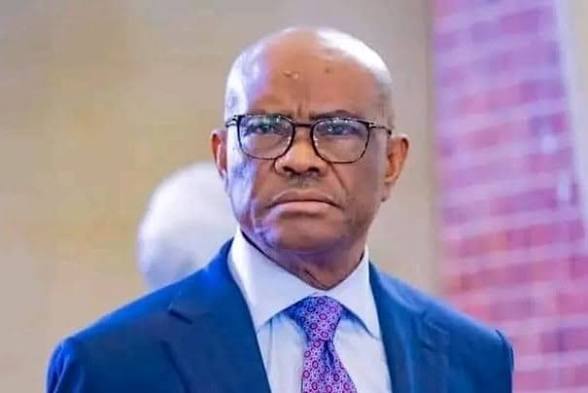
FCT Minister, Nyesom Wike, has disclosed that the “Rainbow Coalition” in Rivers State will jointly decide its governorship candidate ahead of the 2027 general elections, insisting that no individual has been anointed or confirmed for the ticket.
Speaking on Saturday at a luncheon for coalition aspirants in Port Harcourt, which was broadcast on the Nigerian Television Authority, Wike explained that the political arrangement, made up of the PDP, APC, Labour Party, and Action Alliance, has not yet settled on its flag bearer.
He stressed that the final decision on who becomes the coalition’s governorship candidate would be reached collectively under its agreed structure.
According to him, “The Rainbow Coalition, we have not chosen who will be the governor of Rivers State. But we have party candidates who have emerged under the Rainbow Coalition. The only decision we have taken is that we are going to support President Bola Ahmed Tinubu.”
The former Rivers State governor also described the coalition as the dominant political force in the state, urging politicians seeking elective positions to align with it if they hope to succeed.
He said participation in the coalition was essential for political relevance in Rivers State, adding that all levels of political ambition, from councillorship to governorship, must pass through the platform.
Wike further cautioned against what he called premature declarations of victory by some aspirants, warning that such claims distort the ongoing process and create unnecessary tension within the alliance.
He urged all aspirants across the four parties to continue mobilising support at the grassroots level while awaiting a formal consensus decision from the coalition leadership.
The minister also accused some external commentators, activists, and media actors of exploiting political tensions in Rivers State for personal gain, saying the Rainbow Coalition was formed partly to address such divisions.
He maintained that unity and development of the state should remain the priority, insisting that political differences must not override collective progress.
Wike also downplayed the influence of smaller political parties, arguing that only major parties with established structures have the capacity to compete effectively in elections across the country.