
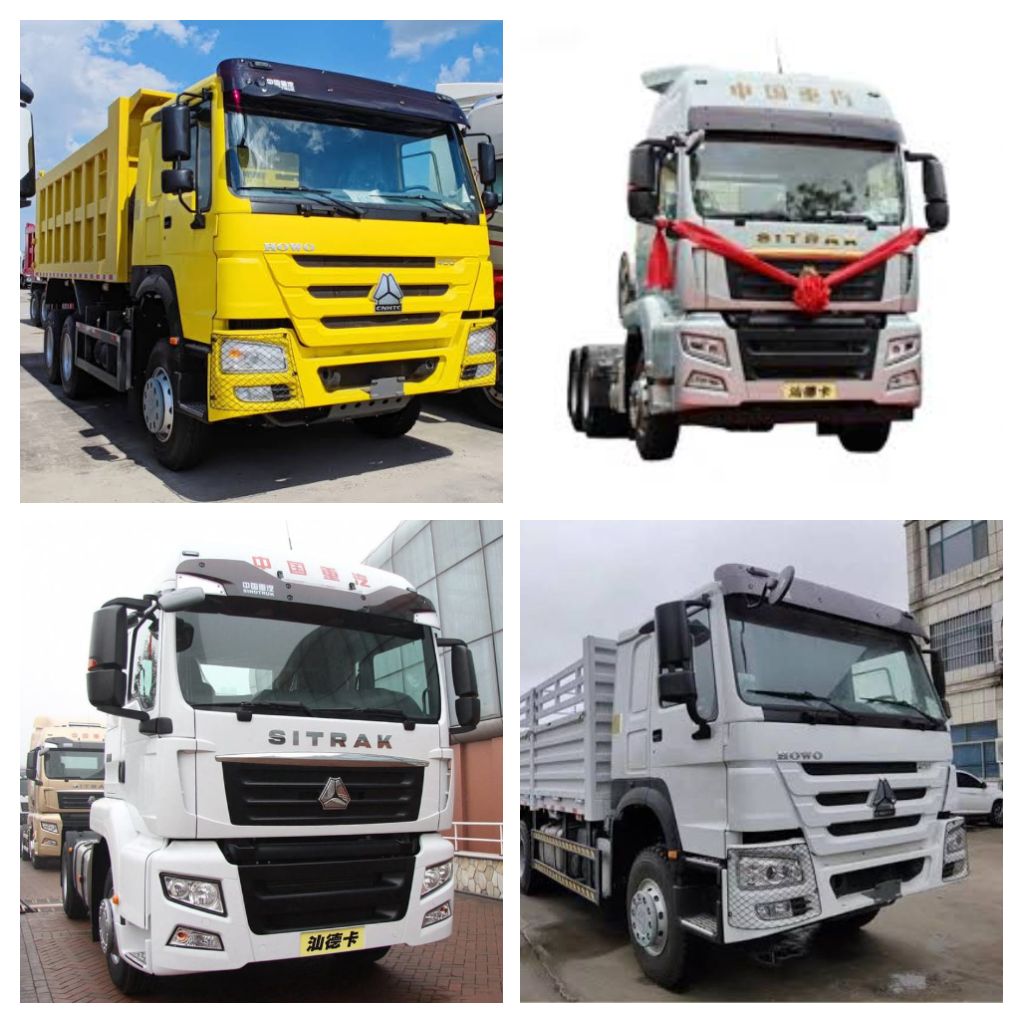
…an appraisal of quality, durability, affordability, and spare parts availability
Nigeria’s roads tell stories. From the potholed stretches of Lagos-Ibadan Expressway to the rugged mining routes in Jos and the long-haul haulage corridors from Apapa to Kano, the trucks that survive here earn their reputation the hard way. For over two decades, one name keeps showing up in those stories: SINOTRUCK, marketed locally as HOWO. While other brands have come and gone, SINOTRUCK has stayed at the top of Nigeria’s heavy-duty truck market. The reason isn’t hype. It’s a mix of four things every Nigerian transporter cares about: quality, durability, affordability, and the availability/affordability of spare parts.
Here’s a breakdown of why SINOTRUCK still leads, and why fleet owners, independent drivers, and logistics companies keep buying it.
1. Quality: Built for “Naija Conditions”
SINOTRUCK is a subsidiary of China National Heavy Duty Truck Group, one of the world’s largest truck manufacturers. The brand entered Nigeria aggressively in the early 2000s and adapted fast. Unlike trucks designed only for smooth European highways, SINOTRUCK models like HOWO A7, T7H, and the newer SITRAK were engineered with developing markets in mind.
Key quality factors Nigerian buyers notice:
1. Chassis and frame: SINOTRUCK uses high-tensile steel double-layer chassis on many models. In Nigeria, where overloaded trucks are the norm, that frame resists twisting and cracking better than lighter single-layer designs. Fleet owners in Onitsha and Aba say a SINOTRUCK chassis can take years of 40-60 tonne loads without major welding.
2. Engine tech: Most models run Weichai WP10/WP12 engines. These are turbocharged, direct-injection diesel engines known for high torque at low RPM. That matters on hills around Lokoja and on bad roads where you need pull, not just speed. The engines also handle Nigeria’s diesel quality better than some Euro 5/6 engines that clog injectors quickly.
3. Cabin comfort: The A7 and T7H cabins are air-conditioned, have sleeper berths, and improved ergonomics. For drivers doing 12-hour Lagos-Kano runs, comfort reduces fatigue and accidents. Better cabins also mean drivers prefer SINOTRUCK, so fleet owners have lower driver turnover.
Quality doesn’t mean “luxury”. In Nigeria, quality means “does the truck start every morning, carry load, and not break down on a bridge”. On that metric, SINOTRUCK scores high.
2. Durability: The 10-Year Truck
Ask any mechanic at Ladipo Market or Aspamda: “Which truck can you still see working after 8-10 years?” SINOTRUCK comes up first. Durability is why second-hand SINOTRUCKs still command strong resale value in Mile 12 and Kaduna.
Why it lasts:
1. Simple mechanicals: SINOTRUCK avoided over-complicating early models. Fewer sensors, fewer electronic modules compared to some European brands. That simplicity means fewer things to fail in dusty, hot, humid conditions. Mechanics can fix most issues with basic tools.
2. Over-engineering for overload: Nigerian truckers rarely stick to manufacturer load limits. SINOTRUCK axles, suspensions, and differentials are rated conservatively. A HOWO 6×4 tipper rated for 25 tonnes will often haul 35-40 tonnes of granite daily in Abuja construction sites and still last 5+ years.
3. Corrosion resistance: Newer models use better paint and anti-rust treatment on the chassis and cabin. That matters in coastal areas like Port Harcourt and Warri where rust kills trucks fast.
There’s a saying among drivers: “MAN and DAF are fine, but when SINOTRUCK breaks, you fix it and it runs. When others break, you wait for parts.” That perception of rugged durability keeps demand high.
Affordability advantages:
1. Lower upfront cost: Banks and leasing companies like IBTC, Rand Merchant Bank, and Jaiz Bank are more willing to finance SINOTRUCK because the loan ticket is smaller and resale risk is lower. That opens ownership to more SMEs.
2. Fuel efficiency: The Weichai engine + Fast gearbox combo is not the most advanced, but it’s efficient for its class. Drivers report 1.8-2.2 km/litre on highway loads. Over 200,000 km a year, that fuel saving vs heavier or less efficient trucks adds millions to the bottom line.
3. Insurance and registration: Lower vehicle value = lower comprehensive insurance and registration costs. For fleet operators with 20+ trucks, that difference is huge annually.
Affordability also shows up in “total cost of ownership”. A cheaper truck that breaks down every week is expensive. SINOTRUCK balances low purchase price with uptime, which is why transporters calculate ROI and still choose it.
4. Availability & Affordability of Spare Parts: The Real Game-Changer
This is where SINOTRUCK beat everyone in Nigeria. A truck is only as good as the parts you can find at 2am when it breaks down in Benin.
Spare parts ecosystem:
1. Ubiquity: Walk into Ladipo, Aspamda Lagos, Ariaria Aba, or Kachako Kano and you’ll find 10-20 shops selling SINOTRUCK parts. Brake chambers, clutch plates, turbos, filters, gearboxes — everything is stocked. No waiting 6 weeks for import like some European brands.
2. Multiple quality tiers: The market offers Genuine/OEM parts, “Taiwan” grade, and “China” grade. A transporter with budget can buy a brake chamber for ₦15,000 or ₦45,000 depending on quality. That flexibility keeps trucks moving even when cash is tight. European truck parts often have no “budget” option.
3. *Interchangeability*: Many SINOTRUCK components are shared across HOWO A7, T7H, and even some FAW or Shacman models. Gearboxes like Fast 12-speed and axles are widely cloned. That reduces monopoly pricing.
4. *Local expertise*: Because SINOTRUCKs are everywhere, every roadside mechanic knows how to fix them. No need to tow 300km to an authorized dealer. A mechanic in Sokoto or Owerri can overhaul a Weichai engine with locally available tools.
*Affordability of parts*: A SINOTRUCK clutch kit might cost ₦80,000-₦120,000. Equivalent for a Mercedes Actros can be ₦350,000+. A turbocharger for HOWO is ₦150,000-₦250,000 vs ₦600,000+ for some Euro brands. For truckers operating on thin margins, that difference decides profit vs loss.
Dealers like Dozzy Group, Fouani, and dozens of independent importers have also set up warehouses in Lagos, Kano, and Abuja, so parts move faster. Online WhatsApp groups and parts dealers now deliver to any state within 24 hours.
he Bottom Line for Nigerian Truck Buyers
Nigeria’s trucking market is brutally practical. Emotion doesn’t move cargo; reliability and profit do. SINOTRUCK wins because it aligns with that reality:
Factor SINOTRUCK Position Why it matters in Nigeria
Quality High-tensile chassis, proven Weichai engines Survives overload and bad roads
Durability Simple design, strong axles/suspension 8-10 year lifespan common
Affordability 30-40% cheaper upfront than Euro brands Lower loan burden, faster ROI
Parts availability Stocked in every major market Minimal downtime
Parts affordability Multiple price tiers Keeps maintenance cost low
For a small fleet owner in Onitsha hauling goods to Abuja, or a construction company in Abuja moving granite, those five factors add up to one thing: cash in hand. That’s why SINOTRUCK, especially HOWO and SITRAK models, remains the default choice for most Nigerian transporters in 2026.
If you’re buying your first truck or expanding a fleet, the lesson from the market is clear: buy what the road can fix. And on Nigerian roads, the road has already voted for SINOTRUCK.