
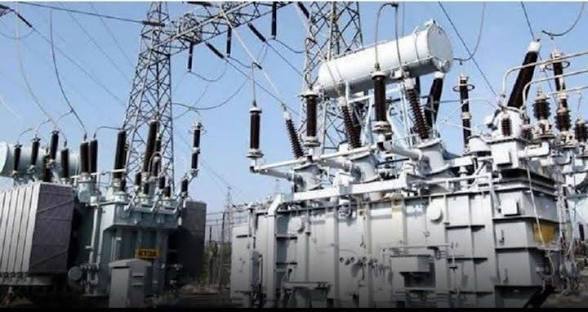
Despite receiving about $3.653bn in World Bank-backed funding over the past two decades, Nigeria continues to struggle with unstable electricity supply, frequent national grid failures, and heavy dependence on fuel-powered generators, a new analysis has revealed.
Findings based on World Bank-supported energy interventions between 2001 and 2024 show that successive funding programmes were directed at improving transmission infrastructure, driving sector reforms, expanding rural electrification, boosting renewable energy access, and stabilising the country’s power industry.
The projects reviewed include the $100m Transmission Development Project launched in 2001, the $172m National Energy Development Project in 2005, and the $400m Nigeria Electricity and Gas Improvement Project initiated in 2009.
Others are the $145m Nigeria Power Sector Guarantees Project (2014), $486m Nigeria Electricity Transmission Project (2018), and the $350m Nigeria Electrification Project also approved in 2018. More recent interventions include the $750m Power Sector Recovery Programme (2020), the $750m Distributed Access through Renewable Energy Scale-up initiative (2023), and the $500m Sustainable Power and Irrigation for Nigeria project (2024).
Altogether, these interventions amount to roughly $3.653bn, excluding several regional and hydro-related projects whose financial details were not fully disclosed.
However, despite these investments, Nigeria’s electricity supply has remained unreliable, with recurring grid collapses and generation levels still falling short of national demand. Many homes and businesses continue to rely on petrol and diesel generators to meet basic energy needs.
Experts attribute the persistent crisis to weak transmission infrastructure, liquidity challenges in the power market, gas supply limitations, vandalism of equipment, policy inconsistency, and underinvestment across the value chain.
Over time, the World Bank’s approach has shifted from traditional grid expansion projects toward renewable energy and decentralised electricity solutions aimed at improving access in underserved communities.
Recent schemes such as the renewable energy scale-up programme and the sustainable power and irrigation initiative are designed to expand solar-based electricity access, particularly in rural areas.
The World Bank maintains that its interventions are intended to strengthen infrastructure, improve electricity access, and support reforms capable of attracting private sector investment.
Yet concerns remain over slow implementation and limited impact on end users. High energy costs continue to burden businesses, with many manufacturers spending heavily on self-generation due to poor grid reliability.
The ongoing power challenges have also affected productivity, healthcare delivery, small businesses, and general living conditions across the country.
Stakeholders argue that Nigeria’s continued reliance on donor-supported programmes reflects deep structural weaknesses in the sector, even years after the privatisation of power generation and distribution companies.
Meanwhile, earlier reports indicate that the Federal Government recently cancelled about $717.7m in undisbursed World Bank financing tied to a major electricity recovery programme, effectively ending part of a $1.52bn intervention ahead of schedule.
The cancellation followed a joint decision by both parties, citing sector realities and difficulty meeting key reform targets. The programme’s lifespan was also shortened from June 2027 to May 2026.
Energy expert, Prof. Dayo Ayoade of the University of Lagos, blamed poor governance and corruption for the sector’s continued failure, warning that Nigeria’s economy will keep suffering without decisive reforms.
He argued that inefficiencies and leakages in the system have made self-generation unsustainable for most citizens and small businesses, adding that government must take stronger control of the sector.
According to him, tariffs must reflect the real cost of electricity supply, while calling for institutional streamlining and stricter accountability to address systemic corruption and governance gaps.
Ayoade further stressed that without comprehensive reforms, the power sector will continue to drain the economy and limit national development.