
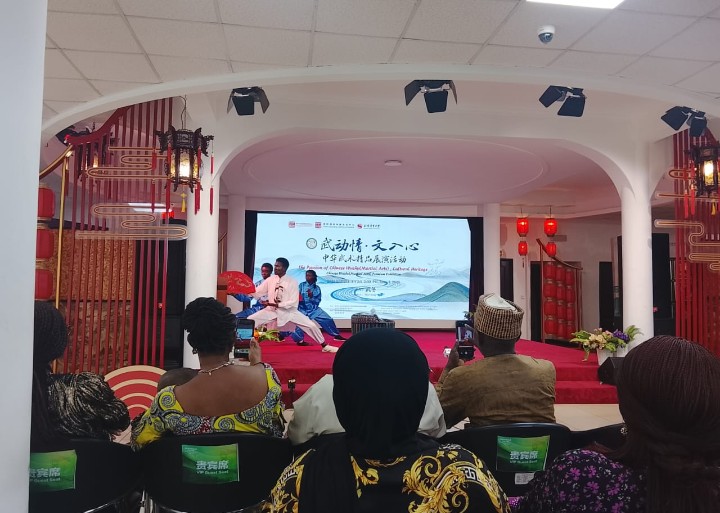
The Chinese Cultural Center in Abuja turned its hall into a stage for values rather than violence on Tuesday as martial artists demonstrated Wushu before diplomats, students, and youth leaders. Organizers framed the exhibition not around fighting, but around the inner qualities the art is meant to build: discipline, respect, and moral character.
Speaking at the event, Counselor and Director of the China Cultural Center in Nigeria, Yang Jianxing, shifted attention away from combat. “A set of martial arts is not about advocating fighting, but rather about stopping the move of fighting,” he said. “Chinese martial arts reflect the philosophical wisdom of harmony between man and nature, and harmony in diversity.”
According to Yang, each movement in Wushu is designed to train self-control and balance. The aim, he explained, is for practitioners to develop patience, humility, and a sense of responsibility toward others. He said the exhibition was meant to show Nigerian youth that martial arts can be a tool for personal growth, not aggression.
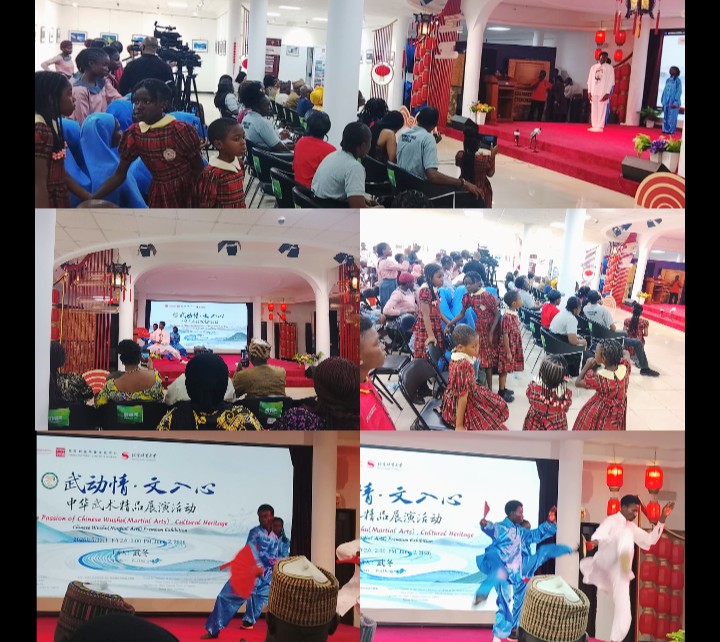
The Wushu showcase opened a month-long calendar of cultural activities at the center. Coming up are the “Chinese Language Bridge” competition, youth art exhibitions, and exchange programs that will connect young Nigerians and Chinese through learning and creativity. Yang said all the programs share the same goal: to bring the younger generations of both countries closer through shared values rather than differences.
Also addressing the gathering, Abiodun Ogidan, Director of Programmes at the Federal Radio Corporation of Nigeria, praised the Embassy for using culture to deepen understanding. He pointed to the ongoing partnership between FRCN and the Chinese Embassy through the weekly Mandarin and culture program, _Nao Ni Hao_. The show airs across FRCN’s network of more than 47 stations and zonal channels nationwide, teaching language while exploring Chinese tourism, innovations, and traditions.
“This partnership has provided an invaluable platform for showcasing China’s culture and achievements to Nigerians, while fostering a greater understanding and appreciation of the enduring friendship between the two countries,” Ogidan said. He reaffirmed FRCN’s commitment to sustaining the broadcast as part of efforts to promote people-to-people ties.
The exhibition closed with stakeholders from both countries calling for more use of culture, sports, and media to build character and strengthen the relationship between Nigeria and China. For the young audience, the message was clear: true strength lies in discipline, and real victory is learning to live in harmony.