
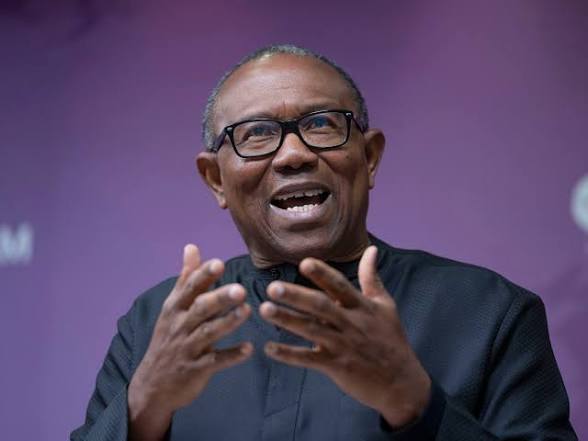
Peter Obi has cautioned Nigerian youths against embracing ethnic and religious sentiments, urging them to avoid narratives capable of weakening national cohesion, even as he publicly defended the General Overseer of the Redeemed Christian Church of God, Enoch Adeboye, amid recent online criticism.
In a statement shared via his X handle on Thursday, Obi expressed concern over growing social media hostility directed at the cleric, which stemmed from claims that Adeboye had failed to speak out on the country’s worsening insecurity. The former presidential candidate warned that such conversations were being shaped in ways that could deepen divisions among citizens.
The controversy followed a viral image circulating online, allegedly showing Adeboye participating in a protest during the administration of former President Goodluck Jonathan. However, the Redeemed Christian Church of God has since dismissed the claim, explaining that the photograph was taken during a peaceful walk held under the administration of late former President Muhammadu Buhari, and was not linked to any political demonstration.
Obi noted that Nigeria’s 2023 general elections, particularly in Lagos State, demonstrated how public discussions can easily shift from governance issues to identity-based sentiments, adding that politicians often exploit such fault lines when they struggle to compete on performance or ideas.
He argued that when leaders lack strong records or convincing visions, they tend to rely on ethnicity, religion, and identity politics to influence public perception, stressing that such strategies are often aimed at dividing the populace.
According to him, “whenever politicians find it difficult to compete on ideas, performance, character, or vision, some resort to exploiting the fault lines of ethnicity, religion, and identity,” adding that division remains a common political tool used to manipulate public opinion.
Obi further observed that many citizens unknowingly participate in spreading such narratives, believing they are defending a cause, while potentially advancing hidden agendas.
Defending Adeboye, the former Anambra State governor described him as a respected faith leader who has consistently promoted peace, unity, and reconciliation over the years. He added that it would be unfair to expect elderly religious leaders to shoulder responsibilities that belong to younger Nigerians.
He emphasised that national development should be driven primarily by the youth, noting that they must take responsibility for shaping conversations, leading reforms, and pushing for meaningful change in the country.
Obi also advised Nigerians to critically evaluate information before sharing it, urging them to resist manipulation and prioritise unity over division, warning that a divided society cannot achieve lasting progress.