
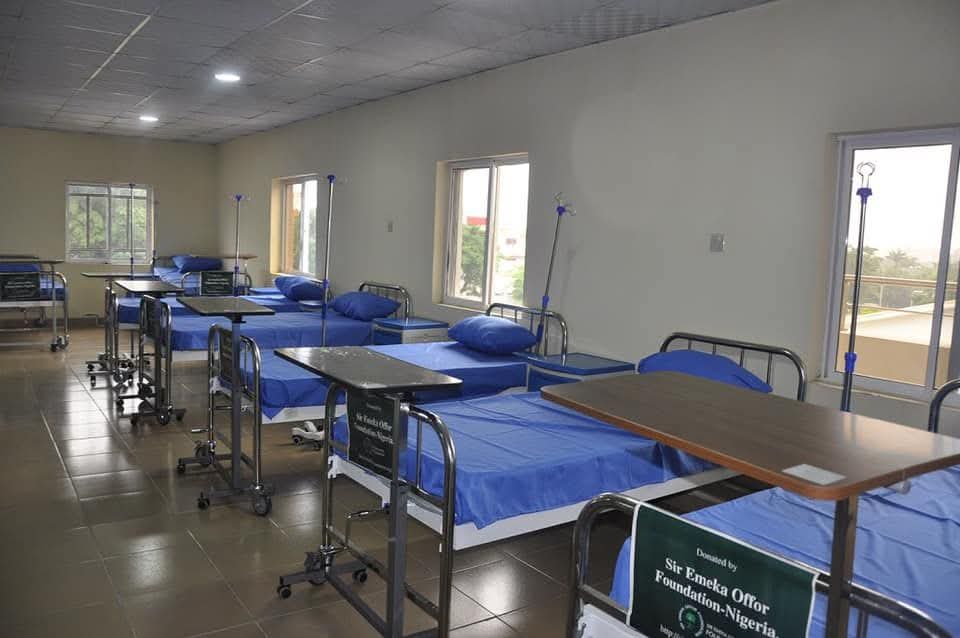
The Bauchi State government has initiated a N20 billion upgrade project for the Bauchi Specialist Hospital to enhance the quality of healthcare service delivery.
Governor Bala Mohammed said this during the project’s groundbreaking ceremony.
He said the project was part of a strategic infrastructure intervention in the health sector aimed at improving access to quality healthcare delivery for the people of the state.
Mr Mohammed said the N19.9 billion project would involve extensive renovation, expansion, and construction of new facilities in the hospital complex.
“The project is a comprehensive effort to modernise healthcare infrastructure across the state. It will ensure that our people, especially those in hard-to-reach areas, have access to affordable, quality medical services,” he said.
The project, which has reached an advanced stage, would feature new consulting clinics, admission wards, laboratories, seminar rooms, and operating theatres.
Others include the construction of 130 housing units for clinical and non-clinical staff, solar lighting systems, internet and communication facilities, modern furniture and equipment.
Dr Rilwanu Mohammed, executive secretary of the Bauchi State Primary Healthcare Development Agency, said the government had approved the solarisation of 20 general hospitals across the state.
He said the project was designed to address power supply challenges and improve healthcare service delivery.
The initiative, he said, aimed at ensuring an uninterrupted electricity supply to health institutions to enhance the efficiency of healthcare operations.
“We want to avoid the problem of power supply. The governor directed that all primary healthcare facilities should be provided with permanent and regular power supply,” he said.
Also, Dr Sani Dambam, the state Commissioner for Health, said the government had awarded a contract to construct the Accident and Emergency complex at the General Hospital, Alkaleri.
He reiterated the government’s commitment to improving healthcare infrastructure and enhancing access to quality healthcare services in the state.
Some patients at the Ningi General Hospital commended the state government for upgrading the facility.
They, however, advocated deployment of watch guards to enhance security at the facility.
Fatima Inuwa, a patient’s relative, said the existing security personnel were inadequate to manage the large number of visitors and patients accessing the facility daily.
“Health workers are often left with the responsibility of restricting unauthorised movement within the hospital during and after working hours.
“Sometimes, moving to the laboratory at night for tests becomes difficult due to inadequate security presence,” she said.
Another patient, Babayo Garba, whose six-year-old child is receiving treatment at a temporary facility at the Bauchi Specialist Hospital, stressed the need for additional staff to ensure proper hygiene management.
He noted that the hospital’s growing patient population should be taken into account when determining the number of personnel needed to maintain cleanliness and order.
On her part, Labara Shehu said the facility was overstretched due to the high number of patients, adding that excessive noise within the hospital environment often causes discomfort to admitted patients.
In Gombe State, the government renovated and equipped five general hospitals as part of its annual healthcare infrastructure improvement programme.
Mohammed Abdulkadir, Executive Secretary of the Gombe State Hospital Services Management Board, said the initiative has transformed healthcare delivery through improved infrastructure, modern medical equipment, and better working conditions for health personnel.
He listed the projects to include the reconstruction of the General Hospital Kumo, which was upgraded to the Federal Medical Centre, Kumo.
Mr Abdulkadir said that new Accident and Emergency units, administrative blocks, and road networks were constructed at Kaltungo, Gombe, Bajoga and Dukku General Hospitals.
He said the facilities had been equipped with laboratory and radiology equipment, ward furniture, and other essential facilities, leading to improved patient care and service delivery.
The secretary said that arrangements had been made to rehabilitate Deba and Billiri General Hospitals as part of the next phase of the programme.
“The policy of renovating at least one general hospital in a local government area every financial year has enabled the government to gradually modernise healthcare facilities across the state,” he said.