The United States Federal Reserve has maintained its benchmark interest rate at 3.50–3.75 per cent for a fourth consecutive meeting, while also revising its inflation outlook upward and indicating a possible rate hike by the end of 2026.
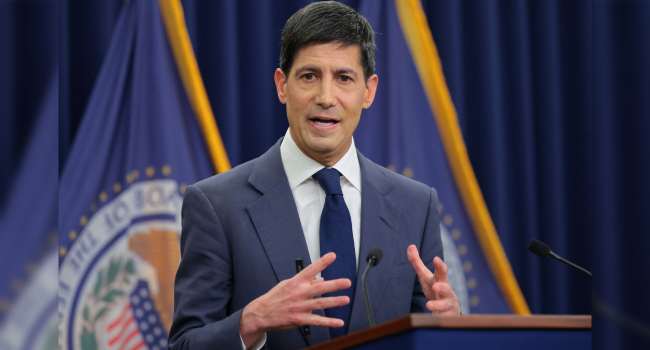
The decision, announced on Wednesday during Chair Kevin Warsh’s first policy meeting since assuming leadership of the central bank, was reached unanimously—marking the first such consensus vote in a year.
The Fed noted that economic activity in the US continues to expand at a “solid pace,” though it warned that uncertainty remains elevated, partly due to ongoing geopolitical tensions, including the conflict in the Middle East.
It also acknowledged that inflation is still above its two per cent target, driven in part by supply disruptions that have pushed up costs in key sectors such as energy.
In its latest Summary of Economic Projections, the central bank raised its year-end Personal Consumption Expenditures (PCE) inflation forecast to 3.6 per cent, up from 2.7 per cent in March. The adjustment reflects sustained price pressures in the US economy, where inflation has recently climbed to multi-year highs.
Before recent geopolitical developments, markets had expected at least one rate cut before the end of the year. However, sentiment has shifted, with expectations now leaning toward a possible rate increase at the Fed’s December meeting.
The projections, compiled from 18 of 19 policymakers, also suggest tighter monetary conditions ahead, with signals pointing to a potential hike by the end of 2026. One official did not submit a forecast.
The Fed’s statement was notably more restrained than usual, dropping previous forward guidance on future interest rate direction. Analysts say the change reflects a more cautious and data-dependent approach under the new leadership.
Inflation in the US stood at 3.8 per cent in April based on the Fed’s preferred Personal Consumption Expenditures index, while a relatively strong labour market continues to add pressure on policymakers to keep inflation under control.
The development comes as American households continue to feel the impact of prolonged price increases, particularly in energy markets influenced by global tensions.
The central bank says it remains focused on balancing price stability with sustained economic growth as it navigates an uncertain global environment.
US Fed Holds Interest Rate Steady, Signals Tougher Inflation Outlook