
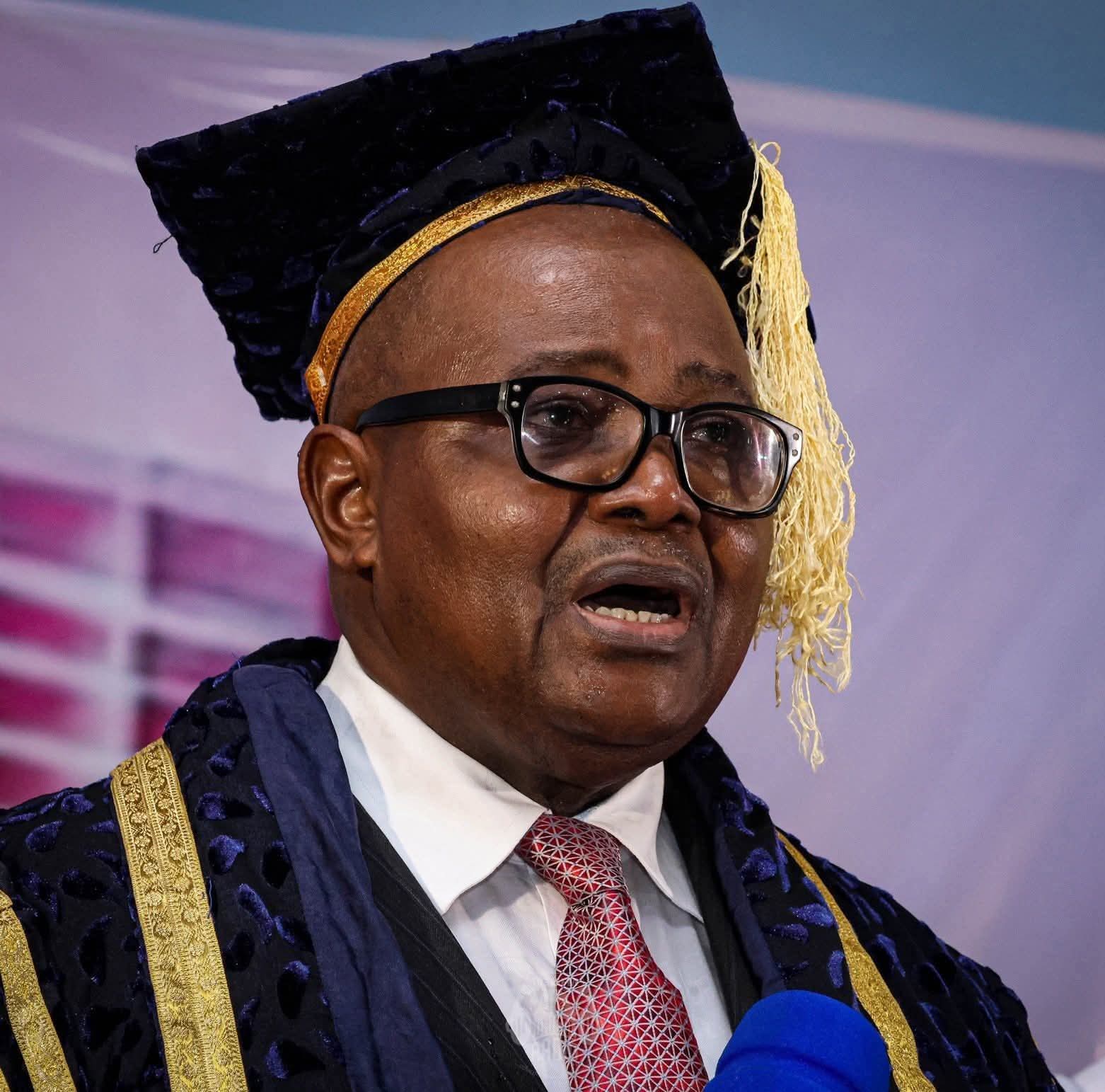
The Vice Chancellor of the University of Calabar (UNICAL), Prof. Offiong Efanga Offiong, has described insecurity as Nigeria’s most pressing challenge, saying the country must adopt drastic and sustained measures to overcome the growing threat and achieve meaningful national development.
Prof. Offiong made the remarks while declaring open the 2nd International Hybrid Conference 2026 organised by the Faculty of Social Sciences at the ASUU Secretariat, University of Calabar. The conference, themed *“Insecurity and National Development: Is the Nigerian State at Crossroad?”*, brought together scholars, security experts, policymakers, and other stakeholders to deliberate on solutions to Nigeria’s security challenges.
Represented by the Deputy Vice Chancellor, Research, Linkages and Collaborations, Prof. Anthony Eneji, the Vice Chancellor stressed that insecurity cannot be addressed with half measures. He said government, institutions, and citizens must work together to confront both the immediate threats and the underlying factors driving criminality.
According to him, meaningful development cannot take place where lives and property remain unsafe, adding that universities have a critical role in advancing research, influencing policy, and producing experts capable of developing practical security solutions.
Prof. Offiong noted that the conference theme was timely, considering ongoing national conversations on governance, public safety, and nation-building. He urged participants to move beyond identifying problems and develop practical recommendations capable of shaping security policies at both state and national levels.
The Vice Chancellor said the university’s Department of Criminology and Security Studies is supporting government efforts by serving as a centre for research, training, and policy development on contemporary security issues. He explained that the department is producing graduates with expertise in crime prevention, intelligence analysis, and conflict management, while its research continues to contribute to discussions on policing reforms, community security, and counter-terrorism.
He further expressed the university’s readiness to collaborate with security agencies through data-driven research, specialised training programmes, and expert advisory services to improve operational planning and policy formulation. He noted that stronger partnerships between academia and security institutions would help translate research findings into practical strategies for intelligence gathering, threat assessment, and community engagement.
While commending the Federal and Cross River State governments for efforts to combat insecurity through military operations, intelligence gathering, and community policing initiatives, Prof. Offiong maintained that more work remains to be done. He argued that military action alone cannot resolve security challenges rooted in poverty, unemployment, weak institutions, and porous borders, calling instead for an integrated approach that combines security operations with economic opportunities, quality education, and stronger governance.
Earlier, the Dean of the Faculty of Social Sciences, Prof. Enang Udah, said the conference reflects growing public concern over insecurity both within Nigeria and among citizens in the diaspora. He lamented the increasing cases of abductions and killings across the country, warning that the situation continues to undermine public safety, national development, and regional integration.
Prof. Udah said the conference aims to provide objective and intellectual perspectives on insecurity while creating opportunities for learning, collaboration, and the exchange of ideas among scholars, practitioners, and policymakers.
Chairman of the conference and Commissioner of Police, Cross River State Command, CP Rashid Afegbua, advocated proactive and technology-driven policing to improve security. He recommended the establishment of a dedicated state cybercrime and digital evidence unit, alongside continuous training of security personnel in digital investigations and stronger collaboration among security agencies to enhance intelligence sharing.
Afegbua described security as a collective responsibility that extends beyond law enforcement agencies, while also hailing the recent passage of the State Police Bill by the Senate as a significant step towards strengthening Nigeria’s security architecture and advancing true federalism.
Chairman of the Conference Organising Committee, Prof. Agba Ogaboh, said the gathering was designed to promote evidence-based solutions to insecurity through dialogue and shared knowledge. He noted that insurgency, banditry, and communal conflicts continue to threaten national development, economic growth, and social stability.
Delivering the keynote address, Air Vice Marshal Adebayo Gabriel Kehinde identified poor governance, poverty, unemployment, illiteracy, and competition for natural resources as major drivers of insecurity in Nigeria. He urged the country to strengthen intelligence gathering and embrace modern technologies, including surveillance systems and data analytics, to improve early warning mechanisms and operational effectiveness.
Lead discussant and Abuja-based security consultant, Mr. Rekpene Bassey, also called for a review of Nigeria’s counter-terrorism strategies, insisting that current approaches have not yielded the desired results. He advocated intelligence-driven and proactive measures tailored to emerging security threats.