
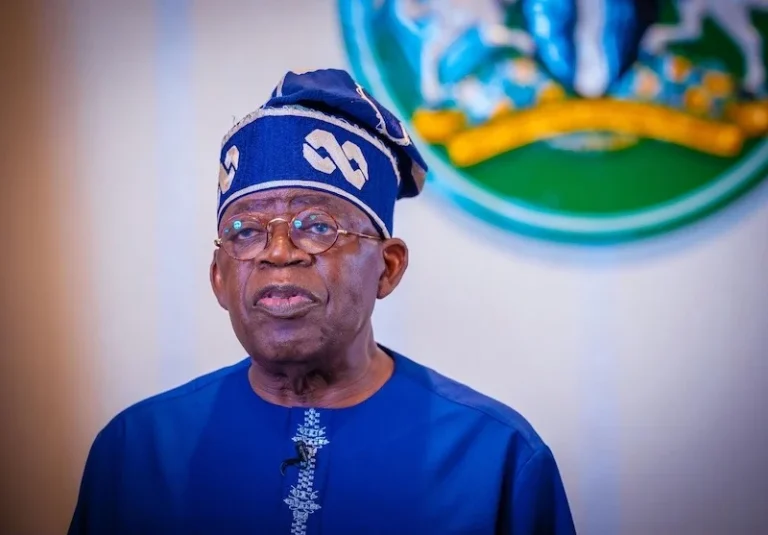
President Bola Tinubu has declined to sign two bills passed by the National Assembly, citing constitutional and drafting issues that must be corrected before they can become law.
The Senate was informed of the President’s decision on Thursday through separate letters read during plenary by Senate President Godswill Akpabio.
The affected bills are the Raw Materials Research and Development Council (Amendment) Bill, 2026 and the Chartered Institute of Purchasing and Supply Management of Nigeria Bill.
Tinubu explained that he withheld assent under Section 58(4) of the 1999 Constitution (as amended), which empowers the President to return bills to the National Assembly with observations for reconsideration.
Regarding the Raw Materials Research and Development Council Amendment Bill, the President said it contains structural and drafting defects that require correction. He noted that the bill’s title does not properly reflect its main objective of promoting the development, protection and processing of Nigeria’s raw materials. According to him, the title should also highlight support for local manufacturing and processing industries.
He also pointed out that Section 2 wrongly presents the council’s functions as legislative objectives rather than operational responsibilities. Tinubu further observed that provisions relating to value addition were inserted in the wrong sections of the bill, making the amendment confusing and inconsistent with the principal law.
He said the misplaced provisions make the bill disjointed and difficult to understand.
Tinubu also refused assent to the Chartered Institute of Purchasing and Supply Management of Nigeria Bill, stating that some of its provisions seek to grant the institute powers beyond its legal authority.
Although he acknowledged that many of the proposed amendments are commendable, he maintained that certain sections require further legislative review.
The President specifically faulted a provision requiring incorporated companies and organisations to notify the institute within one month of appointing a procurement and supply chain head. He argued that the institute is not the statutory regulator of those organisations and therefore cannot compel them to provide such information.
He also rejected provisions empowering the institute to inspect organisations, sanction employers and enforce compliance on entities registered under the Companies and Allied Matters Act, saying those responsibilities fall outside the institute’s legal mandate.
Despite his objections, Tinubu said the bill could still receive presidential assent once the identified issues are corrected.
Following the reading of the letters, Senate President Godswill Akpabio referred both bills to the Senate Committee on Rules and Business for further legislative action, directing the committee to report back within four weeks.
Under the Constitution, the National Assembly may amend the bills in line with the President’s observations or, where necessary, override the veto through the constitutional process.