
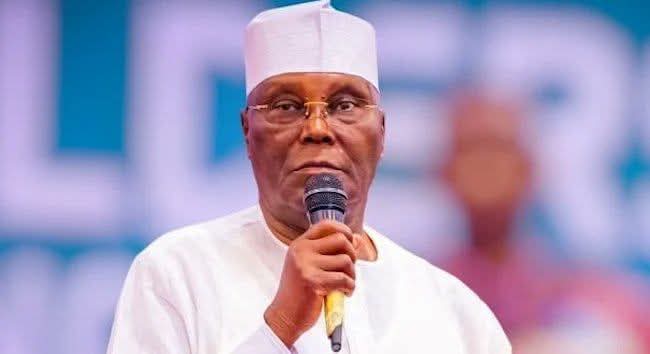
Former Vice President and African Democratic Congress (ADC) presidential candidate, Atiku Abubakar, has criticised the Federal Government’s reported plan to introduce a uniform N50,000 examination fee for candidates sitting the West African Senior School Certificate Examination (WASSCE) and National Examinations Council (NECO) examinations from 2027.
Atiku also condemned the recent increase in fees at Federal Unity Colleges, describing the decisions as unfair and a threat to efforts aimed at making education accessible to all Nigerian children.
In a statement released on Sunday by his Senior Special Assistant on Public Communication, Phrank Shaibu, the former vice president described the developments as “cruel, economically insensitive and fundamentally incompatible” with the government’s responsibility to provide affordable education.
He argued that the fee hikes were coming at a difficult time when many Nigerians were struggling with rising inflation, increasing food prices, transportation costs, electricity tariffs, unemployment and reduced purchasing power.
“At a time when Nigerian families are facing severe economic pressures, the decision to make education more expensive is deeply troubling,” Atiku said.
He maintained that education remains a key pathway out of poverty and a tool for improving social mobility, warning that additional financial burdens could force many children to abandon their academic aspirations.
According to him, education should not be treated as a privilege reserved for wealthy families but as a fundamental right of every Nigerian child.
Atiku expressed concern that the new policies could worsen Nigeria’s out-of-school children crisis, noting that millions of children and young people are already outside the formal education system.
He said the government should be focusing on expanding access to schools rather than introducing measures that could prevent more children from enrolling or completing their education.
The former vice president further warned that increased school and examination fees would have the greatest impact on poor and middle-income families who are already struggling to meet basic needs.
He said children who are denied education due to financial difficulties could become vulnerable to unemployment, child labour, criminal activities, drug abuse and insecurity.
Atiku also raised concerns over the impact of the proposed examination fee on students seeking admission into higher institutions, saying many qualified candidates could lose the opportunity to pursue university education because they may be unable to afford required examinations.
He criticised the current capacity of Nigerian tertiary institutions, stating that universities admit only a fraction of the millions of candidates seeking admission annually.
Rather than increasing infrastructure such as lecture halls, laboratories and hostels to accommodate more students, he accused the government of creating additional barriers through higher costs.
The ADC presidential candidate also questioned the effectiveness of the Nigerian Education Loan Fund (NELFUND) initiative, arguing that student loans would not address the challenges faced by young people who cannot afford secondary school completion or examination fees.
He called for a broader education reform strategy focused on affordable schooling, improved infrastructure, recruitment of qualified teachers and increased admission capacity in public universities.
Atiku urged President Bola Tinubu’s administration to reconsider the proposed WAEC and NECO fee increase, reverse the rise in Unity School charges and engage education stakeholders to develop sustainable funding solutions.
He added that an ADC-led government would prioritise policies aimed at making quality education accessible to Nigerians regardless of their economic background.