
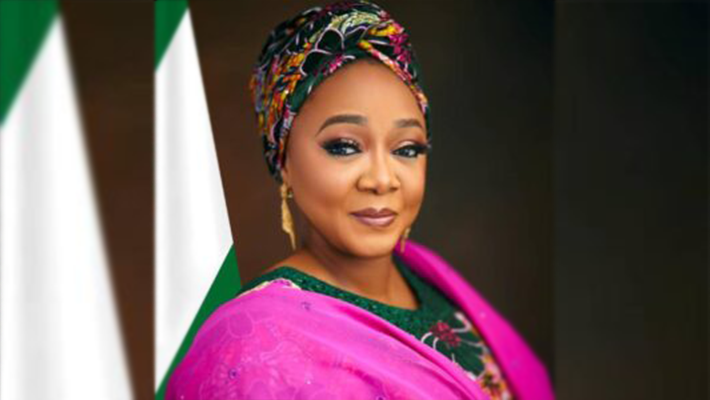
The Minister of Women Affairs and Social Development, Imaan Sulaiman-Ibrahim, has said greater investment in Nigeria’s care economy will generate decent employment opportunities for women and help reduce the burden of unpaid care work.
Sulaiman-Ibrahim made this known on Wednesday at the 2026 National Council on Women Affairs and Social Development held in Jalingo, Taraba State.
The conference was themed, “Strengthening Families and Advancing the Care Economy for Inclusive Development: Operationalising Nigeria’s Renewed Social Protection Architecture.”
The minister called for deliberate efforts to develop the care economy through the establishment and regulation of childcare services, investment in early childhood development, and expansion of services for older persons and people living with disabilities.
She noted that women have for years carried out a large share of unpaid care work, often without adequate recognition, financial support or measurement.
According to her, the heavy burden of unpaid domestic and caregiving responsibilities has kept many qualified women out of the formal workforce.
She stressed that care services should no longer be viewed solely as private household responsibilities, describing them as essential infrastructure that deserves proper financing, regulation and investment.
Sulaiman-Ibrahim said expanding childcare, elderly care, disability services, community health, early childhood development and other social care facilities would create jobs while allowing more women to participate actively in the workforce.
She cited the establishment of a crèche in a market as an example, saying such a facility could improve productivity by enabling traders and workers with young children to remain economically active.
The minister also disclosed that her ministry had developed, reviewed and validated 42 policy instruments designed to provide a coordinated framework for the sector.
She said the instruments include national policies, guidelines, action plans, implementation frameworks, as well as monitoring, evaluation, accountability and learning frameworks.
According to her, 38 new instruments were developed, reviewed and validated within the past year, bringing the ministry’s total portfolio to 42.
She explained that the policies cover areas such as childcare centres, adoption, orphanages, residential care, boy-child development, shelters for survivors of sexual and gender-based violence, workplace gender equality, menstrual health and hygiene, women’s economic empowerment and social protection.
Other areas include rehabilitation services, humanitarian assistance, emergency response, disability services, family support, community inclusion and the regulation of partnerships.
Sulaiman-Ibrahim urged women leaders across the country to ensure that national women-focused policies are domesticated in their respective states to promote effective implementation, funding and adoption.
She also praised Taraba State Governor Agbu Kefas for providing a conducive environment and adequate arrangements for the national gathering.
Earlier, the governor, represented by the state Head of Service, Ahmed Kara, called on women to support the people-oriented policies of President Bola Tinubu’s administration in the interest of national development.
(NAN)