
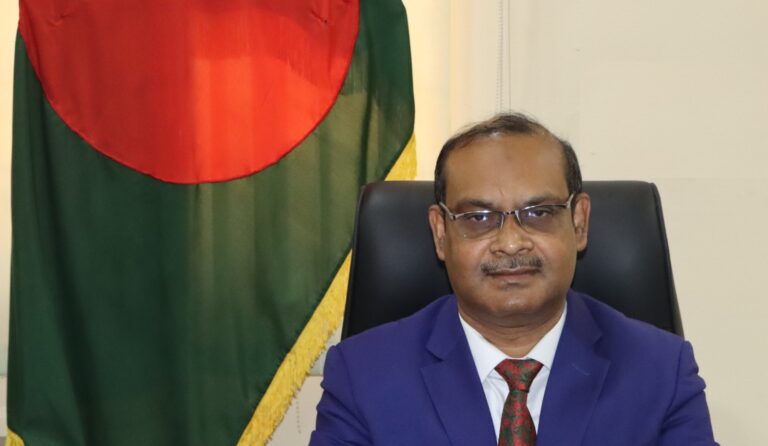
Bangladesh’s recent democratic reforms, including changes to government job quotas, greater youth involvement in politics and institutional restructuring, have emerged from the July 2024 uprising, the country’s High Commissioner to Nigeria, Miah Kabir, has said.
Kabir made the disclosure during an interview in Abuja on Wednesday, explaining that the movement initially began as a student-led protest against Bangladesh’s government employment quota system.
According to him, the system had previously allocated 56 per cent of government positions to different categories, leaving the rest to applicants competing on merit.
He said young people regarded the arrangement as unfair and mobilised against it, but the protests soon attracted wider support from parents, teachers, women and other members of society.
The envoy noted that the broad participation showed that the concerns over employment opportunities had grown beyond the student community and become a national demand for reform.
Kabir said the changes introduced after the uprising had extended beyond the job quota system to several areas of national life, including politics, the economy and public institutions.
He added that youth involvement in governance had become more prominent, with young people taking part in political activities and contributing to discussions on national reforms.
According to him, ongoing reforms cover areas such as elections, education, the judiciary, the civil service and foreign affairs.
The envoy also linked the movement to Bangladesh’s longstanding pursuit of democratic governance, noting that the country’s struggle for democracy dates back to the period before its independence in 1971.
He stressed that the events demonstrated the power of citizens coming together to pursue a common objective, describing unity as an important driver of political and social transformation.
On youth representation, Kabir said six young people now represent each constituency within Bangladesh’s parliamentary structure. He described the development as significant because young people were increasingly being recognised as active participants in governance rather than merely protesters or beneficiaries of government policies.
He further disclosed that young representatives were involved in drafting the July Declaration, which was developed through consultations between political parties and the interim administration.
Kabir said the current government accepted the declaration, adding that the reform process had also influenced the Bangladesh Election Commission.
He said the changes contributed to what he described as a successful general election, following years of electoral difficulties dating back to 2008.
The envoy added that Nigerian election commissioners observed the election and witnessed the electoral process, which he described as organised and inclusive.
Kabir said the developments were evidence of the impact of the July 2024 movement and demonstrated the continued commitment of both the Bangladeshi people and government to democratic governance.
“These are concrete examples of the success of this movement. It also shows that the people really believe in democracy, and the government also believes in that,” he said.
(NAN)