
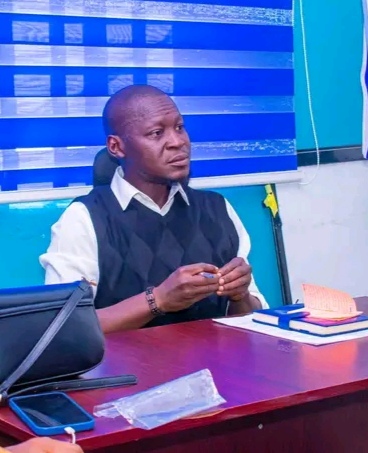
By Cliff Stanley
The return of former Adamawa State Governor, Senator Mohammed Umaru Jibrilla Bindow, to the All Progressives Congress (APC) is more than a routine party defection. In the increasingly fluid politics of Adamawa State, it represents another significant realignment ahead of the 2027 general elections and raises fundamental questions about the future of opposition politics, the viability of the African Democratic Congress (ADC), and the strategic choices confronting political actors across the state.
Bindow formally re-registered with the APC in his ward in Mubi on August 23, 2026, after previously leaving the party for the ADC. Reports indicate that he consulted political associates and Vice President Kashim Shettima before making the decision. He also disclosed that he had met President Bola Ahmed Tinubu and described the encounter positively. At his return, Bindow endorsed the APC’s candidates for the 2027 elections, including President Tinubu and the party’s Adamawa governorship candidate, Ahmad Tijjani Galadima.
His explanation is instructive. Bindow said he was returning “not to divide, but to contribute; not to fight, but to build.” That statement should be understood not merely as political rhetoric, but as an attempt to frame his return as an act of reconciliation and strategic consolidation rather than personal political retreat.
But beneath the language of reconciliation lies a much bigger political question: what does Bindow’s return actually mean for the balance of power in Adamawa?
Bindow is not an ordinary defector.
He governed Adamawa State from 2015 to 2019 and previously represented Adamawa North in the Senate. His political network, particularly in the northern senatorial zone and the Mubi axis, remains relevant to any serious calculation about electoral mobilisation in the state.
The historical record demonstrates why his movement matters.
In the 2019 governorship election, Bindow, then the incumbent APC governor, secured 336,386 votes, while Ahmadu Umaru Fintiri of the PDP won with 376,552 votes, a margin of 40,166 votes. Interestingly, the ADC candidate, Senator Abdul-Azeez Nyako, obtained 113,237 votes and finished third.
That result offers an important lesson: Adamawa has repeatedly demonstrated that third-party and opposition forces can possess meaningful electoral weight, even when they do not win the governorship.
The question in 2026 is whether ADC can reproduce such relevance without Bindow.
Bindow’s departure presents the ADC with a serious organisational and psychological challenge.
Political parties are not sustained by logos, manifestoes and registration certificates alone. They require political capital, identifiable leaders, grassroots structures, financial capacity, credible candidates and an electoral coalition capable of converting public dissatisfaction into votes.
Bindow’s exit therefore creates a vacuum.
However, it would be premature to conclude that ADC is finished in Adamawa.
Indeed, the history of Nigerian politics shows that political parties sometimes become stronger after losing established political figures when they successfully transform themselves from personality-driven platforms into institutional movements.
That is precisely the test facing ADC.
The party must now answer a difficult question:
Can it build a political identity that is larger than Bindow?
If the answer is yes, his departure could eventually become an organisational turning point rather than an existential crisis.
If the answer is no, ADC risks becoming another platform whose political fortunes rise and fall with individual politicians.
Adamawa’s electoral history should caution against simplistic conclusions.
In 2019, the ADC’s 113,237 governorship votes demonstrated that there was space for an alternative political platform beyond APC and PDP.
Four years later, however, the dominant contest was essentially between PDP and APC. In the 2023 governorship election, Fintiri won with 430,861 votes, while APC’s Aisha Dahiru Ahmed Binani secured approximately 398,738 votes. The margin was just over 32,000 votes.
That narrow margin is politically significant.
It tells us that Adamawa is not an electoral monolith.
The state is competitive.
The difference between victory and defeat can be determined by relatively small shifts in voting blocs, candidate popularity, regional mobilisation, party organisation and coalition-building.
Consequently, the return of a former governor with an established political network to APC cannot reasonably be dismissed as insignificant.
For the APC, Bindow’s return is potentially valuable in three ways.
First is symbolism.
A former governor returning to the party communicates an image of reconciliation and organisational recovery. In electoral politics, perceptions of momentum can influence undecided voters, party financiers, local political actors and grassroots structures.
Second is network mobilisation.
Bindow’s political associates and supporters across the state may become available to the APC’s 2027 campaign architecture.
Third is regional arithmetic.
Adamawa politics requires a coalition that cuts across the state’s complex geographical, religious, ethnic and senatorial interests. Bindow’s political history gives APC another experienced actor capable of participating in that coalition-building process.
However, APC should not confuse the return of an influential politician with guaranteed electoral victory.
Political capital is not automatically transferable.
A former governor may possess influence, but influence must still be converted into votes. And votes are increasingly determined by performance perceptions, candidate credibility, local networks, economic conditions, youth engagement, internal party cohesion and the quality of campaign organisation.
The most immediate political obstacle for APC remains Governor Ahmadu Fintiri and the PDP.
Fintiri has already demonstrated electoral resilience.
In 2019, he defeated Bindow.
In 2023, he defeated Binani and secured a second term with 430,861 votes.
This means that APC’s challenge is not simply to assemble influential personalities.
It must construct an electoral coalition capable of overcoming an incumbent administration with an established political structure.
The party therefore needs to move beyond the politics of defections.
Defections make headlines; governance determines elections.
The APC must convince Adamawa voters that its candidate represents a credible alternative capable of addressing unemployment, insecurity, infrastructure deficits, education, healthcare, agricultural productivity, youth exclusion and the broader economic pressures confronting households.
Without such a policy proposition, Bindow’s return may generate excitement within party circles without necessarily producing a decisive electoral transformation.
ADC faces perhaps its most important strategic moment since its emergence as a serious alternative platform in Adamawa politics.
Its first responsibility is to resist the temptation to respond emotionally.
Bindow has made his choice.
The party must now make its own.
ADC should immediately begin the process of institutional reconstruction.
It must identify new political leaders, strengthen its ward structures, recruit young professionals, build relationships with civil society and articulate a compelling policy agenda.
Most importantly, ADC must avoid becoming merely an anti-APC or anti-PDP vehicle.
Nigerian voters are increasingly asking a more fundamental question:
What will you do differently?
ADC needs a clear answer.
It should present itself as a platform for competent governance, institutional accountability, economic opportunity, peaceful coexistence and generational political renewal.
That is where the party can potentially distinguish itself.
The future of Adamawa politics cannot be understood exclusively through the activities of former governors, senators and political godfathers.
Adamawa, like Nigeria generally, has a large youthful population whose political expectations are changing.
Young voters are increasingly interested in employment, digital opportunities, education, entrepreneurship, security, political inclusion and accountable leadership.
Any party that reduces the 2027 contest to elite negotiations risks misunderstanding the electorate.
ADC has an opportunity here.
Rather than spending all its energy mourning Bindow’s departure, it could transform the setback into an opportunity for generational renewal.
The party could deliberately create a new political architecture built around young professionals, women, community leaders, entrepreneurs, academics, farmers and civil society actors.
That would give ADC something that political defections cannot easily provide: an independent political identity.
There is a broader democratic question that should not be ignored.
What does it say about Nigerian democracy when prominent politicians move between political parties in response to changing political calculations?
Political mobility is constitutionally legitimate. Politicians have the right to associate with parties of their choice.
But democracy becomes institutionally weak when political parties are treated merely as electoral vehicles for individual ambitions rather than ideological and programmatic institutions.
Bindow’s movement should therefore provoke a wider conversation about the nature of Nigerian party politics.
Are our parties institutions?
Or are they temporary coalitions assembled around elections?
This question is bigger than Bindow, APC or ADC.
It goes to the heart of Nigeria’s democratic development.
The emerging political environment should not be reduced to a contest over who has more defectors.
Adamawa needs a competition of ideas, competence and public policy.
APC should consolidate its new alliances but avoid triumphalism.
PDP must recognise that incumbency does not guarantee electoral victory.
ADC must rebuild rather than retreat.
And all political parties must understand that the electorate should not be treated merely as an instrument for winning elections.
The 2027 election should be a referendum on governance.
The central questions should therefore be:
Who can create jobs?
Who can improve education?
Who can strengthen healthcare?
Who can secure communities?
Who can expand agricultural productivity?
Who can attract investment?
Who can build institutions rather than political empires?
And, perhaps most importantly:
Who can unite Adamawa beyond ethnic, religious and partisan boundaries?
Bindow’s return to the APC undoubtedly strengthens the party’s political narrative and potentially expands its network ahead of 2027.
But it does not, by itself, settle the Adamawa question.
For ADC, his departure is a setback but it can also be a moment of reinvention.
For PDP, it is a warning that the opposition is reorganising.
For APC, it is an opportunity that must be converted into credible grassroots organisation and policy-driven politics.
And for the people of Adamawa, the development should be a reminder that democracy is not ultimately about where politicians stand; it is about what political choices mean for the lives of citizens.
The 2019 election showed that Adamawa can produce a significant third force, while the 2023 election demonstrated how competitive the APC-PDP contest can become.
The 2027 contest may therefore become less about which politician defects next and more about which political coalition can successfully transform influence into trust, trust into votes, and votes into responsible governance.
Bindow has chosen his political home.
Now ADC must decide what kind of political institution it wants to become.
And Adamawa’s voters must ultimately decide which political project deserves their mandate.
That is where the real contest begins.
Cliff Stanley
Political Scientist, Public Theologian
Cliffstanley3@gmail.com
07032826319