
By Emmanuel Awari -Jalingo
Media practitioners have been called upon to see their responsibilities as form of public service and promotion of peaceful co – existence.
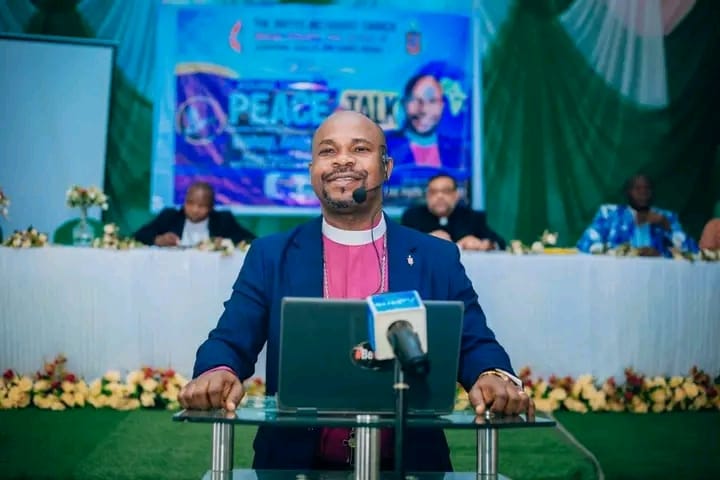
The Bishop of the United Methodist Church Nigeria, Cameroon, Senegal and Guinea-Bissau Episcopal Area, Bishop Ande Emmanuel stated this while convening a Peace Talk and Media Interactive Session under the theme:
“Promoting Peace, Reconciliation, Unity and Sustainable Conflict Transformation.”
He said that Journalism can be a Ministry of Peace.
“You can be peace builders. You can identify early warning signs. You can expose injustice before it becomes violence. You can give communities opportunities to speak. You can report reconciliation.”
“You can tell stories of Muslims and Christians working together.
You can tell stories of traditional rulers preventing conflict.
You can tell stories of young people building businesses instead of joining violence.
You can tell stories of communities rebuilding after crisis.
Tell Nigeria that peace is possible.”
According to him, media is one of the most powerful institutions in modern society.
“You do not merely report reality,
You help shape how society understands reality.”
“A headline can create fear,
create hope. A photograph can inflame. A story can reconcile. A rumour can destroy a community and a carefully researched report can prevent violence.”
Bishop Ande appealed to the media to verify before amplify and not allow social media to turn y newsroom into a forwarding centre.
“Investigate, Cross-check, Contextualize, Distinguish fact from allegation.
Do not publish inflammatory language simply because it attracts attention. Do not reduce complex conflicts to simplistic stories of “us versus them.”
He disclosed that behind every conflict are human beings, every statistic is a family and behind every casualty is a mother, father, brother, sister or child.
“Please help us tell a new story about Nigeria, not a false story propaganda or a story that hides our problems, But a truthful story that also tells us that we are capable of solving our problems.”
The Bishop urged the media to expose injustice, challenge leaders, investigate wrongdoing and also report reconciliation, courage, cooperation and hope, adding that peace needs a narrative.
“And you, the media, help shape that narrative,” he stated.
He emphasized on the importance of Peace, adding that it is not optional.
“Jesus Christ says in Matthew 5:9, says, Blessed are the peacemakers: for they shall be called the children of God.” Jesus did not say, “Blessed are those who watch peace.”
“A peacemaker is active, walks into difficult places, listens when others are shouting, builds bridges where others are building walls, seeks reconciliation where others are demanding revenge, chooses healing over hatred.
“The Apostle Paul therefore says in Romans 12:18: “If it be possible, as much as liveth in you, live peaceably with all men.”»
“As much as liveth in you. That means each of us has a responsibility.”
Bishop Ande Emmanuel disclosed that Peace is also deeply rooted in Islam.
“To our Muslim brothers and sisters, I want to say clearly today that we recognize you as partners in the work of peace.
“The Qur’an contains a powerful invitation to peace. Surah Al-Anfal 8:61 says:
«“If they incline to peace, then incline to it [also] and rely upon Allah.”»
“The Qur’an also teaches in Surah Al-Hujurat 49:13 that humanity has been created into peoples and tribes so that we may know one another. What a powerful foundation for peaceful coexistence.”
He advised that differences should create opportunities for understanding—not excuses for hatred, and therefore, as Christians and Muslims, can stand together and reject violence is not the answer to differences.
“Hatred, Revenge are not the answers. Dialogue, justice, mutual respect and peaceful coexistence must be our preferred path.”
He further disclosed that the United Methodist Church has previously supported Christian-Muslim peace building in Jalingo, including bringing Christians and Muslims together for training and dialogue.
“That is the spirit we want to strengthen.”
“Nigeria has suffered from violence perpetrated by extremists.
But we must be intellectually and morally careful, must not label an entire religious community because of the actions of extremists.”
“As we all know in United Methodist peace building work in Nigeria, violence by extremist groups should not be interpreted as meaning that all Muslims are attacking Christians and therefore we must not transfer individual guilt to an entire religious community, because collective blame is itself a seed of conflict.”
He urged Christians and Muslims from Jalingo to send a message of Peace to Nigerians.
“Let us say: We refuse to surrender our country to hatred, refuse to allow religion to become a weapon, refuse to allow ethnicity to become a weapon, refuse to allow politics to destroy our relationships, refuse to allow social media to turn Nigerians against Nigerians and refuse to allow yesterday’s wounds to determine tomorrow’s future.”
“We choose dialogue, reconciliation, justice, unity and peace.”
To the Government, the Bishop said that Government also has a fundamental responsibility.
“Citizens need to believe that the law protects them. They need to believe that justice is possible.
They need to believe that their lives matter. They need to believe that institutions will not discriminate against them.”
“Where people trust institutions, they are more likely to seek lawful solutions. Where people lose trust in institutions, they may resort to self-help.”
He disclosed that good governance is peace building.
“Justice, Education, Developments, Employment and Security are elements of peace building.”
To the Traditional Rulers, Bishop Ande said that they play critical role in peace building.
“Our traditional institutions remain indispensable to peacebuilding.
Traditional rulers know their communities, families, histories, understand the grievances and often know when tension is rising before government receives a formal report.”
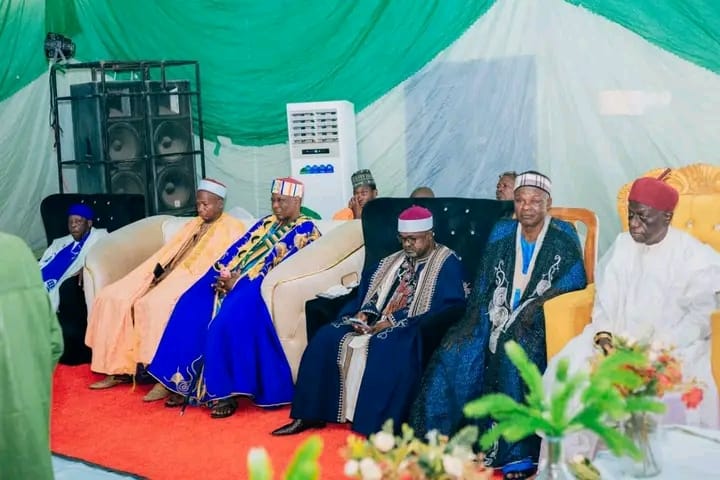
He urged people to strengthen traditional institutions as partners in early warning, response, Dialogue, Mediation and Reconciliation and community healing.
The seminar brought together frontline church and community leaders from the Southern Nigeria and South Western Nigeria Annual Conferences, alongside traditional rulers, government officials, media practitioners and civil society representatives.
The programme focused on conflict prevention, transformation, reconciliation and peacebuilding, with particular emphasis on strengthening collaboration among religious and community leaders in responding to conflict.
The seminar was facilitated by Rev. Dr. Neal Christie, former Assistant General Secretary of the General Board of Church and Society and current consultant with Wespath.