
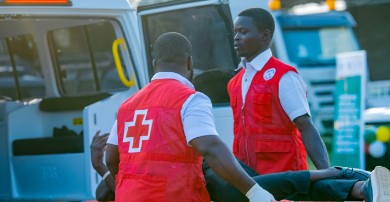
Health ministers across African countries are seeking to address delays and gaps in emergency medical care through a new regional framework on emergency medical teams for 2026–2030.
At the 76th session of the World Health Organisation (WHO) Regional Committee for Africa, member states agreed to establish at least one functional national emergency medical team in every country by 2030, a statement said Monday.
“This framework marks a shift from reaction to readiness. Strong national medical teams will save lives, protect essential services and strengthen health security across Africa,” Mohamed Janabi, WHO regional director for Africa, said.
The medical team will comprise trained clinical and public health professionals, while the facilities will be equipped for infection prevention, control and management.
The statement said 26 member states had already advanced to structured training as countries work towards developing national teams capable of responding rapidly to emergencies.
“Between 2017 and December 2025, 29 international teams were also deployed at the request of 32 Member States, with three-quarters responding to disease outbreaks,” the statement said.
The ministers projected that every country would have an operational team by 2039 and that 80 per cent of those nations should have validated their teams against the WHO global standards.
“Preparedness means having trained, equipped and self-sufficient teams ready to deploy when they are needed most,” Marie-Roseline Darnycka Belizaire, regional emergency director at WHO, said.