
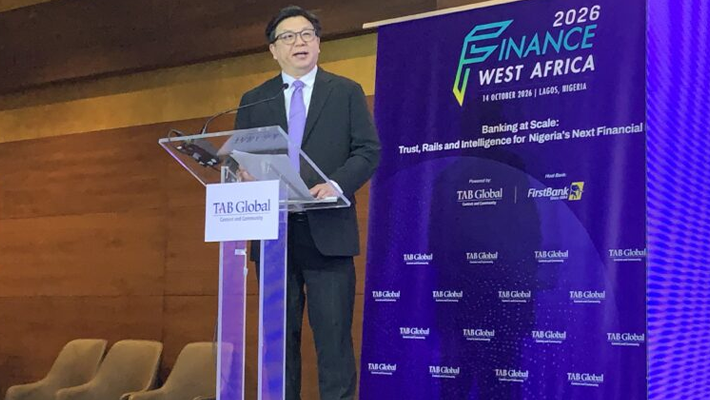
Financial sector stakeholders have urged Nigerian banks to channel capital into productive lending, strengthen digital infrastructure, and build customer trust to promote financial inclusion and economic growth.
They made the call at the West Africa International Banking Dialogue and Awards Gala 2026 in Lagos on Wednesday.
Industry professionals examined the future of banking amid recapitalisation, technological transformation and growing demand for reliable financial services.
The stakeholders said banks should translate stronger balance sheets and digital investments into improved access to credit, efficient payment systems, safer transactions and greater financial inclusion.
Foo Boon Ping, president and managing editor of The Asian Banker Global, said banks’ strength should be measured beyond balance sheet size.
He said their ability to mobilise savings and channel capital into productive economic activities was equally important.
He stressed the need to match stronger capital positions with sound lending practices and increased financing for businesses.
Tavong Muchuchuti, managing director of Xavier Africa, said banks should prioritise customers’ practical needs, including reliable instant payments, affordable credit and effective fraud prevention.
He said financial inclusion should extend beyond access to payment services to include affordable credit, insurance and investment opportunities.
Mr Muchuchuti urged banks to improve lending to small businesses by assessing their cash flows, liquidity and repayment capacity.
He advised banks against relying excessively on collateral and credit history when assessing small businesses for loans.
Stephen Ohiomoba, acting head, IT Governance and Service Delivery at the Nigeria Inter-Bank Settlement System (NIBSS), restated the importance of standardised data and interoperable payment systems.
He said harmonised transaction information would enable banks, fintech companies and other payment service providers to develop more efficient services.
Mr Ohiomoba identified foreign exchange constraints, liquidity challenges, settlement arrangements and regulatory differences as obstacles to seamless cross-border payments.
He called for greater cooperation among financial institutions and regulators to address the challenges.
Ebenezer Akinyemi, chief digital officer of Abbey Bank Plc, said recapitalisation would strengthen banks’ capacity to expand but must be supported by scalable digital infrastructure.
He said financial institutions should modernise legacy systems to accommodate rising transaction volumes.
Mr Akinyemi added that technology investments should deliver faster transactions, prompt reversals and responsive customer service.
He said reliable data was essential for assessing credit risks, pricing loans appropriately and developing products that met customers’ needs.
On customer confidence, Sunday Olaniyan, head of digital banking at SunTrust Bank, identified trust as a major factor influencing financial service adoption.
He said customers expected reliable services, simple processes and prompt resolution of complaints. Mr Olaniyan noted that access to banking services did not automatically translate into active usage.
Oluremi Tinoulu-Gabriel, director of retail and digital businesses at United Capital, said financial institutions should develop products that reflected customers’ needs and financial circumstances.
He highlighted affordable credit, reliable identity data and collaboration among financial institutions as important factors in extending services to underserved populations.
Daniel Awe, head of Africa Fintech Foundry, called for stronger collaboration among banks, fintech companies, telecommunications firms, and payment service providers to expand financial inclusion.
He said banks should combine technology and automation with customer-focused services.
Mr Awe added that transaction data could help banks identify customers who could responsibly access credit.
Omowunmi Odumusi, head of digital solution sales (government), at Wema Bank Plc, said technology alone could not guarantee sustained adoption of financial services.
“Technology provides access, relevance drives adoption, trust retains customers,” she said.
Ms Odumusi stressed the importance of financial education and community engagement in encouraging adoption of digital payments.
She said such efforts were particularly important for people unfamiliar with formal financial services.
The stakeholders also examined the growing use of artificial intelligence to analyse transactions, detect suspicious activities and improve banking operations.
They said these technologies require reliable data, secure systems, and effective risk-management frameworks to protect customers.
On regional financial integration, they said Nigeria’s progress in instant payments offered opportunities to strengthen cross-border transactions and facilitate trade across Africa.
They, however, identified foreign exchange availability, liquidity, settlement arrangements and regulatory differences as obstacles to seamless cross-border payments.
The stakeholders called for improvements in these areas to facilitate regional financial integration. The event was hosted by First Bank of Nigeria, which received awards from TAB.
The awards included Best Retail Bank in Nigeria, Best SME Bank in Nigeria and Best SME Bank in Africa.
(NAN)