
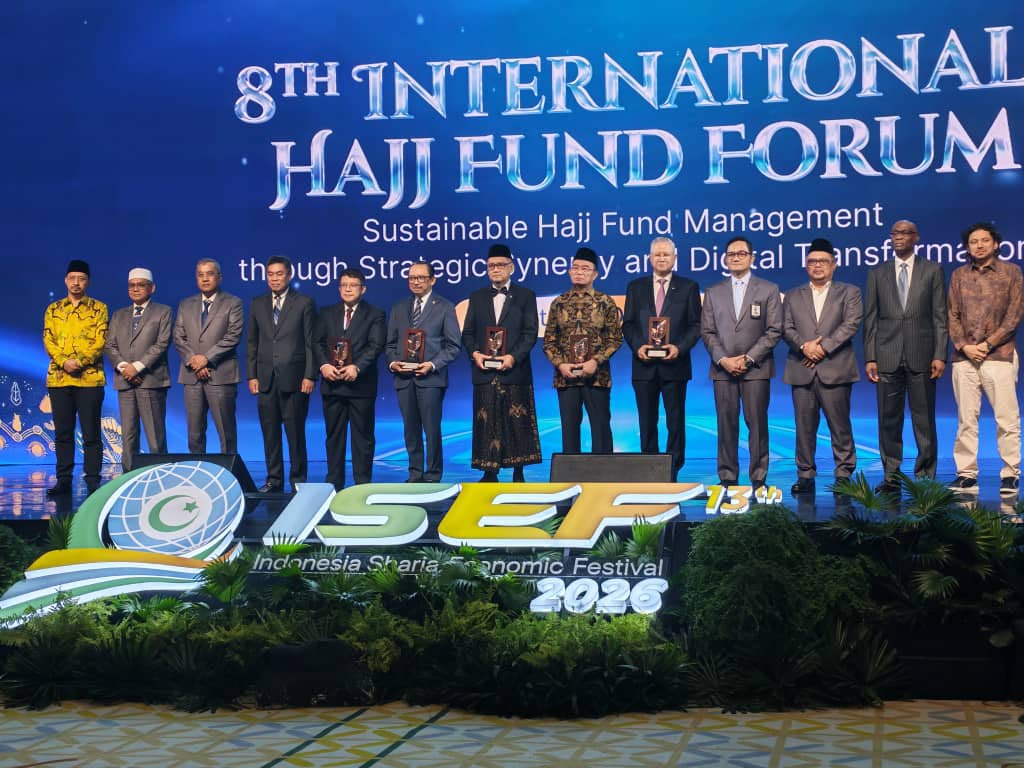
In diplomacy, some victories are measured by treaties signed; others by doors opened, ideas exchanged and opportunities secured. Nigeria’s participation at the 8th International Hajj Fund Forum in Jakarta, Indonesia, belongs to the latter category. Led by the Chairman of the National Hajj Commission of Nigeria (NAHCON), Ambassador Ismail Abba Yusuf, the country’s engagement offered more than ceremonial representation. It placed Nigeria within an important global conversation about the future of Hajj financing, digital transformation and the economics of pilgrimage.
That is a worthwhile achievement. Hajj is a spiritual obligation, but its administration is an increasingly sophisticated economic undertaking. Rising costs, volatile markets, accommodation pressures and complex logistics demand more than annual budgetary adjustments. They require institutions capable of anticipating change, mobilising capital, deploying technology and building partnerships across borders. In Jakarta, Nigeria’s message was that its Hajj administration must be equipped for precisely this challenge.
The forum, hosted by Indonesia’s Hajj Financial Management Agency, BPKH, brought together policymakers, Islamic finance specialists and institutional leaders under the theme of sustainable Hajj fund management through strategic synergy and digital transformation. Ambassador Yusuf’s participation as an international panelist gave Nigeria an opportunity to contribute to this debate while learning from a country whose experience in managing Hajj finances offers valuable lessons.
His central argument was both practical and consequential: Hajj fund management must look beyond financing the next pilgrimage. It must preserve wealth, generate sustainable benefits and protect the interests of future pilgrims. This is the difference between administering a recurring obligation and building an enduring institution.
For Nigeria, the potential gains are substantial. Strategic investment in hospitality and logistics, for instance, could help moderate accommodation and operational costs while generating returns, provided such ventures are commercially viable, transparently governed and carefully managed. Digital systems could improve financial oversight, reduce inefficiencies and strengthen accountability. International partnerships could accelerate the transfer of expertise and open new avenues for institutional learning.
None of these benefits will materialise simply because Nigerian officials attended an international conference. But conferences can create the relationships, expose the policy gaps and establish the intellectual foundations from which meaningful reforms emerge. The Jakarta mission matters because it brought Nigeria into a conversation where the future of Hajj administration is being shaped by finance, technology and strategic investment.
There is also a diplomatic dividend. Nigeria’s engagement with Indonesia, a major player in global Hajj management, reinforces the value of South-South cooperation. Countries with shared religious responsibilities and comparable institutional challenges have much to gain from exchanging experience rather than attempting to solve every problem independently. Such partnerships can make international diplomacy useful in the most tangible sense: improving the institutions that serve citizens.
Ambassador Yusuf’s role in this engagement is significant because leadership in Hajj administration must extend beyond coordination and regulation. It must also involve strategic thinking, institutional innovation and the ability to translate international opportunities into domestic improvements. By placing sustainable financing and digital transformation at the centre of Nigeria’s participation, he articulated a direction that deserves serious policy attention.
Yet the real test begins after Jakarta. NAHCON must convert the ideas exchanged into a clear programme of action: stronger digital governance, rigorous investment appraisal, measurable cost-efficiency targets and partnerships capable of delivering practical results. Transparency will be indispensable. Hajj funds carry a special public trust, and every investment decision must protect the interests of pilgrims rather than expose their contributions to unnecessary risk.
Nigeria’s victory in Jakarta, therefore, should not be exaggerated into a claim that pilgrimage costs have already fallen or that new investments have been secured. Its significance lies in the opportunity created: access to international expertise, a stronger platform for cooperation and a clearer framework for rethinking Hajj financing.
The larger lesson is that diplomacy works best when it returns home with something useful. Under Ambassador Ismail Abba Yusuf’s leadership, Nigeria has made a case for a Hajj system that is more technologically capable, financially resilient and attentive to the long-term welfare of pilgrims.
Jakarta was an important opening, not the finish line. If NAHCON can translate its international engagement into transparent reforms and measurable savings, Nigeria’s presence at the global forum will prove to have been more than a diplomatic success. It will have been an investment in the future of Nigerian pilgrimage itself.
Abdullahi Haruna Haruspice