
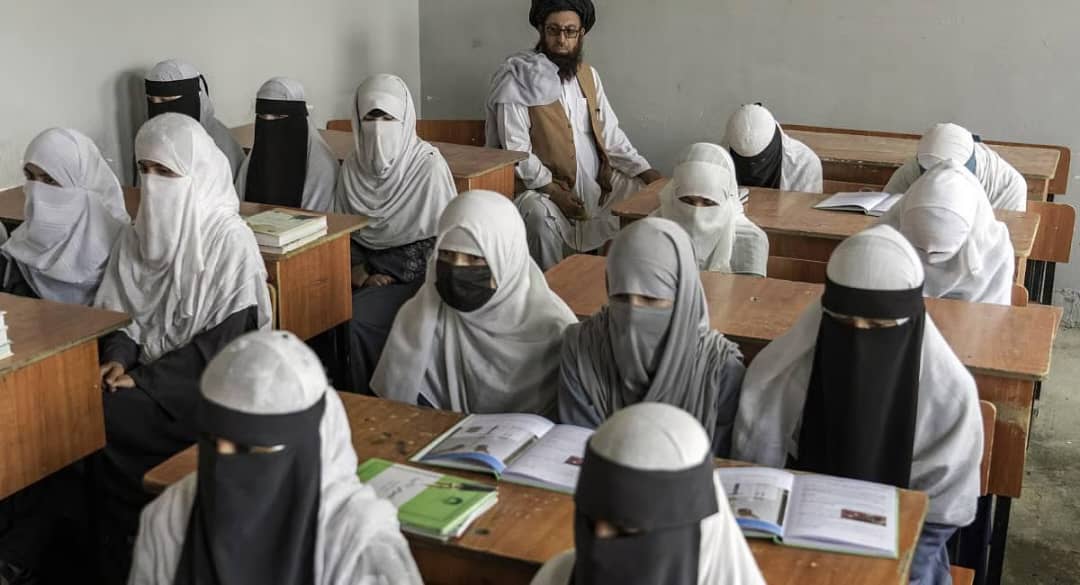
In Kabul, Afghanistan, many girls who once hoped to pursue careers like medicine are now turning to religious schools, or madrassas, after being blocked from further education.
One such girl is 13-year-old Nahideh, who works in a cemetery each day after primary school, earning a small income by selling water to visitors.
Despite her dream of becoming a doctor, she knows it is out of reach under current restrictions.
Since the Taliban banned girls from secondary school and university three years ago, options for continuing education have narrowed sharply.
Afghanistan remains the only country in the world with such a ban in place. As a result, more girls are enrolling in madrassas, where they can continue some form of learning through religious studies.
At the Tasnim Nasrat Islamic Sciences Educational Center in Kabul, around 400 students — most of them girls and women — study the Quran, Islamic law,
Arabic, and other religious subjects. The center accepts students as young as 3 and as old as 60.
Staff say interest has increased since the school ban began, with madrassas now seen as one of the few educational paths still available.
Though no official data is currently available on female enrollment, government estimates from 2024 suggest that more than 3 million students are now attending madrassas across Afghanistan.
This reflects a sharp rise, with over 1 million new enrollments in just one year.
In one of the classrooms at the Tasnim Nasrat center, girls and women sit on carpets with plastic desks, quietly writing Arabic verses.
Many wear full black coverings that reveal only their eyes.
Some of these students had once hoped for careers in science or healthcare, and a few still hold onto hopes of continuing those dreams someday if conditions change.
For now, religious schools offer a rare space for Afghan girls to continue learning in a country where nearly all other educational doors remain closed.