
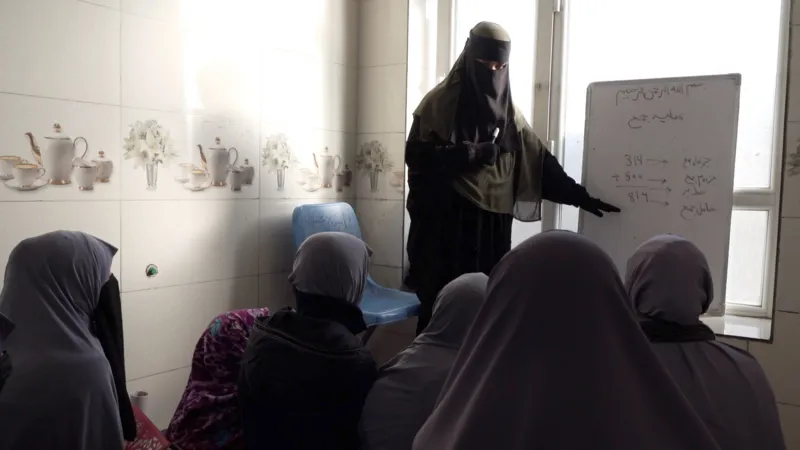
Girls in Afghanistan are turning to madrassas as their only hope for learning after the Taliban banned them from attending school beyond the age of 12.
The ban, which has been in place since 2021, has disrupted the education of over a million girls, forcing families to find alternative ways to keep their daughters learning.
The restrictions were put in place after the Taliban returned to power, reversing years of progress in girls’ education. While officials claimed the ban was temporary, no steps have been taken to reopen schools for older girls. This has left families with few choices, with some turning to private tutors and others seeking religious schools that offer additional subjects.
The madrassas, traditionally centers for Islamic studies, have started teaching subjects like math, science, and languages to help bridge the gap. Some schools have even introduced midwifery and first aid training. However, in December, the Taliban banned medical training for women, further limiting their career options.
The situation has changed the daily lives of many young girls, including those who once dreamed of becoming doctors, engineers, or teachers. Instead of attending regular schools, they now sit in small, overcrowded rooms in makeshift madrassas, hoping that their education will not come to a complete stop.
Families have struggled to adapt to this new reality, with many unable to afford private tutors or alternative schooling. The restrictions have also raised concerns among rights groups, who argue that denying girls an education will have long-term consequences for Afghanistan’s future.
Some madrassas have attempted to provide a well-rounded education, but concerns remain about the content being taught. A recent report suggested that some institutions may be incorporating extremist material into their curriculum, raising fears that girls may not be receiving the balanced education they need.
Despite these challenges, many Afghan girls remain determined to learn. Some wake up early every morning, traveling long distances to reach madrassas that accept them. Others secretly study at home, hoping for a future where they can freely attend school again.
With no clear path to reopening formal schools, these religious institutions have become a lifeline for Afghan girls desperate to continue their education. But for many, it is a temporary solution to a problem that should never have existed in the first place.