
Air Canada and the union representing 10,000 flight attendants returned to negotiations late Monday in Toronto, marking their first formal meeting since crews launched a strike over pay and working conditions.
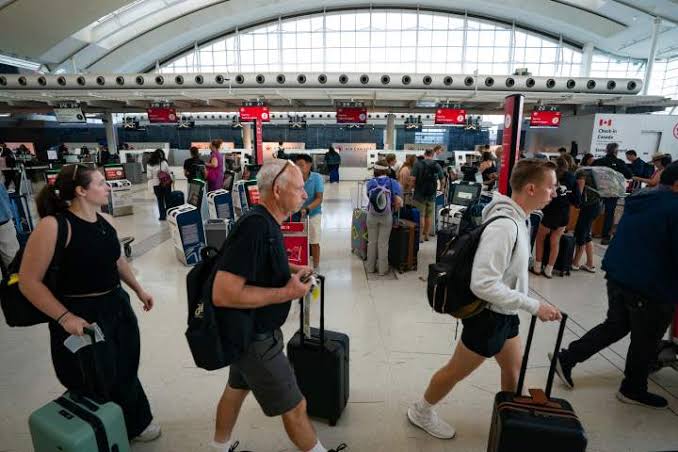
The strike, now in its fourth day, has forced the cancellation of about 700 flights daily, stranding more than 130,000 passengers at the height of Canada’s summer travel season.
The Canadian Union of Public Employees (CUPE) says attendants are demanding higher wages and pay for time spent performing ground duties such as boarding and safety checks, tasks for which they currently receive no compensation.
Under existing rules, attendants are paid only for flight hours.
Air Canada CEO Michael Rousseau defended the company’s latest offer, which includes a 38% pay increase spread over four years, but acknowledged that a “big gap” remains with union demands.
CUPE insists staff will not return to work until the wage structure is changed.
The Canada Industrial Relations Board has declared the strike unlawful, but CUPE has defied the order, deepening tensions.
The dispute has now turned into a three-way standoff between the airline, the union, and the federal government.
Jobs Minister Patty Hajdu urged both parties to reach an agreement quickly while also announcing a federal review into airline pay practices.
Prime Minister Mark Carney added further pressure, warning that hundreds of thousands of travelers are facing severe disruption.
Air Canada confirmed rolling cancellations would extend into Tuesday, bringing the total number of canceled flights to over 2,500 since the strike began. The company’s shares have fallen nearly 3% since last week.