
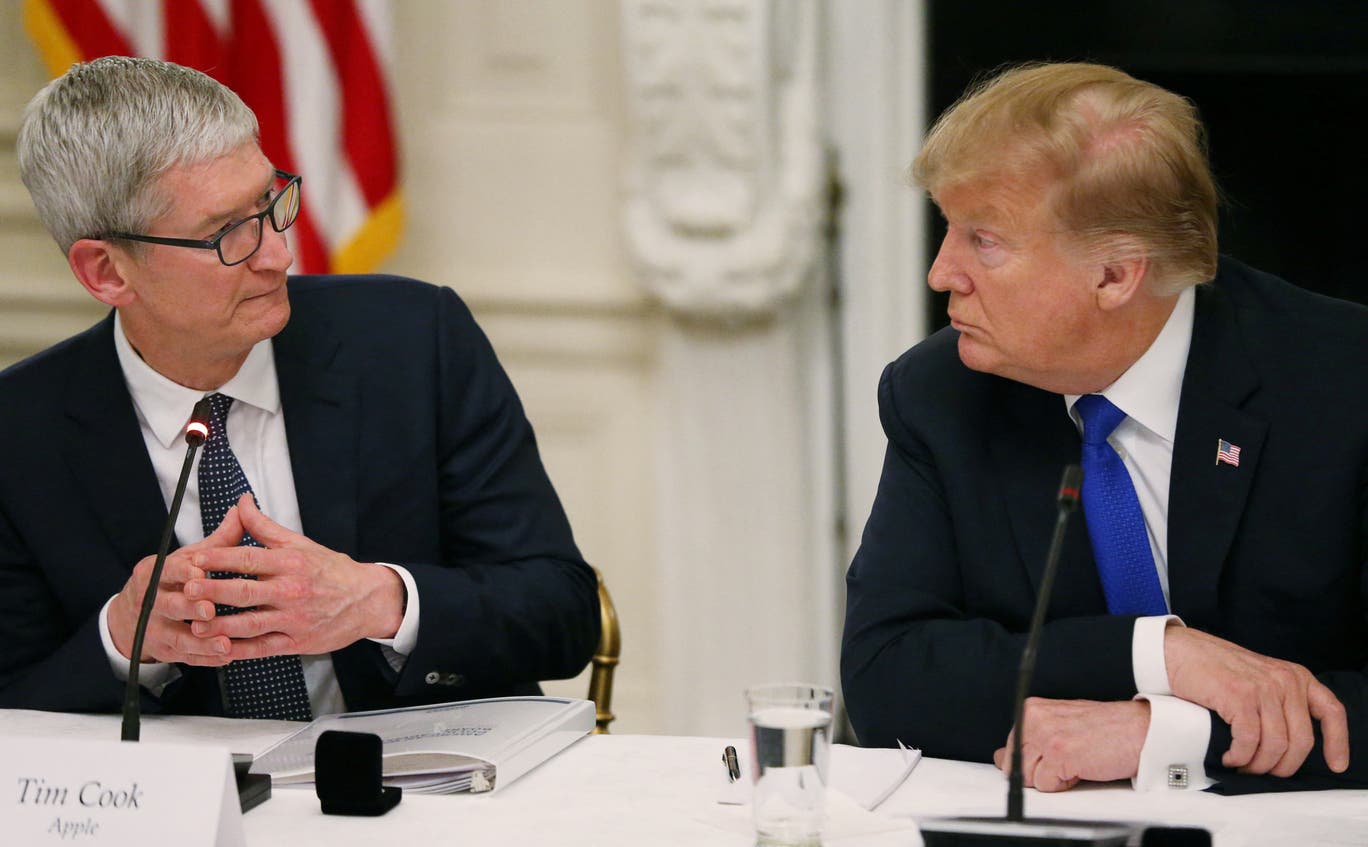
Apple faced a sharp decline in its stock price after President Donald Trump warned the company that it could face a new tariff unless it moves iPhone manufacturing to the United States.
The tech giant’s shares fell by 3 percent by the end of trading on Friday, while the Dow Jones Industrial Average lost about 250 points. The announcement shook investors and raised fresh concerns about the future of U.S. trade policies.
The situation unfolded after Trump reportedly met with Apple CEO Tim Cook at the White House earlier in the week. Following the meeting, Trump took to his social media platform to announce that Apple could be hit with a 25 percent tariff on all products not made in the U.S. This message came at a time when Apple is already shifting some of its production to India in response to past trade tensions between the U.S. and China.
The market reaction was swift. Apple’s shares dropped in premarket trading but managed a partial rebound during the day. The uncertainty triggered broader concern on Wall Street, especially after Trump also suggested placing a steep 50 percent tariff on imports from the European Union, citing frustrations over trade negotiations.
Trump’s remarks focused on Apple’s decision to expand manufacturing outside the U.S., particularly in India. He pointed to the company’s global operations as a point of concern, suggesting that future production should return to American soil. The comments came during his overseas trip, where he voiced frustration over American companies building outside the country despite benefiting from its large market.
Industry experts quickly weighed in, with some describing the proposed production shift as unrealistic. Analysts noted that bringing full-scale iPhone assembly to the U.S. could take several years and dramatically increase costs. One estimate said an American-made iPhone could cost over three thousand dollars due to higher labor and operational expenses.
The U.S. Treasury Secretary backed Trump’s move, saying the administration wants to boost local manufacturing and encourage companies like Apple to invest more in domestic production. According to officials, the intention is to strengthen the U.S. economy by bringing advanced technology jobs back home. However, critics argue that the plan lacks feasibility given the complexity of global supply chains.
Apple has yet to respond publicly to the tariff threat. The company had previously announced plans to expand production in India as part of its effort to reduce dependence on China. These efforts now appear to be drawing political scrutiny, adding pressure as Apple balances cost, logistics, and international relations.
With the June 1 deadline for the proposed EU tariffs approaching, the business world is watching closely. Investors, tech leaders, and foreign trade partners are preparing for potential shifts in policy that could affect everything from consumer prices to global supply chains. The tension between politics and business continues to grow, with Apple caught in the middle of the latest standoff.