
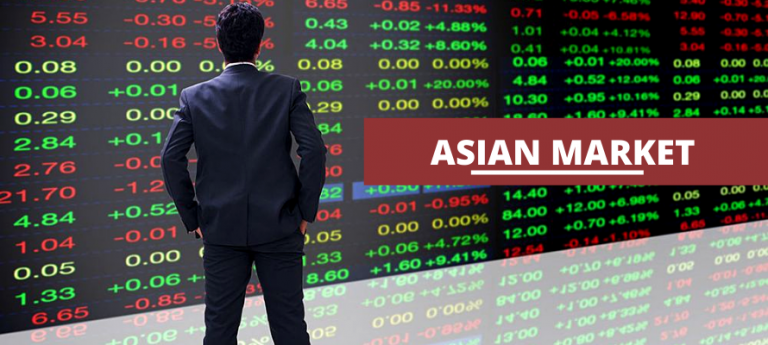
Asian stock markets pushed higher Thursday as investors welcomed signs of a possible thaw in trade tensions between the United States and China, with key negotiations scheduled for the weekend and talk of a new trade agreement on the horizon.
Momentum in the markets picked up following announcements that top-level representatives from Washington and Beijing would meet for the first time since sweeping tariffs were introduced last month. U.S. Treasury Secretary Scott Bessent and Trade Representative Jamieson Greer are expected to sit down with Chinese Vice Premier He Lifeng in Switzerland on Saturday and Sunday.
The prospect of face-to-face talks between two of the world’s largest economies sparked optimism among investors, many of whom had grown uneasy with the rapid escalation in tariffs—145 percent from Washington and 125 percent from Beijing—that has rattled global trade.
Adding fuel to the rally was a message posted by President Donald Trump on his Truth Social platform, teasing the announcement of “a major trade deal” with what he described as a respected foreign country. While he did not specify which nation, speculation quickly swirled that Britain was involved. The pound strengthened in response, rising sharply in early Asian trading hours.
Markets across the region reflected the upbeat mood. Stocks in Hong Kong, Shanghai, Tokyo, Seoul, Sydney, and other major exchanges all moved higher, mirroring gains on Wall Street. Investors appeared eager to capitalize on any signs of reduced tensions, after weeks of market unease triggered by aggressive tariff strategies and economic uncertainty.
Despite the positive trading session, concerns linger over the broader economic impact of Trump’s trade policies. Federal Reserve Chair Jerome Powell, speaking at a press conference after the Fed decided to hold interest rates steady, acknowledged the unpredictability of current trade dynamics. He cautioned that sustained tariffs could lead to inflation, slower growth, and rising unemployment.
Powell suggested that while the initial inflationary impact might be short-term, there’s also a risk that it could last longer depending on how trade developments unfold. The Fed’s post-meeting statement also pointed to rising concerns over the economic outlook, noting increased chances of both higher inflation and job losses.
President Trump has frequently criticized the Fed for not cutting rates faster, sparking fears in the financial community of political pressure on the central bank’s independence. However, analysts believe the Fed is likely to hold its position unless there is a clear and sharp downturn in key economic data.
Recent job reports have shown solid growth, reducing the urgency for immediate policy changes. With limited data expected before the Fed’s next meeting in June, the likelihood of a near-term rate cut remains low, according to analysts like Tai Hui of JP Morgan Asset Management.
Meanwhile, currency and commodity markets also reflected Thursday’s cautious optimism. The dollar weakened slightly against the euro and yen, while oil prices ticked upward with West Texas Intermediate at $58.26 and Brent crude at $61.27 per barrel.
Key indices at the time of reporting showed Tokyo’s Nikkei 225 up 0.2%, Hong Kong’s Hang Seng up 0.9%, and Shanghai’s Composite Index up 0.1%. In Europe, however, London’s FTSE 100 ended the day down 0.4%.
While much remains uncertain, Thursday’s gains offered a moment of relief for global investors hoping for stability in an increasingly unpredictable trade landscape.