
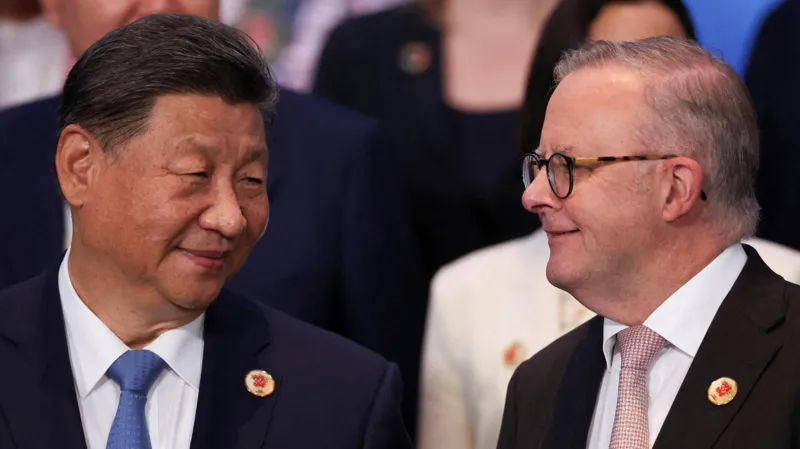
Australia has firmly rejected China’s call to unite against newly imposed tariffs from US President Donald Trump, saying its response will be based on national interests rather than alliances.
The move came after China’s ambassador to Australia urged both countries to work together to counter what he described as unfair trade measures from Washington.
The diplomatic exchange followed the latest round of US tariffs that included a 10% import tax on Australian goods. China, however, was hit much harder, with tariffs raised to 125%. In response, Beijing retaliated with an 84% tariff on US goods, escalating tensions in an already strained global trade environment.
The Chinese ambassador, Xiao Qian, made a public appeal on Thursday through an opinion article, saying cooperation between Australia and China was essential to oppose what he called “hegemonic” actions from the US. He argued that only by working together could countries like Australia and China protect global trade and prevent economic instability.
Australia quickly made it clear it would not take that path. Prime Minister Anthony Albanese responded by reaffirming the country’s commitment to speak and act for itself. He acknowledged the importance of the China-Australia trade relationship but emphasized that the government’s approach would be based on independent decision-making. “We’re not aligning with others against anyone,” he told reporters.
Defence Minister Richard Marles echoed the sentiment, stating that Australia had no plans to “hold China’s hand” on the issue. He explained that Australia’s trade policy would remain focused on its own economic resilience and interests, not on forging joint positions with other powers in opposition to the United States.
Even as tensions rise, Australia has opted for dialogue over retaliation. Officials have voiced their frustration with the tariffs but stopped short of imposing countermeasures. Instead, Canberra has signaled it will pursue further talks with the US to seek a resolution.
Trump’s administration has since announced a temporary pause on the higher tariffs, offering a 90-day window during which only a 10% tariff will apply for most affected countries. China, however, remains excluded from that grace period, a move that has deepened the trade conflict between the two largest economies in the world.
China’s appeal to Australia also served as a warning. Ambassador Xiao expressed fears that a lack of resistance to US policies would allow Washington to rewrite the rules of global trade. He claimed that such actions threatened the stability of the international system and would have ripple effects across all economies, including Australia’s.
Despite these warnings, Australia’s leaders say they are charting a course toward more diversified trade. Albanese noted that while the US is an important partner, the majority of Australia’s trade lies elsewhere. He pointed to opportunities in other regions and said Australia is actively looking to expand exports to countries such as India, Indonesia, the UK, and the UAE.
Trade Minister Don Farrell has recently held meetings with leaders from Japan, Singapore, South Korea, and India to explore deeper ties. Meanwhile, Canberra has also continued efforts to reduce its dependence on China, citing the need for greater economic security in a shifting global landscape.
With both the US and China hardening their stances, Australia is walking a careful line—defending its trade interests without choosing sides in an intensifying global dispute.