
By Aaron Mike Odeh
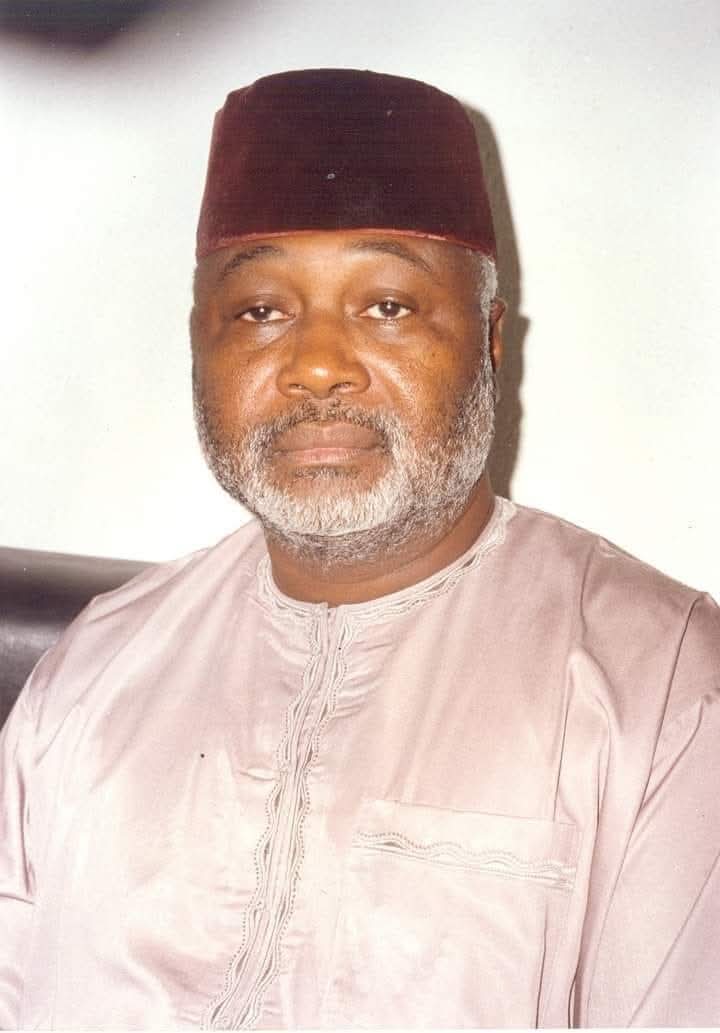
As the 2027 political horizon draws nearer, Benue South Senatorial District stands at one of its most defining moments since the return of democracy. The Idoma nation, rich in history and resilience, finds itself asking a simple but profound question: Who can steer the district toward stability, dignity, and purposeful representation? In this growing national debate, one name continues to rise above the noise—His Excellency, Chief Steven Lawani, CON.
Widely respected as one of the most seasoned statesmen from the Middle Belt, Chief Lawani is no stranger to leadership. His political journey, which spans decades of service, diplomacy, business leadership and governance, makes the prospect of his emergence as Distinguished Senator representing Benue South a compelling political narrative reverberating far beyond Idoma land.
A REGION SEARCHING FOR DIRECTION
Benue South has long been a theatre of intense political competition, shifting alliances, and a persistent struggle for development. Yet, as the nation edges into another electoral season, stakeholders across the nine local government areas are increasingly unified on one point: the district needs a calming, unifying, and strategic figure.
This is where the conversation around Chief Lawani’s potential candidacy gains extraordinary momentum. For many, he represents the antidote to political fragmentation—an elder statesman capable of restoring balance, credibility, and respect to the zone’s representation in the Senate.
STEVEN LAWANI: A STATESMAN ABOVE THE FRAY
To understand the renewed appeal of Chief Lawani, one must revisit the foundations of his public life. As a former Deputy Governor of Benue State, he is admired for his calm disposition, intellectual depth and disciplined approach to governance.
Unlike many politicians who embrace theatrical politics, Lawani belongs to a rare class of leaders who favour substance over spectacle. His reputation is rooted in:
maturity in decision-making,
a wide national network of allies,
an unblemished public profile,
and a track record of economic and community development.
This combination positions him as a political stabiliser at a time when stability may be the greatest currency.
WHAT A LAWANI SENATE ERA COULD MEAN
Envisioning His Excellency Chief Steven Lawani in the Red Chamber opens a wide canvas of possibilities—many of which resonate deeply with the aspirations of Benue South citizens.
1. A Rebirth of Legislative Respect and Visibility
Chief Lawani’s presence alone would command respect in the Senate. His experience, age, and credibility give him the moral authority to speak for the Idoma nation with unmatched clarity. In many circles, he is seen as someone who can elevate the district’s voice to the national negotiating table.
2. Strategic Development Legislation
With decades of business and governance expertise, Chief Lawani is well placed to champion bills tailored to:
agricultural enhancement,
rural infrastructure development,
job creation initiatives,
and federal investment in Idoma-speaking communities.
His legislative agenda is imagined to be practical, economically sound, and aligned with the unique needs of Benue South.
3. Unity in a Fragmented Political Climate
Benue South politics has often been characterised by rivalry, factional divides, and generational clashes. Chief Lawani’s temperament could provide the ideological centre around which political actors rally. Many believe his entry would usher in a more issue-based, less combative political landscape.
4. Renewed Hope for Youth and Women Inclusion
The district’s growing youth population has expressed desire for mentorship and access to opportunities. A Senate era led by Chief Lawani is widely envisioned as one that would encourage:
youth-focused empowerment,
entrepreneurship pathways,
educational support systems,
and increased women participation in governance.
THE POLITICAL TEMPERATURE IN BENUE SOUTH
Political observers note that the rising conversation around Chief Lawani’s potential Senate role is altering the local political temperature. Stakeholders across traditional institutions, business communities, civil society groups, and diaspora Idoma networks are increasingly vocal about the need for a tested hand in 2027.
While no official declaration has emerged from the statesman himself, the discussions are loud enough to echo across Otukpo, Apa, Agatu, Ogbadibo, Ado, Okpokwu, Ohimini, Obi, and Oju. The consensus is simple: Benue South deserves a stable, trusted, and strategic voice at the centre of national politics.
A SYMBOL OF POLITICAL RENAISSANCE
Beyond legislative functions, the symbolism of Chief Lawani in the Senate is powerful. It signals a return to:
elder statesmanship,
strategic negotiation,
political civility,
and elevated representation.
His potential candidacy serves as a metaphor for the type of leadership the Idoma people may be yearning for—mature, measured, and deeply connected to the region’s roots.
THE CROSSROADS BEFORE THE IDOMA NATION
Every political season presents a choice. The 2027 election offers Benue South a critical one:
Will the district continue with younger experimental leadership models, or will it turn to a seasoned statesman capable of restoring unity and evolving a clear development framework?
Chief Lawani stands at the intersection of these questions. While he has not publicly indicated interest, the sheer volume of conversations around him underscores one truth: His name has become central to the district’s political calculations.
FINAL THOUGHT: A DECISION ONLY THE FUTURE CAN CONFIRM
Whether Chief Steven Lawani chooses to step forward remains a matter of personal decision and political timing. But if the voices from Benue South are any indication, the path toward 2027 is increasingly pointing in his direction.
At this crucial crossroads, one sentiment appears to be gaining ground across the Idoma nation—
that Chief Steven Lawani could very well be the stabilising force the district needs for a more purposeful, dignified, and development-driven future.
Aaron Mike Odeh, A Public Affairs Analyst and Community Development Advocator, write from Post Army Housing Estate Kurudu Abuja