
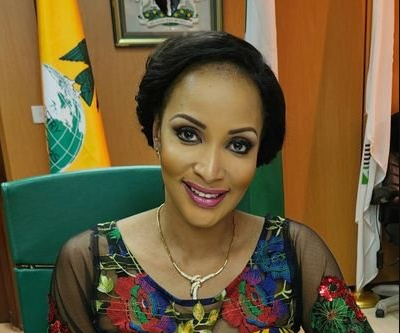
Deputy foreign affairs minister Bianca Odumegwu Ojukwu has advised Igbos in the South-East to use dialogue and peaceful means to address the conviction and imprisonment of IPOB lynchpin Nnamdi Kanu.
Ms Ojukwu gave the advice at the 14th edition of the Dim Chukwuemeka Odumegwu Ojukwu Memorial Day Celebration, held at the Ojukwu Memorial Library, Owerri, on Wednesday.
She said, though the court of first instance had sentenced Mr Kanu to life imprisonment, all hope was not lost, saying that, through dialogue and peaceful means, Mr Kanu could be released from the Sokoto prison.
The Ojukwu annual memorial day was instituted by Ralph Uwazuruike, the founder of the Movement for the Sovereign State of Biafra.
Ms Ojukwu called for a minute’s silence for the late BBC journalist, Frederick Forsyth, whom she said resigned her job to cover all things that happened during the 1967 to 1970 Biafran and Nigerian civil war.
“Nnamdi Kanu is in prison, we should not get angry, and it is not an issue to use knives, guns or fighting ourselves in order to solve it. This coming Christmas, all of us should endeavour to meet with our National Assembly members and our governors, ask them the way forward to ensure that Kanu is freed from prison.
“Also, all of us should come together, plan ourselves on how to use peaceful means to settle this matter, we should plan how to meet with President Bola Tinubu and amicably resolve this matter,” she said.
Ms Ojukwu added that the people of the South-East should emulate other zones and learn to address their challenges through dialogue and peaceful means. She urged the youths to be patient and embrace peace and dialogue.
She said that after the civil war, her late husband, Mr Ojukwu, was in exile for many years, but through peaceful means and dialogue, then-President Shehu Shagari granted him an unconditional pardon.
Ms Ojukwu decried the low level of business activities in the zone now due to the Monday sit-at-home directive, adding that this was a result of insecurity in the area. She explained that since killing and kidnapping became common in the zone, socio-economic activities had gone down, noting that investors are now investing in other zones.
“Before, foreigners such as those from Cameroon, Ghana, Togo, among others, were coming to invest in the South-East. But since insecurity started, many of the investors, both foreigners and locals, had withdrawn from the area,” the minister explained.
(NAN)