
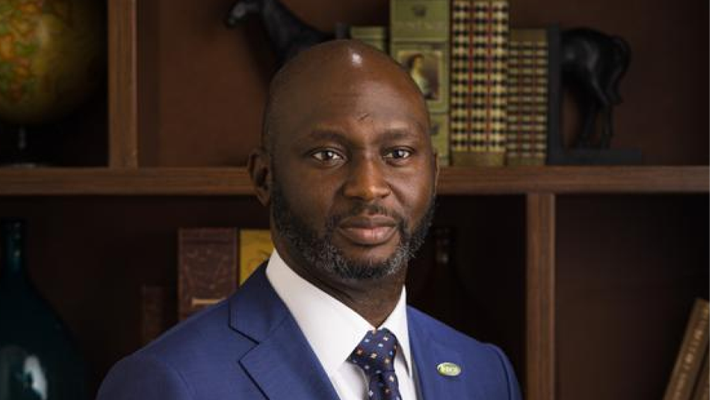
The managing director of the Bank of Industry, Olasupo Olusi, has called for deliberate and coordinated actions to unlock Africa’s full industrial potential.
Mr Olusi said this on Thursday at the inauguration of Course 34 of the National Defence College in Abuja. He spoke while delivering a lecture titled ‘Optimising Capacity for Industrialisation and Socio-Economic Development in Africa’.
According to him, the continent possesses both the talent and resources to achieve rapid and sustainable industrial growth.
He said Africa’s industrial journey was not a matter of chance but of deliberate choice, urging governments, businesses, and citizens to align their efforts toward building a resilient and competitive industrial base.
Mr Olusi outlined a five-point pathway to industrial transformation anchored on infrastructure and energy reforms, access to affordable long-term finance, investment in human capital, regional value-chain integration, and strong institutional coordination.
“Industrialisation is not a miracle; it is a method. Progress is cumulative, not spontaneous. If we execute with patience, precision, and persistence, Africa can move from a continent that consumes to one that produces and protects itself,” he said.
The BOI boss described the current period as a defining moment for the continent. He said global disruptions such as the green transition, emerging technologies, and shifts in global trade patterns offered Africa an opportunity to reimagine its economic model around self-reliance and innovation.
He said that while challenges such as inadequate infrastructure and energy deficits persist, they could become springboards for transformation if addressed strategically.
Citing data from the International Energy Agency, Mr Olusi said Africa would need about $25 billion annually until 2030 to achieve universal electricity access. According to him, this target will significantly boost productivity and reduce industrial costs.
He identified ongoing projects like the Lagos-Abidjan Highway and the Trans-Saharan Trade Route as vital for connecting industrial and agricultural zones, reducing freight costs, and facilitating intra-African trade.
“Roads, railways, and power lines are not merely infrastructure. They are instruments of sovereignty, and investment in human capital was equally critical to sustaining industrial growth,” he said.
The BOI chief explained that Africa’s youthful population could become a strategic advantage if equipped with the right technical and vocational skills to drive innovation and productivity. According to him, over 60 per cent of Africa’s population is under 25 years of age, yet fewer than 10 per cent receive vocational or technical training.
He, therefore, urged governments to shift from degree-oriented education to skills-driven learning that connects classrooms to factory floors.
Mr Olusi also emphasised the importance of affordable long-term financing as the oxygen of industrialisation.
He said that development finance institutions such as the Bank of Industry played a critical role in providing patient capital for manufacturing, renewable energy, and technology sectors.
He said that the BOI had continued to raise capital through debt instruments, syndicated loans, and green financing to support productive enterprises. He emphasised that every dollar of public capital must drive impact, sustainability, and profitability.
Mr Olusi further urged African countries to leverage the African Continental Free Trade Area to build regional value chains, stressing that no nation could industrialise in isolation.
“When goods, skills, and ideas move freely, industrialisation becomes sustainable. Cooperation, not competition, will make Africa stronger,” he said.
The BOI boss also called for strong, coordinated institutions to sustain industrial growth, saying that the continent must move from policy announcements to measurable performance and accountability.
He commended Nigeria’s Ministry of Defence and the Defence Industries Corporation of Nigeria for promoting local production of military hardware. He reiterated the need for industrial capacity to be viewed as a component of national defence and security.
“A secure Africa must also be an industrialised Africa. A nation that cannot produce its own food, medicine, or machinery cannot claim to be secure. I, therefore, urge participants of the Defence College to treat industrial readiness as a strategic defence objective and to promote local production capacity as a measure of national resilience.
“African leaders need to translate vision into execution through discipline, collaboration, and clarity of purpose. If we begin today, within five years we can export at scale and within a generation we can achieve true economic sovereignty,” he said.
(NAN)