
Janet Sam
The British Council has called for urgent reforms in Nigeria’s education system to make classroom teaching more language-responsive, warning that the continued neglect of learners’ language needs is deepening literacy gaps and undermining inclusive education across the country.
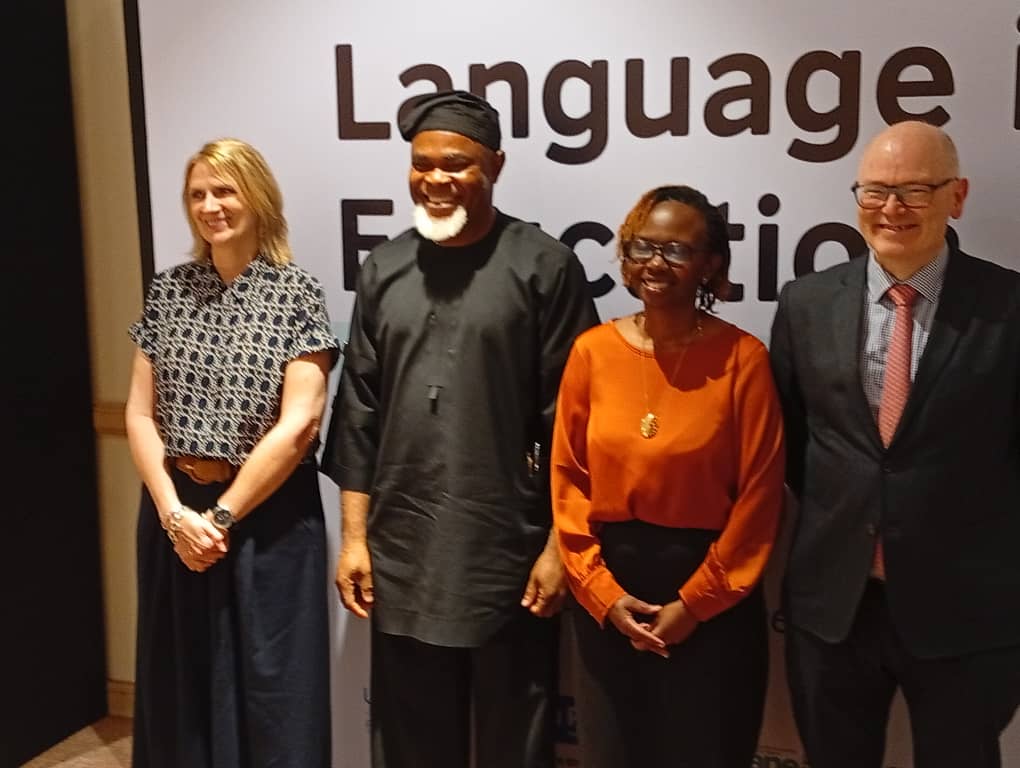
Speaking at a press conference ahead of the Language in Education International Conference 2025 scheduled to be held in Abuja, the Country Director of the British Council, Donna McGowan, stressed that language remains the cornerstone of effective learning and communication.
“Language is central to how children learn, communicate and connect,” McGowan said. “When learners are unable to understand the language of instruction, they are automatically excluded from the learning process. This gap affects not only individual outcomes but the country’s broader development goals.”
She explained that the two-day conference, themed “Language, Education and Inclusion: Empowering Every Learner,” aims to strengthen collaboration among policymakers, educators, and researchers in developing education systems that embrace Nigeria’s linguistic diversity.
“With over 500 languages spoken across Nigeria, we have a rich linguistic resource that should be harnessed to strengthen learning outcomes,” she added. “We’ve convened this conference to foster collaboration, catalyse reforms, and reaffirm our shared resolve to make education truly inclusive through language.”
Organised by the British Council in partnership with UNICEF, Plan International, FCDO PLANE, Sightsavers, Save the Children, and the Sterling One Foundation, the conference will bring together stakeholders from across Africa, South Asia, and the United Kingdom to explore practical solutions for language-based challenges in education.
Also speaking, the British Council’s Director of English Programmes for Sub-Saharan Africa, Julian Parry, said the inability of many learners to grasp lessons due to language barriers has long limited learning outcomes across the region.
“In many classrooms, learners struggle to understand lessons because the language of instruction is not the one they speak at home,” Parry noted. “This creates barriers that prevent children from engaging meaningfully and succeeding academically.”
He emphasised that the British Council is working with ministries of education and development partners to improve teacher training, enhance language proficiency, and promote inclusive approaches that reflect Nigeria’s linguistic realities.
“Language is not just a tool for communication,” Parry said. “It’s a bridge to inclusion, identity, and opportunity. When we fail to use it effectively in education, we leave too many learners behind.”
According to him, British Council-led projects across Africa, including in Rwanda and Uganda have shown that language-responsive teaching can significantly improve comprehension and retention, especially in science and mathematics taught in English.
“The conference is not just a forum for discussion,” Parry added. “It’s a call to action to integrate language policy with classroom practice and ensure that every learner, regardless of their language background, has the opportunity to thrive.”
The Language in Education International Conference 2025 will be held from November 12 to 13 at the Abuja Continental Hotel and will feature plenary sessions, workshops, and panel discussions designed to shape future education policies and bridge the gap between research and practice