
By Abasi Ita
The Cross River State Government has renewed its call for increased federal and international assistance as it continues to shoulder the responsibility of hosting about 50,000 registered Cameroonian refugees.
Governor Bassey Otu said the influx has placed considerable strain on infrastructure and social services in host communities spread across Ogoja, Ikom, Obanliku, Etung, Akamkpa and Boki local government areas.
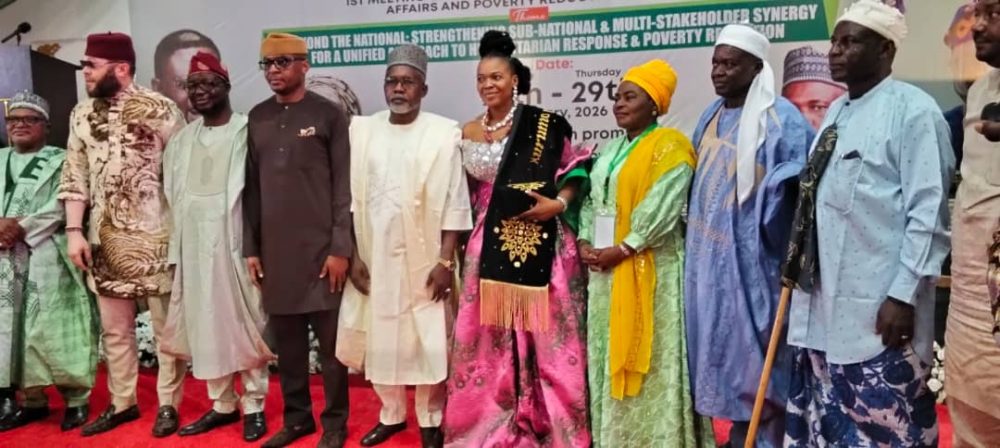
Speaking at the inaugural meeting of the National Council on Humanitarian Affairs and Poverty Reduction in Calabar, the governor stressed the need for stronger collaboration among federal, state and global partners to address mounting humanitarian pressures. The forum was themed Strengthening Sub National and Multi Stakeholder Synergy for a Unified Approach to Humanitarian Response and Poverty Reduction.
Represented by Deputy Governor Peter Odey, Otu noted that beyond the refugee situation, Cross River is contending with thousands of internally displaced persons caused by communal conflicts, as well as persistent poverty and livelihood vulnerability among residents.
He added that recurring flooding, erosion, windstorms and other environmental challenges have worsened conditions in several communities, calling for urgent intervention and sustainable recovery efforts.
The governor said his administration has continued to respond within its limited resources but appealed for support to strengthen the state’s emergency management framework, provide lasting solutions for displaced populations and rehabilitate affected communities.
Delivering the keynote address, Minister of Humanitarian Affairs and Poverty Reduction, Dr Bernard Doro, said the Federal Government is prioritising resettlement and reintegration of refugees and displaced persons through the National Commission for Refugees, Migrants and Internally Displaced Persons.
According to him, over 25 million Nigerians require humanitarian assistance annually, while a significant percentage of the population lives in multidimensional poverty. He emphasized the importance of improved funding, capacity building, locally driven initiatives and data based planning to enhance response efforts.
Minister of State in the ministry, Dr Yusuf Sununu, described humanitarian service and poverty alleviation as collective responsibilities that demand commitment and empathy from all stakeholders.
Muriel Mafico, representing the United Nations Resident and Humanitarian Coordinator in Nigeria, underscored the need for data informed policies and fair distribution of resources to bridge regional disparities.
Earlier, the Cross River State Commissioner for Humanitarian Affairs and Poverty Alleviation, Dr Helen Isamoh, said the council meeting offered a vital platform for dialogue, partnership and coordinated action in tackling emerging humanitarian issues and strengthening resilience among vulnerable groups.
The gathering featured expert presentations, technical deliberations and the adoption of a communique to guide future interventions.