
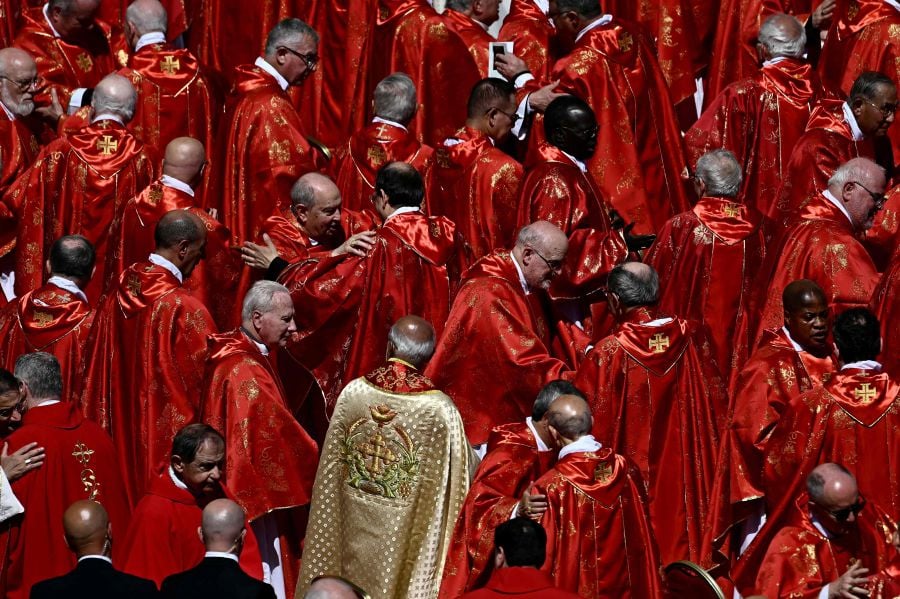
Cardinals preparing to elect a new pope after Pope Francis’s funeral are facing a pivotal decision which is to continue the path Francis set or move in a different direction.
One of Francis’s major legacies was expanding the College of Cardinals’ diversity, appointing church leaders from countries that had never been represented before. However, this diversity now makes predicting the outcome of the conclave much harder, as many cardinals don’t know each other well and traditional voting blocs have not clearly formed.
The only certainty ahead of the upcoming conclave, set to begin by May 10, is uncertainty.
As depicted in the Oscar-nominated film Conclave, the election of a pope combines mystery, secrecy, and faith — but political maneuvering and personal ambitions also play a major role. Over 130 cardinals will soon gather in the Sistine Chapel to cast their ballots, but no obvious successor has emerged.
In the days following Francis’s funeral, the cardinals will meet frequently in Rome, discussing the future of the 1.4 billion-strong Catholic Church after a papacy that many viewed as revolutionary.
During his 12-year tenure, Francis emphasized a more inclusive, compassionate church, shifting the focus away from strict doctrinal enforcement. Progressives saw this as a return to Gospel values, helping the poor and marginalized. Conservatives, however, criticized him for creating confusion, especially around sensitive issues like marriage and homosexuality.
Now, the cardinals must decide: Should the next pope continue Francis’s reforms, or should he steer the Church back toward greater doctrinal clarity and unity?
The conservative bloc — with support from Africa, Eastern Europe, and parts of the United States — hopes to influence the conclave, aiming to revive the more traditional approaches of John Paul II and Benedict XVI.
Practical considerations will also weigh heavily. Choosing a younger pope could mean a long reign, for better or worse. Selecting a candidate from Asia or Africa — regions where Catholicism is growing rapidly — could lead to further tensions within the Vatican’s Italian-dominated bureaucracy, already challenged by Francis’s independent leadership style.
As for potential candidates, there are no clear front-runners. Historian Alberto Melloni points out that many cardinals hardly know each other, especially since Francis’s most recent appointments included cardinals from countries like Algeria, Argentina, and Australia.
Still, some names stand out due to their prominence. Italian Cardinal Pietro Parolin, the Vatican’s Secretary of State, is a key figure known to most of his fellow cardinals.
Filipino Cardinal Luis Tagle, head of the Vatican’s evangelization office, is widely seen as a leading candidate to become the first Asian pope.
On the conservative side, Hungarian Cardinal Péter Erdő, the Archbishop of Budapest, is considered a strong contender at 72 years old.
However, with no clear voting blocs, observers expect the election could take multiple rounds of balloting. Vatican expert Marco Politi noted that no candidate appears to have locked in enough early support to make a quick victory likely.
Melloni added that cardinals should not fear a long conclave — history shows that careful deliberation can produce the right choice for the Church’s future.