
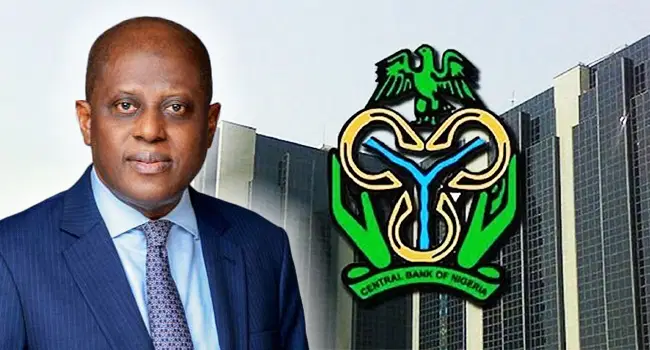
The Central Bank of Nigeria (CBN) has announced a significant increase in diaspora remittances, which rose by 79.4% to $4.18 billion in the first three quarters of 2024, compared to $2.33 billion in the same period of 2023.
CBN Governor Olayemi Cardoso disclosed this on Thursday at the Monetary Policy Stakeholders Forum in Abuja. He attributed the surge to key financial reforms introduced by the apex bank over the past year.
CBN Reforms Drive Growth in Remittances
Cardoso emphasized that beyond monetary policy adjustments, the CBN implemented critical reforms to enhance financial stability and economic growth.
“This reform yielded tangible results, with remittances through International Money Transfer Operators (IMTOs) rising 79.4% in the first three quarters of 2024,” he said.
The governor highlighted that these reforms were necessary due to persistent inflationary pressures driven by both domestic and global economic shocks.
Tackling Inflation and Exchange Rate Volatility
Cardoso noted that past monetary policies, particularly since the COVID-19 pandemic, contributed to excessive liquidity without a corresponding increase in productivity, fueling inflation and foreign exchange volatility.
“Excess naira liquidity in the system has amplified demand-driven inflation, further exacerbated by supply-side constraints stemming from structural deficits,” he explained.
To address these issues, the CBN adopted a disciplined and orthodox monetary policy approach, tightening liquidity to stabilize the economy.
Monetary Policy Measures to Curb Inflation
The CBN implemented several bold policy measures throughout 2024, including:
- Raising the Monetary Policy Rate (MPR) by 875 basis points to 27.50%
- Increasing the Cash Reserve Ratio (CRR) for Other Depository Corporations (ODCs) by 1,750 basis points to 50.00%
- Adjusting the asymmetric corridor around the MPR
Cardoso stated that without these interventions, inflation could have soared to 42.81% by December 2024.
Outlook for Nigeria’s Economy
The CBN governor reaffirmed the bank’s commitment to ensuring macroeconomic stability through proactive policy measures. He expressed optimism that with sustained reforms, Nigeria would continue to experience improved foreign exchange inflows and greater economic stability.
As diaspora remittances continue to rise and inflationary pressures are managed, the CBN believes that these reforms will foster a stronger and more resilient economy in the coming years.