
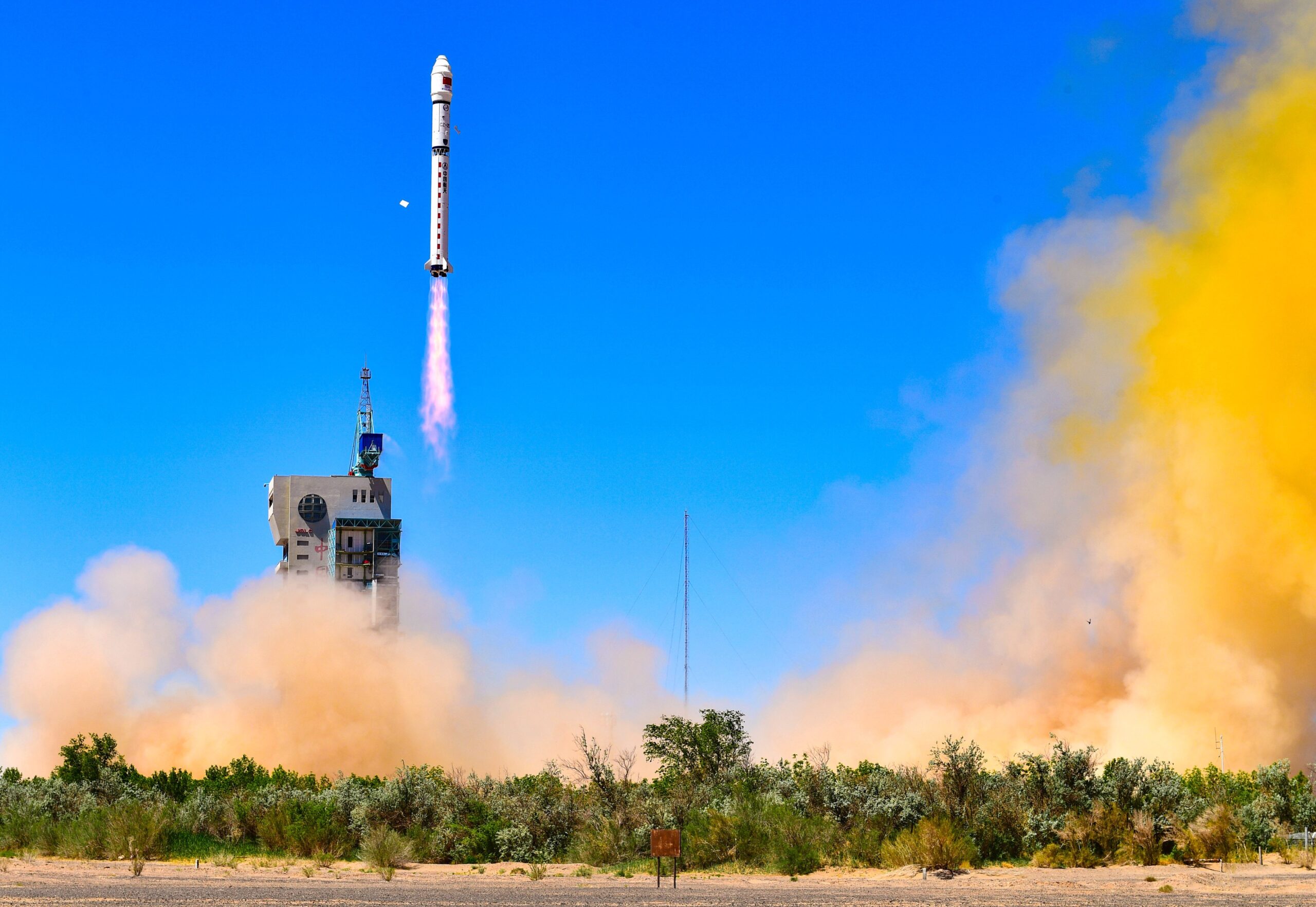
China has taken a major step toward creating the world’s first space-based supercomputer by launching a group of satellites into orbit.
The launch took place on May 14 from the Jiuquan Satellite Launch Centre, using a Long March-2D rocket.
These satellites are part of what China is calling the Three-Body Computing Constellation. Once fully deployed, this system will allow for real-time data processing directly in space, eliminating the need to send large amounts of information back to Earth for analysis. This could speed up everything from scientific research to military operations, especially in remote or fast-changing environments.
The project marks a new phase in space technology, where powerful computing is moved out of Earth’s atmosphere. Instead of waiting for data to be downloaded, analyzed, and then returned to orbit, future missions will be able to make decisions and process data on the spot. This could improve satellite communication, Earth monitoring, and even deep space exploration.
While full details about the number of satellites and their capabilities remain limited, Chinese state media described this as the starting point of a much larger system. The name “Three-Body” refers to a famous Chinese science fiction novel involving advanced space technology, signaling China’s ambition in space innovation.
This launch is part of a broader strategy by China to lead in emerging technologies, especially in space and artificial intelligence. The move comes as other countries, including the United States, increase their own investments in space-based infrastructure.
The successful launch puts China ahead in a new race — not just to explore space, but to compute in it.