
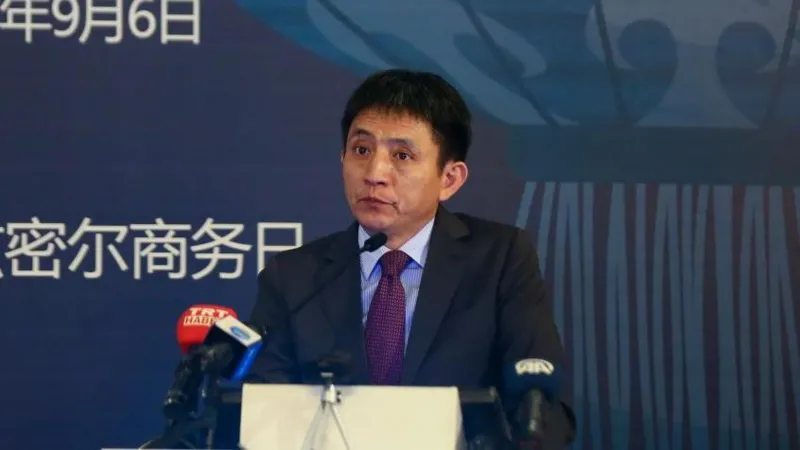
China has appointed Li Chenggang as its new top trade envoy during a tense time for international commerce, with relations between Beijing and Washington under heavy strain.
The change in leadership comes as China braces for the full impact of a sharp increase in US tariffs on its exports.
Li, 58, will replace veteran negotiator Wang Shouwen, who has played a central role in past talks with the United States. Known for his experience at the World Trade Organization and the United Nations in Geneva, Li has long been involved in shaping China’s commercial policies. His appointment signals a possible shift in approach as Beijing navigates the escalating trade standoff with the US.
The decision follows a new round of tariffs imposed by US President Donald Trump, who raised levies on Chinese imports from 10% to 145%. In response, China increased tariffs on American goods to 125%, fueling fears of a deeper global economic slowdown. Despite both countries saying they are open to negotiations, neither side has made a concrete move toward the table.
While China’s economy showed some strength at the start of the year—posting 5.4% growth in the first quarter—this was before the latest tariff hikes were introduced. Analysts suggest the growth may have been boosted by exporters racing to ship goods before the new tariffs took effect. This short-term bump is expected to fade as the trade penalties begin to bite.
At a press briefing, officials from China’s National Bureau of Statistics stressed the resilience of the Chinese economy but acknowledged the pressure from rising US tariffs. They criticized Washington’s actions as harmful to the global trading system and accused the US of engaging in protectionist behavior that disrupts international economic stability.
In a strongly worded editorial, China Daily also lashed out at the US, dismissing claims that America is being treated unfairly in global trade. The editorial said the US has benefited from globalisation for decades and should not claim to be a victim while implementing aggressive trade policies.
Li’s sudden promotion has raised questions among experts. Some view it as a strategic shift by China’s leadership to find a new voice for future trade negotiations. Others see it as a routine change that happens to coincide with a turbulent time. Either way, Li now faces the task of managing one of the most complex trade relationships in the world.
With China’s property market still under stress and domestic consumption not yet strong enough to replace lost exports, Beijing is expected to roll out more support measures to keep growth on track. Officials have hinted at further stimulus, but the effectiveness of such measures could depend on how well China adjusts to its new trading reality.
For now, China’s leadership is preparing for a difficult year. While exports remain a crucial part of the economy, shifting global dynamics and mounting trade barriers mean that officials may need to focus more heavily on strengthening internal demand to stay on course.