
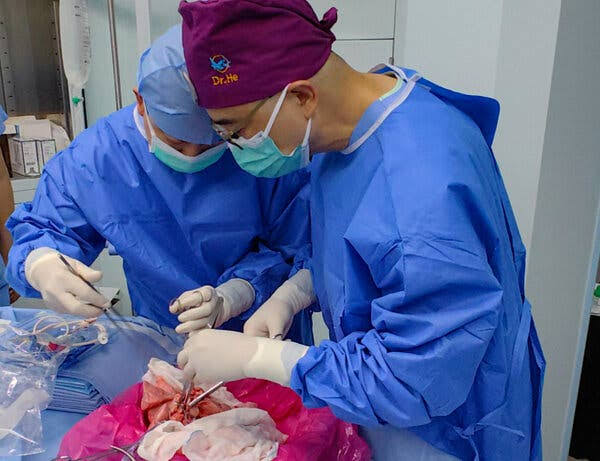
Doctors in Guangzhou, China, have carried out a pig-to-human lung transplant that remained functional for nine days, marking a step forward in experimental organ replacement research.
The procedure involved placing a genetically modified pig lung into a brain-dead human patient, where it continued working for 216 hours without infection or rejection.
The transplant was performed at the National Clinical Research Center for Respiratory Disease.
Researchers said the operation shows promise for future treatments, although extensive testing is still needed before such methods can be used in living patients.
This type of cross-species procedure, called xenotransplantation, is being studied as a possible answer to the global shortage of donor organs.
While progress has been noted in pig-to-human heart and kidney transplants, lungs present more obstacles because they are exposed to outside air and carry higher infection risks.
In this case, the lung came from a 22-month-old, 70-kilogram genetically engineered Bama Xiang pig and was transplanted into a 39-year-old man.
Researchers said the results point to advances in genetic modification and immune system control but cautioned that more work is needed before clinical use becomes a reality.