
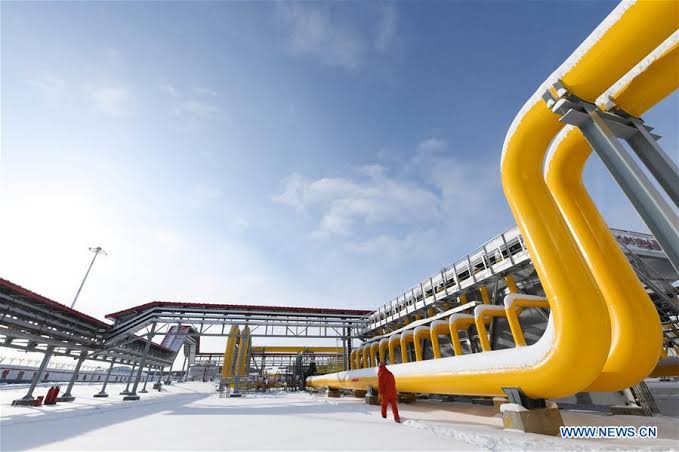
Russia and China have taken a major step forward by signing a binding agreement to build the Power of Siberia 2 gas pipeline.
This project will move natural gas from western Siberia to China via Mongolia. Gazprom, Russia’s state energy producer, announced the deal during meetings with Chinese and Mongolian leaders.
In addition, Gazprom plans to increase gas flow through the existing Power of Siberia pipeline—from the current level of 38 billion cubic meters per year to 44 billion.
The new pipeline is designed to deliver up to 50 billion cubic meters of gas annually over a 30-year span.
However, key details—such as gas prices, financing plans, construction timeline, and main contractors—have not been finalized and will be negotiated later.
The route taps into Siberia’s Yamal gas fields and runs through Mongolia, potentially giving Russia a reliable outlet to strengthen energy exports while European demand remains weak due to sanctions.
Analysts note that China is positioning itself to reduce reliance on U.S. liquefied natural gas by securing a steady supply via pipeline while also boosting its role in energy markets.
For Russia, the pipeline deal offers a crucial alternative after losing much of its European market. For China, it supports its growing energy needs while keeping leverage in pricing discussions.