
By Abasi Ita
The Cross River State Government has reaffirmed its commitment to advancing gender based climate action reforms to promote inclusive and sustainable development.
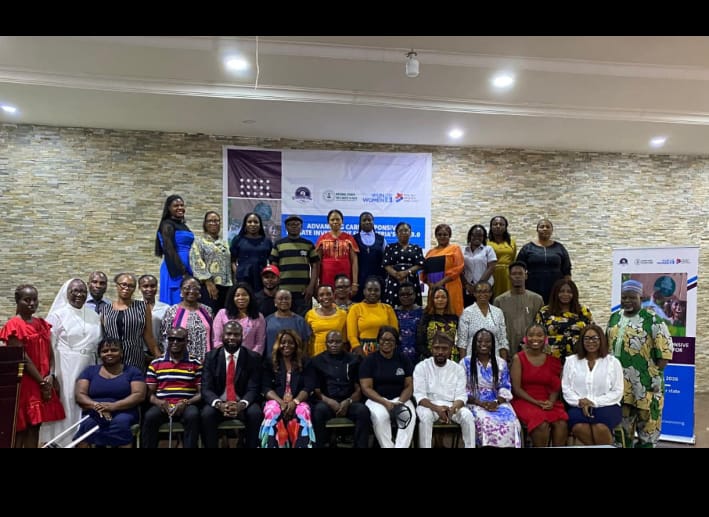
The Special Assistant to the Governor on Gender Mainstreaming, Utibe Abasi Duke, made this known during a two day training on Advancing Care Responsive Climate Investment for Nigeria’s Nationally Determined Contributions NDC 3.0 held in Calabar.
She explained that the training, facilitated by the Department of Gender Mainstreaming in partnership with UN Women and the National Council on Climate Change, was designed to deepen understanding of the care climate nexus and ensure that climate policies reflect the realities faced by caregivers, particularly women.
According to her, flooding, heat stress and food insecurity continue to increase unpaid and underpaid care work across communities in Cross River State and across Nigeria. She stressed that climate action must deliberately address these burdens to achieve equitable and lasting outcomes.
Duke noted that discussions at the training were guided by the 4Rs Framework which emphasises the need to recognise care work, reduce care burdens through climate smart infrastructure, redistribute responsibilities among households, markets and government, reward care workers and ensure the representation of caregivers in decision making processes.
In his remarks, the Team Lead for Women’s Economic Empowerment at UN Women, Desmond Osalobo, highlighted the importance of embedding care considerations into national climate strategies. He said climate change disproportionately affects women due to structural inequalities and called for increased investment in climate smart care systems.
Also speaking, the National Programme Officer for Women’s Economic Empowerment at UN Women, Temitope Ekanem, underscored the need to integrate care indicators into climate budgeting and finance frameworks. She said this would strengthen accountability and promote inclusive implementation of Nigeria’s NDC 3.0.
In her presentation, Chioma Amodi of the National Council on Climate Change reaffirmed the Federal Government’s commitment to inclusive climate governance. She noted that aligning care responsive approaches with national climate targets would enhance resilience and social protection.
Speaking, Oluwole Pelumi of the NDC Partnership emphasised the role of partnerships in mobilising technical and financial support for climate initiatives. He stated that integrating care into NDC implementation plans would help attract sustainable investment and drive long term impact.
The training concluded with stakeholders pledging closer collaboration to advance gender responsive climate policies and embed care considerations into climate action frameworks at both state and national levels.