
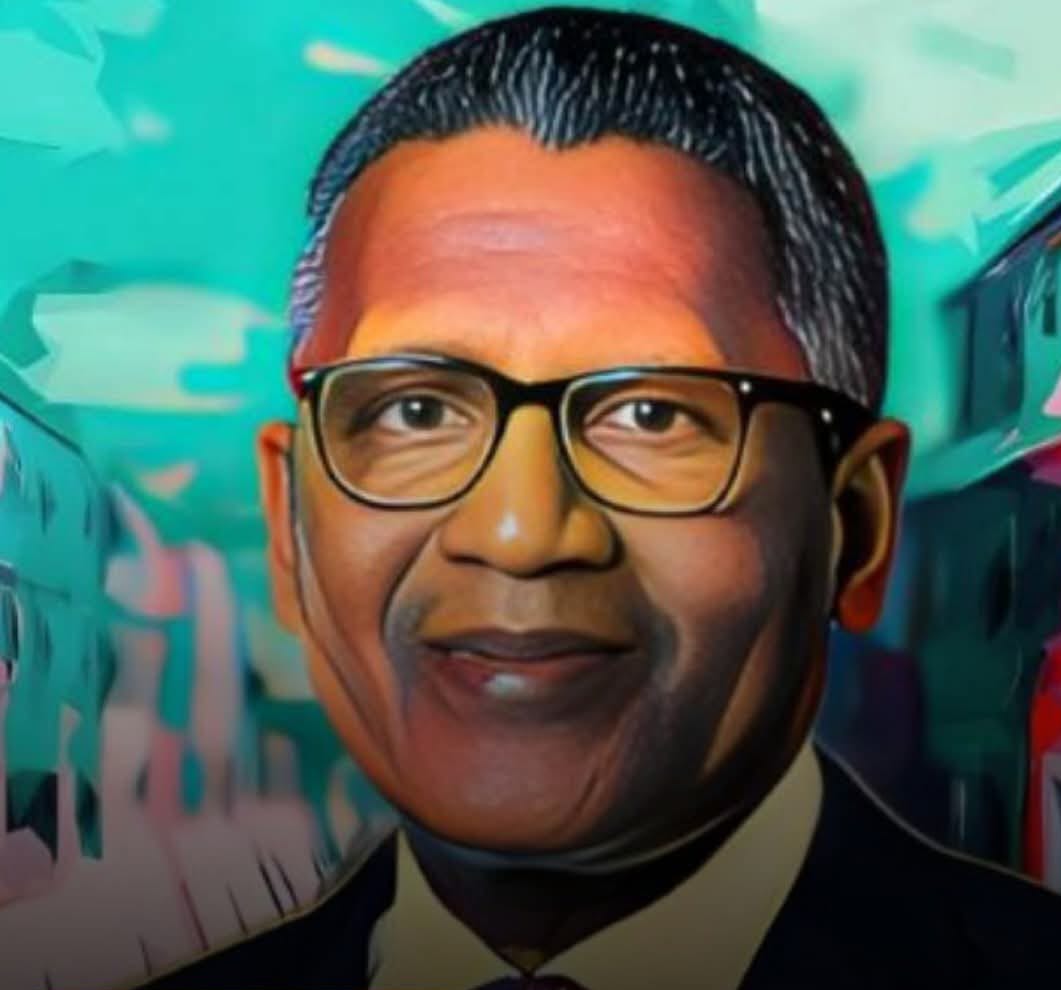
Aliko Dangote, Africa’s richest man, knows how to build factories and dismantle competitors. What he does not know—or perhaps refuses to admit—is when silence would better serve the national interest. His recent verdict on Ajaokuta Steel Company was less an act of candour than an exercise in crass cynicism. Declaring the project obsolete and doomed, he mistook provocation for realism and forgot that patriotism demands more than the luxury of dismissal.
For decades, Ajaokuta has stood as Nigeria’s unfinished industrial cathedral: vast, expensive, and frustrating. Yet, like all great national projects, it embodies not only sunk costs but also unclaimed promise. To pronounce it dead is to strike at the very idea of Nigeria’s self-reliance. Coming from a man who once took over steel assets in Osogbo only to let them rot, the outburst looks less like realism than hypocrisy, and less like concern than subtle economic sabotage.
For a man whose fortune is built on state concessions, protective tariffs, and monopolistic shielding, patriotism ought to carry a higher premium. Instead, Dangote has chosen to dismiss outright the same project he once showed interest in, pouring scorn on what successive governments are working to resuscitate. This is not frankness; it is subtle economic terrorism—an attempt to pronounce a funeral on an industry still fighting for life.
The Ajaokuta Steel Plant is not an industrial curiosity. Its operational lifespan, if properly managed, is at least 50 years, which in terms of Nigeria’s unfinished project, has not diminished significantly. Around the world, integrated plants of similar vintage are thriving. Tata Steel’s Jamshedpur plant in India, founded in 1907, remains operational, having undergone expansions and upgrades for more than a century. The Indian plants at Bhilai, Rourkela, and Durgapur, all established in the 1950s, are still functional with their basic configurations intact—just like Ajaokuta’s. Vizag Steel, once trapped in a chequered history similar to Ajaokuta’s, was eventually commissioned and has since undergone two expansions.
If these plants survive and flourish, why should Ajaokuta be condemned as a relic before it has even run its first full heat? Obsolescence, the bogey Dangote brandishes, simply does not apply here.
The Ajaokuta plant was designed around the Blast Furnace–Basic Oxygen Furnace (BF-BOF) process. Far from being outdated, this technology still accounts for about 71% of total global crude steel production. Yes, there have been innovations—Russia, in its preliminary submissions on Ajaokuta in 2019, proposed upgrades to converters, controls, and pollution management—but the core technology remains relevant.
Globally, steel making is a story of continual upgrades and migrations. Old plants are modernised with new instrumentation, co-generation units, environmental filters, and rolling innovations. Even Delta Steel in Nigeria was already moving toward such upgrades before failed privatisation scuttled progress.
Ajaokuta’s completion today would naturally incorporate such innovations. It will not be commissioned as a frozen artifact from 40 years ago but as a modernised, upgraded plant fit for contemporary demands. To suggest otherwise, as Dangote does, is misleading.
Some argue Dangote speaks as an investor, weighing profitability. But that argument collapses under scrutiny. No other plant built by Tyazhpromexport (TPE), the Soviet firm that designed Ajaokuta, has suffered the neglect Nigeria imposed. Elsewhere, every plant was completed, commissioned, and expanded. Only Nigeria abandoned its steel dream halfway.
It is curious too that Dangote’s own experiment with steel was a disaster. He bought the Osogbo Steel Rolling Mill and the Machine Tools plant in 2006. What has become of them? Are they working? Are they creating jobs? Are they producing spare parts for Nigerian industries? Are they generating national revenue? The answer is a resounding no. These acquisitions, once promising, became derelict under his watch.
If the richest man in Africa cannot revive small mills he bought, his blanket verdict on Ajaokuta rings hollow. It suggests less about the plant’s viability and more about the unattractiveness of steel to his profit model. Cement may be his goldmine; steel, with its long gestation and national importance, requires a patriot’s stomach, not a monopolist’s appetite.
The rot in Nigeria’s steel sector is not the result of technology. It is the outcome of poor policy choices and sabotage disguised as reform. Obasanjo’s decision to yank Ajaokuta from Solgas and hand it to Indian operators was the beginning of its modern paralysis. Itakpe Iron Ore, which was meant to feed Ajaokuta, remains underutilised. Delta Steel limps along. Inland rolling mills have been closed or crippled by the very hands that acquired them.
This was no accident. It was systemic capture—a deliberate weakening of the steel sector to keep Nigeria dependent on imports. Dangote’s statement slots neatly into this history, another stone thrown at the country’s industrial heart.
Russia and Ukraine continue to run blast furnace technology profitably, even amid war. Russia, in particular, remains a global steel powerhouse, exporting millions of tonnes annually. India, with plants older than Nigeria itself, continues to expand capacity. If these nations can, why not Nigeria?
It is not technology but governance that is at fault. Nigeria’s leaders have consistently surrounded themselves with advisers ignorant of steel development, preferring short-term fixes and import regimes to long-term industrial planning. That is why Ajaokuta lies dormant, not because it is obsolete.
The story of 1985 should serve as a reminder. During a cabinet debate on whether to sell Ajaokuta, the Minister of Steel, Rilwanu Lukman, urged General Ibrahim Babangida to visit first. Babangida toured the plant and wrote in the visitors’ book: “The completion of this project is a MUST to the industrial take-off of this nation. It must be supported.” After that, no minister dared oppose it.
That spirit is what today’s leaders must recover. Before condemning Ajaokuta, let President Bola Ahmed Tinubu visit the plant, walk through its vast housing estates, inspect the dormant mills, and witness the potential that still lives within its walls. Only then can a final verdict carry moral legitimacy.
Patriotism is not blind cheerleading, but neither is it the gleeful burial of national assets. To disparage Ajaokuta as Dangote has done is not realism but sabotage. For a man who benefited from state largesse, to now dismiss a project critical to national self-reliance is ethically indefensible.
The steel plant is not merely a factory. It is the bedrock of industrialisation, the foundation upon which power, rail, automobiles, construction, and defence rest. To abandon it is to consign Nigeria forever to the role of importer, beggar, and consumer in a world that rewards producers.
Ajaokuta is not beyond redemption. The path forward lies in clarity of policy and courage of leadership. Whether through a joint venture, public-private partnership, or build-operate-transfer model, government must decide on a framework, lock it in, and insulate it from sabotage. The plant must be completed, modernised, and commissioned—not as a relic of the past but as the engine of Nigeria’s future.
Posterity will judge harshly those who consign it to rust and weeds. Conversely, those who fight for its revival will stand with Shagari, Lukman, and Babangida in history’s ledger—as visionaries who saw steel not just as industry but as sovereignty.
Dangote’s realism is convenient. If steel fails, his cement empire loses no sleep. If Nigeria remains an importer of steel, his monopolies remain secure. That is why his intervention cannot be taken as gospel but must be interrogated against facts, history, and patriotism.
Steel is not dead. Ajaokuta is not obsolete. Its completion is not optional. It is the one project that can decide whether Nigeria remains a consumer colony or ascends as an industrial nation.
The dream of Ajaokuta is not yet buried. And it will not be buried—not by cynicism, not by self-interest, and certainly not by the careless words of Aliko Dangote.
Ben Abdul is a public affairs analyst and a geopolitical expert.