
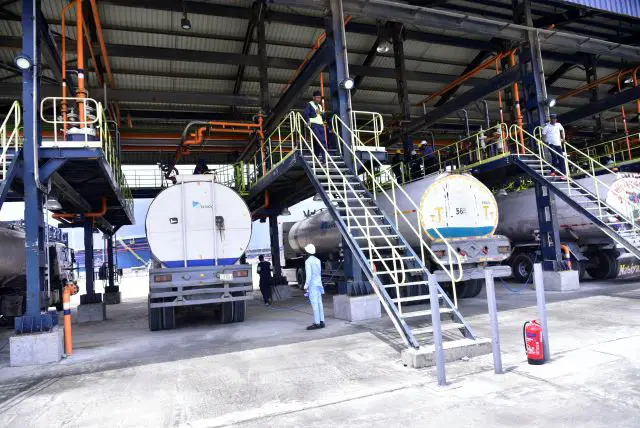
Private fuel depots in Lagos and nearby areas were largely empty yesterday as the Dangote Petroleum Refinery began sending petrol directly to marketers.
The move has shifted attention away from private depot operators, who had been expecting to gain from the refinery’s supply chain.
Reports from the area showed that many depots had only minimal activity because buyers are now turning directly to Dangote’s trucks. Industry watchers noted that the arrival of over 1,000 trucks on Monday unsettled depot owners and retailers, leading to a sharp drop in their sales. Unlike past situations where global oil prices pushed local prices upward, depot prices have started to fall, showing the strong effect of local supply from the refinery.
At the refinery’s one-year anniversary of petrol production on Monday, Aliko Dangote explained that the project has started easing Nigeria’s long battle with fuel shortages, which has lasted for decades. Since the refinery began supplying petrol in September 2024, queues at filling stations have been gradually reducing.
Dangote also spoke about the tough journey of building the refinery. According to him, the project carried huge financial risks, and many experts and officials warned that such a large refinery could only be handled by governments. He explained that failure would have meant losing all his assets to lenders. Despite these challenges, he went ahead with the project, saying it was driven by belief in Nigeria and Africa.
The refinery, which has a capacity of 650,000 barrels per day, is now playing a central role in shaping the downstream petroleum sector. Its entry into the market is forcing new practices, reducing reliance on imports, and giving Nigeria greater control over its fuel supply.