
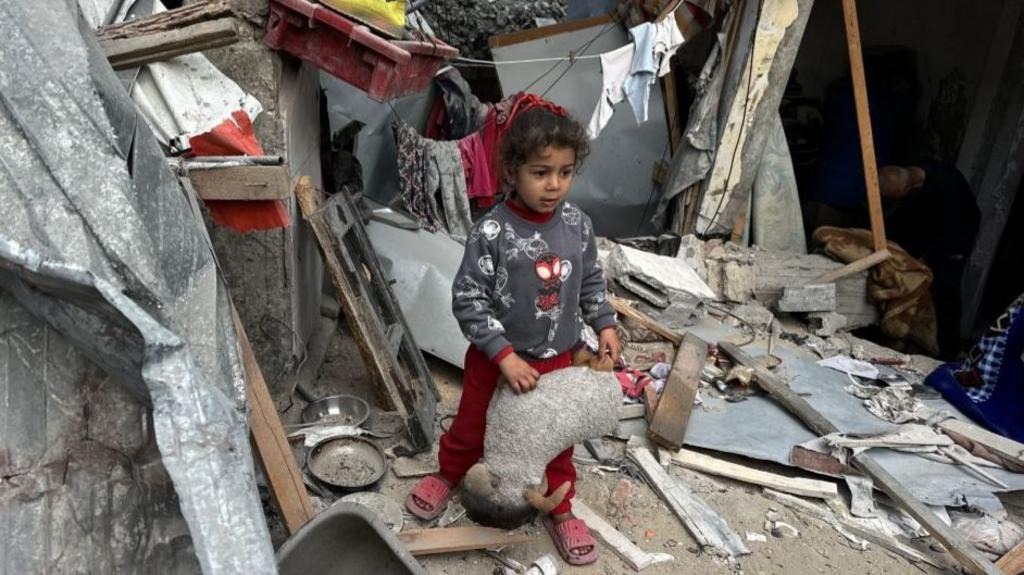
Israeli airstrikes on Gaza have killed at least 330 people, according to the Hamas-run health ministry, following the collapse of negotiations to extend the ceasefire.
The Israeli military confirmed it launched extensive attacks after talks failed.
This marks the most intense wave of strikes since January 19, when the ceasefire initially took effect. Reports from Gaza describe widespread devastation, with residents witnessing entire neighborhoods reduced to rubble. One eyewitness in Gaza City described the attacks as “the fire of hell unleashed again.”
Israeli Prime Minister Benjamin Netanyahu’s office stated that Israel would escalate military operations against Hamas, blaming the group for refusing to release hostages and rejecting ceasefire proposals. Hamas, in response, accused Israel of targeting civilians and violating the truce. Mediators, the group said, should hold Israel fully responsible for breaking the agreement.
Residents of Gaza recounted harrowing experiences. Kamal Abu Al-Atta questioned the ceasefire’s validity, describing the heavy casualties in his neighborhood as unacceptable. Mohammed Bdeir, who lost his daughter in the strikes, recalled the horror of pulling his family from the rubble.
The UN Humanitarian Coordinator for the Palestinian Territories, Muhannad Hadi, condemned the strikes, calling for an immediate ceasefire. He described the situation in Gaza as unbearable, urging the international community to take action.
The Israeli Defense Forces issued new evacuation orders, instructing people in Beit Hanoun, Khuza’a, and other areas to move to shelters in western Gaza City and Khan Younis. The situation remains tense, with ongoing strikes and military buildup.
In the Israeli town of Sderot, close to the Gaza border, some residents expressed support for renewed military action. One woman, who works at a local restaurant, said she once had Palestinian friends but now sees them as betrayers, echoing the sentiments of others who believe the war should continue.