
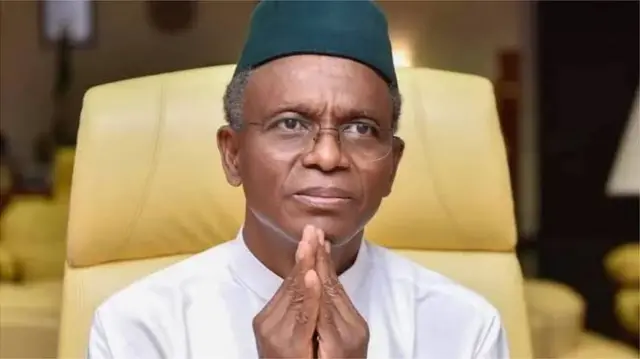
The Democracy Watch Initiative (DWI), has called on the Federal Government of Nigeria to investigate and prosecute those responsible for alleged human rights violations during the tenure of former Kaduna State Governor, Nasir El-Rufai, between 2015 and 2023.
In a statement by its Director of Strategic Communication, Dr. Tunji Bamidele, the group said El-Rufai’s administration was marked by violence, oppression, and disregard for civil liberties, despite efforts at infrastructural reforms.
Among the incidents highlighted were the Zaria Shiite massacre, the Kajuru massacre, and the demolition of properties belonging to political opponents, which DWI described as evidence of a governance style that “prioritized power over fundamental rights.”
Bamidele said: “In light of the alarming human rights violations committed during the tenure of former Governor Nasir El-Rufai of Kaduna State from 2015 to 2023, we hereby call upon the Federal Government of Nigeria to take decisive action in arresting and prosecuting those responsible for these atrocities.
“We also urge international human rights organizations to lend their voices and support in holding accountable those who have perpetuated violence and repression against the citizens of Kaduna State.
“El-Rufai’s administration has been marred by a troubling legacy of violence, oppression, and a blatant disregard for civil liberties. While the former governor attempted to implement infrastructural and governance reforms, his tenure was overshadowed by a series of egregious human rights violations that cannot be overlooked.
“The Zaria Shiite massacre, the Kajuru massacre, and the systematic demolition of properties belonging to political opponents are just a few examples of the alarming pattern of governance that prioritized power over the protection of fundamental rights.
“The Kajuru massacre of 2019 remains a harrowing reminder of the ethnic and religious tensions that escalated under El-Rufai’s leadership. The loss of innocent lives during this tragic event exemplified the administration’s failure to address the root causes of conflict and its subsequent indifference to the suffering of marginalized communities.
“Rather than fostering an environment of reconciliation and peace, El-Rufai’s government exacerbated divisions, contributing to a cycle of violence that continues to plague the region.”
The group accused the former governor of eroding judicial authority, citing the case of Kasuwan Barci traders whose demolished businesses led to protests, as well as the arrest of journalist Jacob Onjewu for allegedly inciting violence.
He added, “El-Rufai’s administration displayed an alarming intolerance for dissent and civil liberties. The incarceration of journalists, the suppression of protests, and the harassment of opposition figures were hallmarks of a regime that sought to stifle free expression.
“The abduction of Abubakar Idris, known as Dadiyata, serves as a poignant symbol of the oppressive climate that characterized El-Rufai’s rule, instilling fear in the hearts of citizens and deterring them from exercising their fundamental rights.
“The erosion of judicial authority during El-Rufai’s tenure further exemplifies the administration’s hostility towards dissent. Incidents such as the protest by Kasuwan Barci traders demanding compensation for their demolished businesses, coupled with the arrest of journalist Jacob Onjewu for allegedly inciting violence, reflect a persistent pattern of resistance to judicial decisions.
“This environment of censorship and intimidation not only undermines the rule of law but also threatens the very fabric of democracy in Nigeria. As the Nigerian electorate prepares for future elections, it is imperative to remain vigilant against the desperate antics, lies, and deceit of leaders like Nasir El-Rufai.
“His tenure serves as a cautionary tale, reminding us of the dangers inherent in prioritizing power over the principles of justice and equity. We must not allow ourselves to be swayed by empty promises or the allure of ambitious reforms that mask a disregard for human rights.”
The Democracy Watch Initiative urged both the Federal Government and international human rights organizations to ensure accountability and justice for victims, warning Nigerians to remain vigilant as the country heads into future elections.
“The protection of human rights must be at the forefront of Nigeria’s governance agenda, ensuring that the lessons of the past are not forgotten. The legacy of Nasir El-Rufai’s governance in Kaduna State serves as a stark reminder of the importance of balancing reform with respect for human rights.
“The challenges and controversies that marked his tenure illuminate the dangers of allowing power to supersede the principles of justice and equity. As Nigeria navigates its path towards sustainable governance, we must collectively commit to upholding the rights of all citizens, ensuring that the mistakes of the past inform a more just and equitable future.”